AI-powered fake ID operation reveals identity verification crisis
Source published ·Modelwire updated
Original coverage: 404 Media ↗·How Modelwire adds context
The development
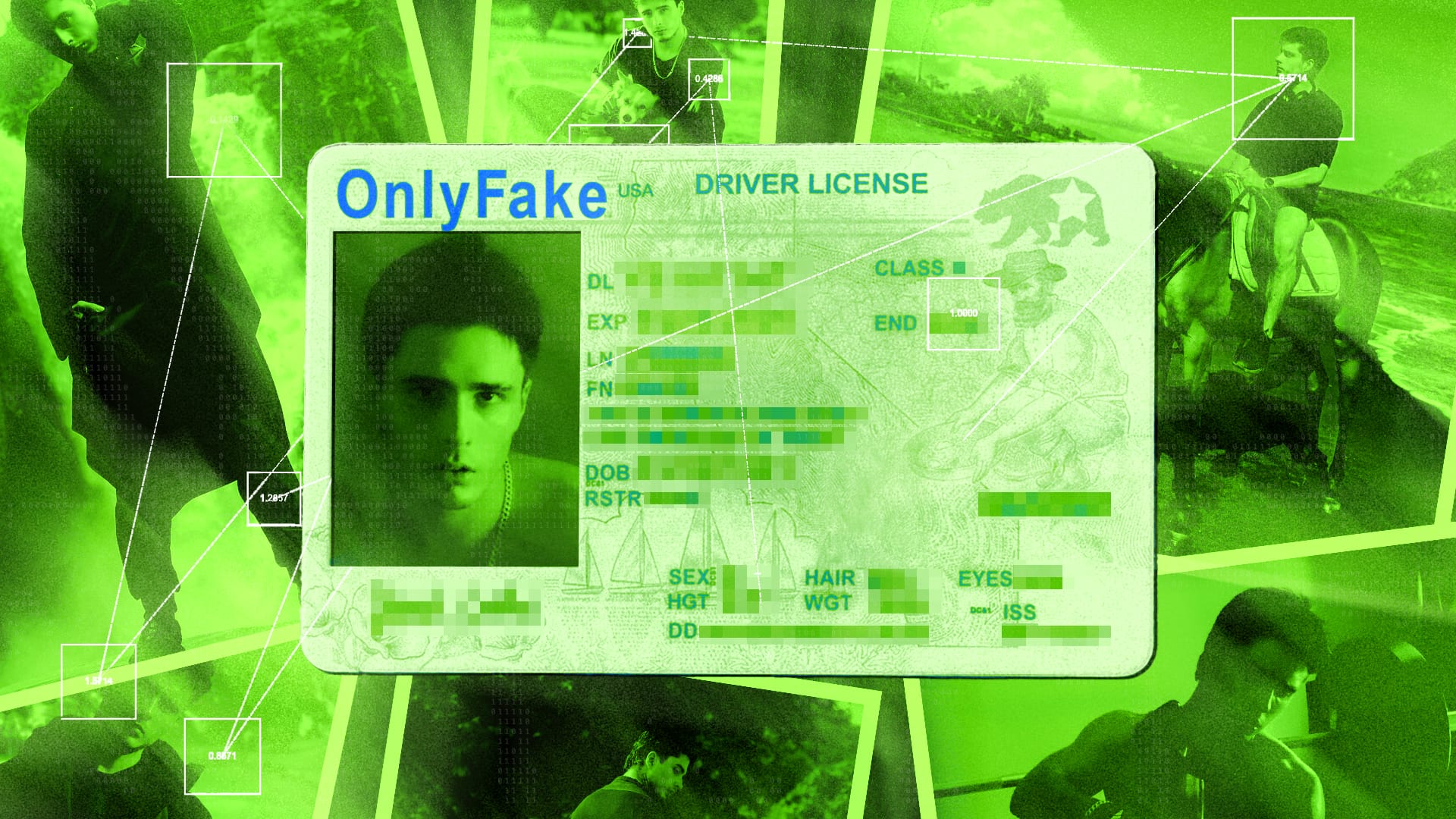
A criminal operation leveraged generative AI to industrialize synthetic identity fraud, exposing how accessible image synthesis tools can be weaponized for document forgery at scale. The case illustrates a critical gap between AI capability deployment and enforcement: synthetic media generation has matured to the point where non-technical actors can operate sophisticated fraud rings, and state-level actors now view such infrastructure as operationally valuable. This signals that identity verification systems, financial institutions, and border controls face an accelerating arms race against AI-generated credentials, forcing rapid investment in detection and authentication layers.
Modelwire’s AI-generated summary of coverage from 404 Media.
Modelwire analysis
Analyst takeOur AI-generated reading of the wider context and the next developments to watch.
The story's real news isn't that AI can forge documents (known for years) but that non-technical criminals now operate at industrial scale using commodity tools, and that North Korea's interest signals state-level demand for this infrastructure as a service. That's a supply-chain maturation event.
This extends the pattern documented in the 400-app investigation from early November: malicious capabilities bundled into accessible tools, with enforcement lagging deployment by months or years. But where the deepfake apps targeted individuals, this targets institutional trust layers (borders, banking, identity). The Theranos piece from late October flagged how AI's low friction enables deception; here we see that friction advantage weaponized operationally. Unlike the frontier labs' election war rooms (which assume detection is possible), this case suggests detection infrastructure hasn't kept pace with synthesis quality.
If major financial institutions announce new synthetic media detection requirements in their KYC/AML frameworks within the next 90 days, that confirms this is now a material compliance risk. If no major bank moves by Q1 2027, it suggests the industry still views this as a fringe threat rather than a structural vulnerability requiring architectural change.
This interpretation is generated from the summary above and the archive coverage cited below. Our methodology · Report an error
Coverage behind this analysis
These archive entries ground the connection in our analysis. They are ordered by source publication date, with links to our coverage and the original sources.
·WIRED - AI
Chinese developers hide abuse features in 400 mainstream AI apps
A WIRED investigation identified roughly 400 applications and websites, predominantly operated by Chinese developers, that disguise themselves as conventional AI utilities while embedding covert functionality for generating non-consensual intimate imagery and violent synthetic media. The discovery exposes a critical gap in app store moderation and highlights how generative AI infrastructure can be weaponized at scale…
MentionsYuriy Nazarenko · OnlyFake · North Korea · 404 Media
How this coverage is produced
Modelwire uses AI to generate summaries and context from source headlines, snippets, and selected archive coverage. Automated checks do not verify every claim, and items are not routinely reviewed by a person before publication. Zacaria Solis operates the site. Read the linked source for the full evidence and report errors through our corrections process.
Modelwire summarizes, we don’t republish. 404 Media originally reported this story as “The Confessions of an AI Fraud Kingpin”. The full content lives on 404media.co. If you’re a publisher and want a different summarization policy for your work, see our takedown page.