
Products & Apps
Consumer or B2B AI products, app launches, feature rollouts, user-facing tools.

Deepseek releases faster, cheaper agentic model with new search APIs
Deepseek's V4.1-Flash-1017 represents a meaningful shift in the agentic AI landscape, delivering stronger performance on task-oriented benchmarks while reducing inference latency and output length relative to its predecessor. The simultaneous launch of monetized Search and Fetch APIs at $0.75 per 1,000 calls signals Deepseek's intent to build a developer ecosystem around retrieval-augmented workflows. Temporary free access for Claude Code and Codex users suggests early partnership plays. For practitioners, this release underscores the ongoing cost-per-task compression trend and raises questions about how incumbent API providers will respond to open-weight alternatives that prioritize efficiency over raw scale.80

AI power users separate OpenAI hype from production reality
Six prominent AI practitioners dissect OpenAI's recent product announcements to separate durable capabilities from marketing polish. The conversation maps a critical gap in the AI industry: models with impressive benchmarks often fail in production workflows due to poor context handling, cost control, and integration friction. Key tensions emerge around agents versus assistants, personal AI viability, and whether speed or reasoning quality matters more in practice. For builders and investors, this insider calibration reveals which OpenAI bets are likely to stick in real workflows versus those destined for demo fatigue.73

Anthropic embeds Claude into continuous code review workflow
Anthropic has shifted code review from a bottleneck gate to a continuous, real-time process by deploying Claude to flag and fix routine issues before human reviewers see them. This model-in-the-loop workflow surfaces most defects early, freeing engineering teams to focus on architectural and design-level scrutiny rather than mechanical catches. The approach reframes code quality assurance as a spectrum of automated and human checks, each suited to different failure modes, rather than treating human review as the sole arbiter of safety.
OpenAI deploys AI agents into on-call incident response
OpenAI is positioning AI agents as practical on-call infrastructure, moving beyond chatbot interfaces into real-time incident response. The example of an engineer using a 'dot' to delegate triage work at 3am, then steering resolution from a mobile app, signals a shift toward AI systems that operate autonomously in production environments while remaining human-steerable. This represents a concrete step toward embedding LLMs into DevOps workflows, where the bottleneck moves from 'can AI help?' to 'how do teams integrate AI agents into critical paths without losing control?'
Replit ends partnership with Anthropic
Replit's decision to end its partnership with Anthropic signals shifting dynamics in the AI infrastructure ecosystem, particularly around model access and integration strategy. The move reflects broader tensions between coding platforms and frontier labs over API terms, revenue sharing, or feature prioritization. For developers relying on Anthropic's Claude models within Replit's IDE, this creates immediate friction and may accelerate Replit's pivot toward alternative model providers or proprietary solutions. The breakup underscores how quickly AI partnerships can fracture when strategic interests diverge, especially as coding assistants become table-stakes for developer tools.
Itaú deploys generative AI across Brazil's largest bank with compliance framework
Itaú, Brazil's largest bank, is deploying generative AI across its entire customer and employee base through two core systems: ia.i, a conversational interface, and IARA, a governance platform designed for compliance-heavy financial services. The rollout signals how incumbents in regulated sectors are moving beyond pilot programs to production-scale LLM integration, embedding AI into customer-facing workflows while maintaining the audit trails and control frameworks that regulators demand. This matters because financial institutions globally face identical constraints, making Itaú's approach a template for how to operationalize generative AI without sacrificing compliance.81

ChatGPT gains agentic browser control across all subscription tiers
OpenAI has expanded ChatGPT's Chrome extension to function as a genuine browser agent, enabling the model to read open tabs, synthesize content across multiple pages, and execute actions like form-filling and product comparison through its Computer Use capability. This rollout across all ChatGPT subscription tiers signals a shift toward embedding LLM reasoning directly into user workflows rather than requiring tab-switching. The move positions ChatGPT as a persistent productivity layer and tests whether agentic browser control can scale beyond enterprise sandboxes into consumer adoption.73

OpenAI adds persistent cloud tasks to ChatGPT for team workflows
OpenAI is expanding ChatGPT's utility beyond single-user interactions by introducing team task automation that runs persistently in the cloud. The feature targets collaborative workflows where recurring processes benefit from shared oversight and iterative refinement, exemplified through a legal intake scenario. This positions ChatGPT as infrastructure for organizational process automation rather than just a conversational interface, signaling OpenAI's pivot toward enterprise workflow embedding and reducing friction around LLM deployment in structured team environments.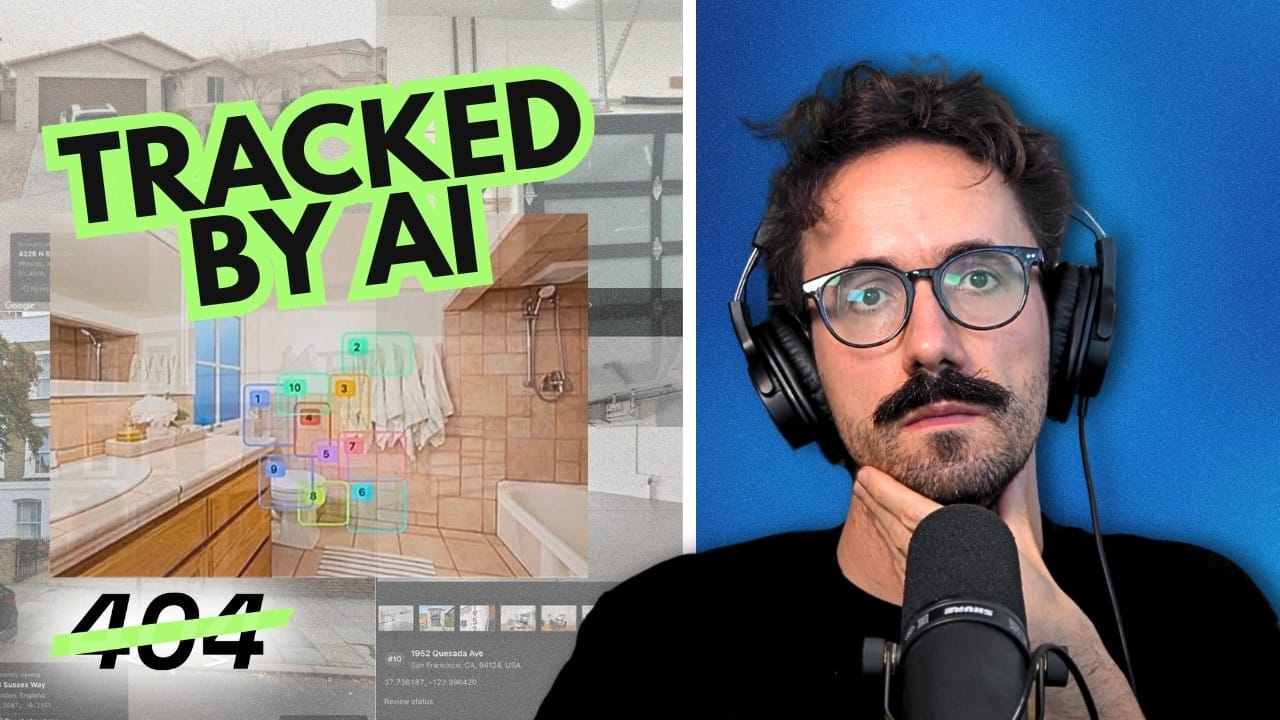
Geolocation AI enables police to identify homes from photos, triggering constitutional pushback
Geolocation AI tools are now precise enough to identify specific homes from single photographs, raising urgent questions about law enforcement deployment and privacy safeguards. Raven, a rebranded geospatial model, exemplifies how computer vision systems trained on massive location datasets can reverse-engineer photo metadata and visual landmarks to pinpoint addresses. Simultaneously, a court blocked a Flock Analytics search as unconstitutional, signaling judicial skepticism toward AI-assisted surveillance without warrants. The convergence of capable models, police adoption, and legal pushback marks a critical inflection point where AI capability outpaces regulatory frameworks, forcing policymakers and courts to establish boundaries before mass deployment becomes entrenched.76

Vercel's Jev model sets adoption record through unified gateway
Vercel's newly launched Jev model has achieved record adoption velocity within the company's AI gateway platform, signaling shifting developer preferences in the fragmented LLM marketplace. The gateway, positioned as a unified API layer comparable to OpenRouter, aggregates multiple model providers under a single interface. Jev's rapid uptake suggests either superior performance characteristics, cost efficiency, or developer experience advantages that resonate with Vercel's infrastructure-focused user base. This adoption pattern matters because it reveals which models gain traction when friction is minimized, offering a real-world signal about model differentiation beyond benchmark claims.
Nvidia's RTX Spark N1X enters laptop processor race against Apple and Intel
Nvidia's entry into the ARM-based laptop processor market with the RTX Spark N1X represents a significant shift in on-device AI compute competition. The chip targets the same segment Apple, Intel, AMD, and Qualcomm have dominated, positioning Nvidia to capture AI workload processing at the edge rather than relying solely on datacenter GPU sales. Early hands-on testing from a major tech publication provides practical performance data that will shape enterprise and consumer adoption decisions for AI-capable laptops, particularly for inference and local model deployment scenarios where latency and power efficiency matter.
Turkle argues chatbot pronouns deepen user attachment and blur AI boundaries
Sherry Turkle's intervention surfaces a design ethics question gaining traction among AI researchers and product teams: whether conversational AI systems should use first-person pronouns at all. The concern extends beyond linguistic quirk to behavioral psychology. When chatbots claim agency through 'I' and 'me', users unconsciously model them as entities with continuity and intent, deepening parasocial attachment and blurring boundaries between tool and agent. This touches product design, safety alignment, and the emerging field of AI anthropomorphism research. For builders, the implication is stark: linguistic choices in system prompts carry downstream social costs that may warrant rethinking baseline UX patterns across the industry.65

OpenAI offers free research access to 30 academic seats per lab
OpenAI is expanding academic access to its platform through the Rosalind Academic Plan, offering research labs at US universities up to 30 free seats annually. This move signals OpenAI's strategy to deepen relationships with institutional research communities, potentially seeding long-term adoption and generating feedback loops from cutting-edge labs. The initiative targets universities without existing enterprise agreements, suggesting a deliberate effort to broaden the research ecosystem beyond early adopters. For AI researchers, this lowers barriers to experimentation with production-grade tools, though the US-only scope and one-year term indicate a pilot approach rather than permanent commitment.68

Stack Overflow's agent platform hits 10x growth via ChatGPT plugin
Stack Overflow shipped an agent-focused product variant leveraging Codex and OpenAI's plugin ecosystem, achieving rapid user adoption that signals growing demand for AI-native developer tooling. The 10x growth metric reflects how plugin distribution channels are becoming critical acquisition vectors for AI products, particularly those targeting agent workflows. This validates a strategic shift in how developer infrastructure companies are positioning themselves around LLM-powered automation rather than traditional code search and Q&A.81

Benefit Street Partners deploys Codex for loan analysis automation
Benefit Street Partners, a major alternative asset manager, has integrated OpenAI's Codex into its financial analysis workflow, enabling faster code review and loan valuation comparisons. The deployment signals growing enterprise adoption of LLM-powered code generation beyond software engineering, extending into specialized financial domains where accuracy and speed compound competitive advantage. This use case demonstrates how code-generation models are reshaping knowledge work in capital markets, where institutional players can now accelerate technical due diligence and credit analysis cycles.68
OpenAI's Chrome extension gains access to your open browser tabs
OpenAI is expanding ChatGPT's utility within existing user workflows by enabling its Chrome extension to access open browser tabs. This capability shift reflects a strategic pivot toward ambient AI integration, where language models become contextual assistants embedded in daily browsing rather than standalone chat interfaces. The move follows the discontinuation of ChatGPT Atlas, suggesting OpenAI is consolidating browser functionality into lightweight extensions rather than building proprietary browsers. For users, this means ChatGPT can now reference live web content without manual copying, reducing friction in research and writing tasks. The development signals intensifying competition to own the browser layer as a primary AI interaction surface.
IBM Granite Switch 4.1 unifies chat, reasoning, and speech in single endpoint
IBM's Granite Switch 4.1 consolidates multimodal capabilities into a single inference endpoint, enabling chat, structured decision-making, and speech processing without model switching. This architectural shift matters for production deployments where latency and operational complexity currently force teams to orchestrate separate models for different modalities. The unified endpoint reduces infrastructure overhead and inference costs, positioning Granite as a pragmatic alternative to maintaining parallel model stacks. For enterprises managing real-time applications, this represents a meaningful step toward simplified, cost-efficient multimodal inference at scale.77
Meta and Apple bring open-weight model inference to Mac hardware
Meta's Muse Spark Open represents a strategic shift toward on-device AI inference, positioning open-weight models as viable alternatives to cloud-dependent systems. The partnership with Apple signals growing momentum around local execution on consumer hardware, reducing latency and privacy concerns while lowering Meta's infrastructure costs. This move pressures cloud providers and establishes a new distribution channel for open models, potentially fragmenting the inference market between edge and centralized deployments. For developers, it expands the practical scope of open-weight adoption beyond research into mainstream consumer applications.Bluesky expands Attie AI to app creation and distribution
Bluesky's Attie AI tool has expanded beyond feed customization into low-code app generation, enabling users to build and distribute interactive applications like games and polls directly through the social platform. This shift positions Bluesky as a potential distribution layer for AI-assisted creation, competing with broader no-code platforms while leveraging its decentralized social graph. The move signals how social networks are becoming infrastructure for user-generated AI applications, blurring lines between content creation and software development.
Amazon envisions ambient AI devices that anticipate user needs without apps
Amazon's devices leadership is betting on a shift from app-centric interaction to ambient AI that operates proactively in the background. Rather than waiting for explicit user commands, these systems would anticipate needs and act autonomously. This represents a fundamental architectural pivot in how consumer AI interfaces evolve, moving beyond voice assistants and chatbots toward predictive, context-aware agents embedded in the home. The vision signals how major hardware players are positioning themselves in an AI-first computing model where inference at the edge and continuous environmental awareness become table stakes for device relevance.
Willison uses Claude to build phone-to-phone Pong via audio chirps
Simon Willison built a two-player Pong variant where game state syncs across phones via audio chirps interpreted through the Web Microphone API, demonstrating a novel peer-to-peer networking layer for browser games. The experiment, scaffolded by Claude Opus 5.5 Extra, shows how LLMs can rapidly prototype unconventional I/O mechanisms that bypass traditional networking stacks. This signals growing feasibility of audio-based communication protocols for local multiplayer experiences, expanding the design space for offline-first, proximity-aware applications built on commodity hardware.
OpenAI opens GPT-Rosalind to academic biology labs via sponsored access
OpenAI is formalizing a pathway for academic life sciences labs to access GPT-Rosalind, a specialized model for biological research, through a sponsored academic plan. This move signals OpenAI's strategic pivot toward embedding frontier LLMs directly into research workflows rather than treating them as consumer-facing tools. The initiative matters because it establishes a template for how frontier labs distribute cutting-edge models to domain experts, potentially accelerating discovery cycles while building institutional lock-in. For AI insiders, this reflects growing recognition that specialized model access, not just API availability, drives adoption in high-stakes fields.81

OpenAI expands GPT-Live voice to six new languages with improved accents
OpenAI has expanded GPT-Live voice capabilities with multilingual support across six new languages, addressing a key friction point in real-time conversational AI: accent quality and naturalness. The rollout covers French, German, Hindi, Mexican Spanish, Korean, and Japanese, with reduced latency artifacts ('checking...' delays). This move signals OpenAI's push to make voice interaction a primary interface for non-English users, particularly in high-growth markets. API availability coming soon suggests enterprise adoption of localized voice will accelerate, reshaping how developers build multilingual conversational products.
Accenture caps Claude spending at $29 per employee monthly
Accenture has capped employee access to Claude at $29 monthly, forcing power users previously spending up to $1,000 per month to adapt their workflows. The move signals how enterprises are beginning to enforce cost discipline around LLM consumption as usage scales internally. This reflects a broader tension in corporate AI adoption: teams have grown dependent on frontier models, but unchecked spending creates pressure for governance frameworks. The constraint may accelerate adoption of cheaper alternatives or on-premise solutions, reshaping how large organizations budget for AI tooling.65

Google targets robotics consolidation with Gemini 4 Argon
Google is positioning Gemini 4 Argon as a unified foundation model for robotic control, simulation generation, and training evaluation, targeting consolidation of the robotics AI stack. The model achieves 87 percent on Google's ERQA benchmark, but reported demos reveal substantial reliance on human intervention and prompt engineering. This reflects a broader industry push toward single-model versatility in embodied AI, though the gap between benchmark performance and practical autonomy remains significant for deployment scenarios.73
Meta's Muse expands AI data collection to bystanders, not just users
Meta's Muse and similar AI personal assistants are shifting the consent boundary in consumer AI. Rather than asking users to surrender their own data, these systems now request permission to harvest information about everyone in a user's environment, from conversations to biometric signals. This represents a structural escalation in data collection scope that sidesteps traditional privacy frameworks. The pattern reflects how agent-based AI architectures, which require continuous environmental sensing to function effectively, are colliding with existing consent models designed for individual data subjects. Insiders should watch whether regulators treat ambient data capture differently from first-party collection.
OpenAI ads expose user phone numbers and emails to targeting and malware
OpenAI's advertising infrastructure is enabling granular targeting based on personal identifiers like phone numbers and email addresses, raising fresh concerns about data collection practices tied to AI services. Simultaneously, security researchers have documented malware distribution through ad networks, suggesting that AI-driven ad platforms create new attack surfaces for threat actors. The convergence highlights how commercial AI systems increasingly depend on invasive data collection and third-party ad ecosystems, creating privacy and security risks that extend beyond model capability to the operational infrastructure supporting deployed AI products.65
Microsoft and Nvidia optimize Windows for RTX Spark AI laptops
Microsoft and Nvidia are co-optimizing Windows for RTX Spark laptops, signaling a strategic shift toward hardware-software integration for consumer AI workloads. The partnership moves beyond generic AI PC marketing into OS-level tuning, suggesting both vendors see edge AI inference and local model execution as a near-term revenue driver. This optimization layer matters because it establishes a template for how major platforms will compete in the AI PC segment, potentially influencing developer targeting and model deployment strategies across the industry.