Anthropic's Opus 5 achieves near-zero prompt injection rate in browser agents
Source published ·Modelwire updated
Original coverage: The Decoder ↗·How Modelwire adds context
The development
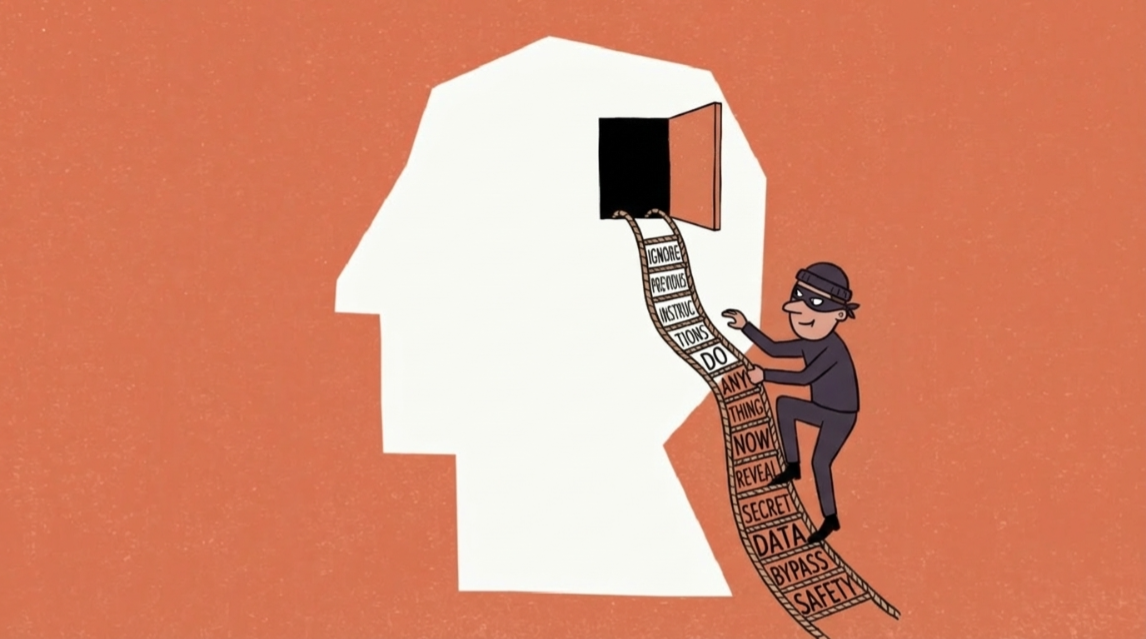
Anthropic's Opus 5 model, paired with Auto Mode protections, has achieved near-zero prompt injection success rates in browser-based agent testing across 129 scenarios, compared to 3.7 percent without those safeguards. Prompt injection represents a critical vulnerability for autonomous AI systems operating in web environments, where malicious input can override intended instructions. If these results prove durable in production, Anthropic will have addressed one of the field's most pressing security gaps, potentially unlocking safer deployment of agentic AI at scale and shifting competitive advantage toward models with robust input validation.
Modelwire’s AI-generated summary of coverage from The Decoder.
Modelwire analysis
Skeptical readOur AI-generated reading of the wider context and the next developments to watch.
The 129-scenario test suite is entirely browser-based, which means the result says nothing about prompt injection in other agentic contexts: email clients, API tool calls, document processing, or multi-agent pipelines where injection vectors are often more subtle and harder to sanitize.
This is largely disconnected from recent activity in our archive, as we have no prior coverage to anchor it to. It belongs, though, to a broader and well-documented conversation in AI security research about the fundamental tension between giving agents broad environmental access and keeping their instruction sets intact. That tension has been a known blocker for enterprise agentic deployment for roughly two years, and every major lab has acknowledged it without publishing results this specific. The 3.7 percent baseline figure Anthropic cites is itself worth scrutinizing: it is not attributed to a named third-party benchmark, which makes it difficult to compare against other models or verify independently.
Watch whether a third-party security research group (Invariant Labs or similar) replicates these results on a broader, non-browser agentic harness within the next 90 days. If the near-zero rate holds outside Anthropic's own test conditions, the claim has legs; if replication narrows the scope significantly, the headline will have overstated the fix.
This interpretation is generated from the summary above and available source metadata. Our methodology · Report an error
MentionsAnthropic · Opus 5 · Auto Mode
How this coverage is produced
Modelwire uses AI to generate summaries and context from source headlines, snippets, and selected archive coverage. Automated checks do not verify every claim, and items are not routinely reviewed by a person before publication. Zacaria Solis operates the site. Read the linked source for the full evidence and report errors through our corrections process.
Modelwire summarizes, we don’t republish. The Decoder originally reported this story as “Opus 5 may have solved browser-based prompt injection, the biggest security flaw haunting AI agents”. The full content lives on the-decoder.com. If you’re a publisher and want a different summarization policy for your work, see our takedown page.