China blocks SoftBank's ABB acquisition, tightening robotics investment gates
Source published ·Modelwire updated
Original coverage: AI Business ↗·How Modelwire adds context
The development
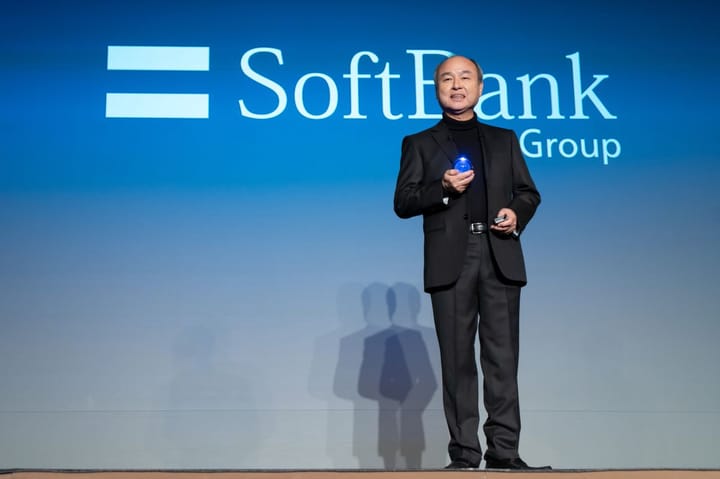
China's regulatory block of SoftBank's acquisition of ABB signals a hardening stance on foreign robotics and automation investment, with ripple effects across AI-adjacent supply chains. The decision reflects broader geopolitical friction over advanced manufacturing capabilities and cross-border tech consolidation. For AI infrastructure builders, the move underscores how national security reviews now extend beyond semiconductors and LLMs into robotics and industrial automation, constraining the capital flows that fund next-generation embodied AI systems and limiting which players can scale globally.
Modelwire’s AI-generated summary of coverage from AI Business.
Modelwire analysis
Analyst takeOur AI-generated reading of the wider context and the next developments to watch.
The block isn't just about one deal. It signals China is now using regulatory rejection as a tool to force domestic consolidation in robotics and automation, mirroring how it weaponized semiconductor policy. This matters because ABB's industrial automation footprint is foundational to embodied AI deployment, not adjacent to it.
This extends the pattern from 'The US let Nvidia sell chips to an empty office in China' (early November). While US export controls leak through enforcement gaps, China is taking the inverse approach: blocking foreign acquisitions to prevent capability concentration outside its borders. Combined with the reported MSS recruitment of AI executives targeting Jensen Huang's roadmap, we're seeing a bifurcation strategy. The Verge's piece on 'What could China get from Jensen Huang' framed this as extraction; this ABB block shows China is also playing defense, locking down the industrial layer before Western capital can consolidate it. Unlike the data center permitting bottlenecks or power grid constraints covered in recent coverage, this is a deliberate policy choice to reshape where embodied AI infrastructure can be built.
If SoftBank pursues a domestic Japanese or Korean robotics acquisition within six months as a workaround, that confirms China forced a geographic pivot rather than killed the deal outright. Conversely, if ABB announces a joint venture or licensing arrangement with a Chinese state-backed automation firm in the next quarter, China has extracted concessions without formal approval, signaling a new negotiation playbook for future cross-border industrial tech M&A.
This interpretation is generated from the summary above and the archive coverage cited below. Our methodology · Report an error
Coverage behind this analysis
These archive entries ground the connection in our analysis. They are ordered by source publication date, with links to our coverage and the original sources.
·The Verge - AI
Nvidia's leverage in the AI supply chain becomes a geopolitical asset
Nvidia's dominance in AI chip supply and its portfolio of strategic investments position the company as a critical chokepoint in global AI development. The piece examines what geopolitical actors like China might extract from Nvidia's leadership, particularly CEO Jensen Huang, amid ongoing US export controls and the race for semiconductor self-sufficiency. This touches on a…
MentionsSoftBank · ABB · China
How this coverage is produced
Modelwire uses AI to generate summaries and context from source headlines, snippets, and selected archive coverage. Automated checks do not verify every claim, and items are not routinely reviewed by a person before publication. Zacaria Solis operates the site. Read the linked source for the full evidence and report errors through our corrections process.
Modelwire summarizes, we don’t republish. AI Business originally reported this story as “China’s block of SoftBank’s ABB purchase raises supply-chain questions”. The full content lives on aibusiness.com. If you’re a publisher and want a different summarization policy for your work, see our takedown page.