Chinese autonomous vehicle maker targets 100,000 self-driving trucks by 2030
Source published ·Modelwire updated
Original coverage: AI Business ↗·How Modelwire adds context
The development
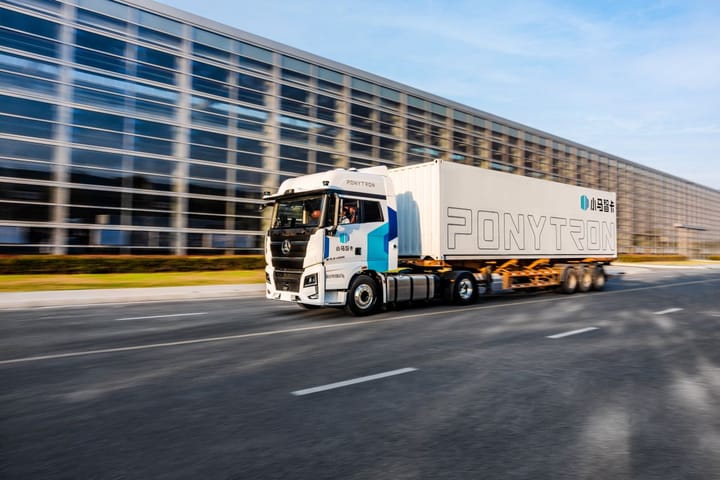
A Chinese autonomous vehicle developer is targeting 100,000 self-driving trucks in commercial operation by 2030, signaling intensifying competition in logistics automation. The timeline underscores a strategic shift: while robotaxi development has captured headlines, heavy-duty autonomous systems remain technically harder and commercially slower to deploy. This deployment target, if achieved, would represent a major inflection point for supply-chain AI, forcing fleet operators and regulators to reckon with autonomous freight at scale. The announcement reflects growing confidence in perception and planning systems for highway trucking, even as the sector lags passenger vehicle autonomy in public visibility.
Modelwire’s AI-generated summary of coverage from AI Business.
Modelwire analysis
Skeptical readOur AI-generated reading of the wider context and the next developments to watch.
The announcement doesn't clarify whether these 100,000 trucks assume full Level 4 autonomy or include driver-assist systems, nor does it address the regulatory pathway in China or export markets where such deployments would face different approval timelines.
This is largely disconnected from recent activity in foundational AI infrastructure. The Hugging Face embedding work from August reflects the industry's shift toward modular, composable AI components that can be fine-tuned for specific domains. Autonomous trucking will eventually depend on similar specialized perception models, but this announcement doesn't indicate whether the company is building proprietary end-to-end systems or adopting the open-source, componentized approach that's gaining traction elsewhere.
If the company publishes third-party validation of autonomous performance on Chinese highways (accident rates, disengagement frequency, weather robustness) within 18 months, the target becomes credible. Absence of such data by mid-2027 suggests the 100,000 figure is aspirational rather than backed by current system maturity.
This interpretation is generated from the summary above and the archive coverage cited below. Our methodology · Report an error
Coverage behind this analysis
These archive entries ground the connection in our analysis. They are ordered by source publication date, with links to our coverage and the original sources.
·Hugging Face
Hugging Face adds custom embedding exports to OlmoEarth Studio
Hugging Face has expanded OlmoEarth Studio with custom embedding export functionality, enabling researchers and practitioners to generate task-specific vector representations for downstream applications. This capability addresses a practical gap in the open-source geospatial AI ecosystem, allowing users to move beyond pre-trained embeddings toward domain-optimized representations without retraining from scratch. The move signals growing maturity in…
MentionsChinese autonomous vehicle company · autonomous trucks · logistics automation
How this coverage is produced
Modelwire uses AI to generate summaries and context from source headlines, snippets, and selected archive coverage. Automated checks do not verify every claim, and items are not routinely reviewed by a person before publication. Zacaria Solis operates the site. Read the linked source for the full evidence and report errors through our corrections process.
Modelwire summarizes, we don’t republish. AI Business originally reported this story as “Chinese Company Envisions 100,000 Self-Driving Trucks on Road by 2030”. The full content lives on aibusiness.com. If you’re a publisher and want a different summarization policy for your work, see our takedown page.