CoorDex: Coordinating Body and Hand Priors for Continuous Dexterous Humanoid Loco-Manipulation
Source published ·Modelwire updated
Original coverage: arXiv cs.LG ↗·How Modelwire adds context
The development
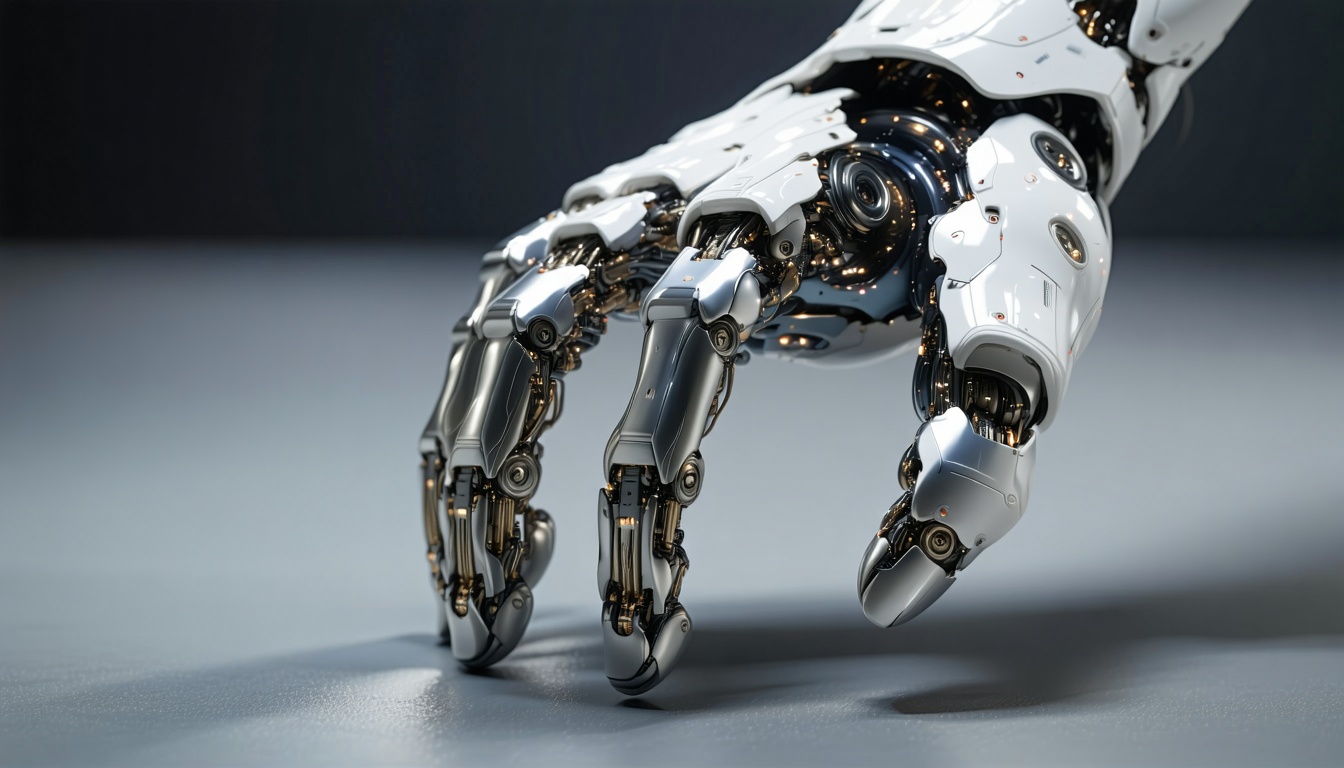
CoorDex addresses a fundamental constraint in embodied AI: the inability to perform complex manipulation while moving. Most humanoid systems treat locomotion and dexterous control as separate phases, but this work fuses them through a novel training pipeline that distills privileged body and hand teachers into frozen latent priors, then applies residual reinforcement learning for continuous whole-body coordination. The approach scales high-DoF hand control into real-time loco-manipulation, signaling progress toward robots that can fluidly integrate navigation and fine motor tasks without stop-and-go bottlenecks.
Modelwire’s AI-generated summary of coverage from arXiv cs.LG.
Modelwire analysis
ExplainerOur AI-generated reading of the wider context and the next developments to watch.
The architectural choice worth noting is the 'frozen latent priors' step: rather than jointly training everything end-to-end, CoorDex locks in separately learned body and hand representations before applying residual RL on top. This staged approach is a deliberate bet that modularity beats monolithic training when degrees of freedom get high enough to make joint optimization unstable.
This pairs naturally with AutoDex, covered the same day, which targets the data bottleneck upstream of exactly this kind of dexterous policy training. AutoDex automates real-world grasping data collection at scale; CoorDex addresses what you do with capable hand control once you have it, specifically how to keep it functional while the robot is also walking. Together they sketch two adjacent problems in a longer pipeline: getting enough manipulation data, then deploying manipulation skills without freezing in place. Neither paper solves the full loop alone, but the timing suggests the field is attacking these constraints in parallel rather than sequentially.
The real test is whether the frozen-prior approach holds up when the manipulation task requires reactive re-grasping mid-stride, not just pre-planned hand configurations. If follow-up work shows degraded performance on dynamic re-grasp benchmarks, the modularity tradeoff will need revisiting.
This interpretation is generated from the summary above and the archive coverage cited below. Our methodology · Report an error
Coverage behind this analysis
These archive entries ground the connection in our analysis. They are ordered by source publication date, with links to our coverage and the original sources.
·arXiv cs.LG
AutoDex: An Automated Real-World System for Dexterous Grasping Data Collection
AutoDex addresses a critical bottleneck in embodied AI: scaling real-world robotic manipulation data without human teleoperation overhead. The system automates the full collection loop, combining dense multi-camera perception to handle hand-object occlusion with collision-monitored execution and autonomous reset. This bridges the sim-to-real gap by replacing slow human operators with closed-loop hardware validation, enabling researchers to…
MentionsCoorDex · humanoid robotics · dexterous manipulation · reinforcement learning · motion tracking
How this coverage is produced
Modelwire uses AI to generate summaries and context from source headlines, snippets, and selected archive coverage. Automated checks do not verify every claim, and items are not routinely reviewed by a person before publication. Zacaria Solis operates the site. Read the linked source for the full evidence and report errors through our corrections process.
Modelwire summarizes, we don’t republish. The full content lives on arxiv.org. If you’re a publisher and want a different summarization policy for your work, see our takedown page.