Explanation of Dynamic Physical Field Predictions using WassersteinGrad: Application to Autoregressive Weather Forecasting
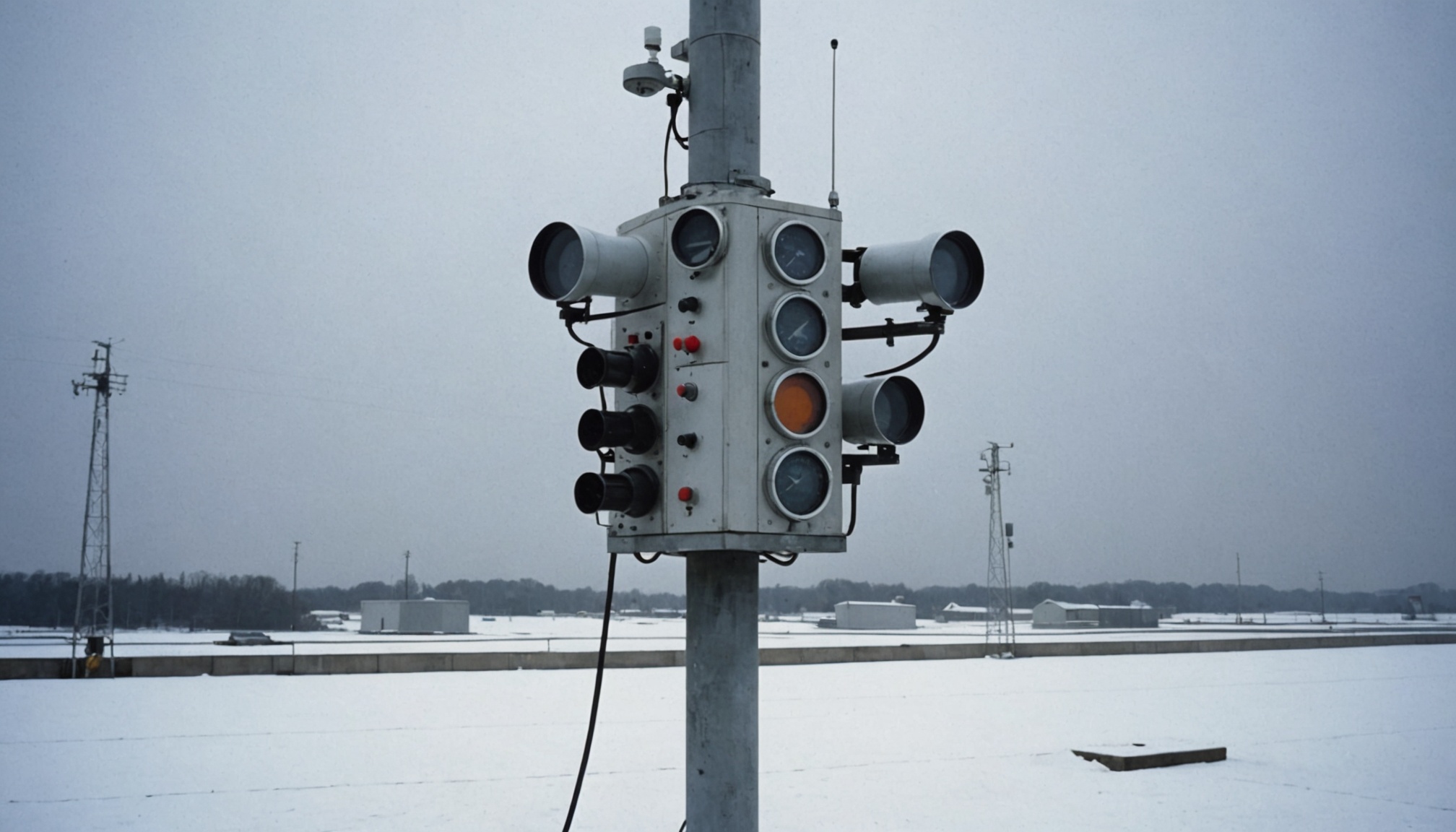
Researchers propose WassersteinGrad, a gradient-based method to explain predictions from autoregressive neural networks on dynamic physical fields like weather forecasting. The technique adapts existing attribution methods to handle high-dimensional spatiotemporal data, addressing the operational need for interpretability in AI systems deployed in safety-critical domains.
Modelwire context
ExplainerThe core challenge WassersteinGrad addresses is not just interpretability in general, but the specific problem of attributing predictions across time steps in autoregressive models, where errors compound and a single saliency map no longer cleanly maps to a single decision.
This sits within a cluster of interpretability work Modelwire has been tracking. The ORCA paper from mid-April tackled post-hoc interpretability for SVMs by expanding decision functions into explicit feature coordinates, and WassersteinGrad is solving an analogous problem one layer of complexity higher: not a static classifier but a model that feeds its own outputs back as inputs across time. The nonlinear separation principle paper from the same period is also relevant background, since it addresses stability conditions in recurrent architectures, which is precisely the class of model where attribution becomes ambiguous. Neither of those papers, however, dealt with physical field data or the operational pressure of safety-critical deployment, which is where WassersteinGrad is staking its claim.
The real test is whether WassersteinGrad attributions hold up against established weather forecast verification benchmarks like WeatherBench 2, specifically whether the highlighted regions correspond to meteorologically meaningful features that domain experts independently identify as causal.
Coverage we drew on
This analysis is generated by Modelwire’s editorial layer from our archive and the summary above. It is not a substitute for the original reporting. How we write it.
MentionsWassersteinGrad · SmoothGrad
Modelwire Editorial
This synthesis and analysis was prepared by the Modelwire editorial team. We use advanced language models to read, ground, and connect the day’s most significant AI developments, providing original strategic context that helps practitioners and leaders stay ahead of the frontier.
Modelwire summarizes, we don’t republish. The full content lives on arxiv.org. If you’re a publisher and want a different summarization policy for your work, see our takedown page.