Factory robots already outnumber the hype, regulation lags behind
Source published ·Modelwire updated
Original coverage: AI Business ↗·How Modelwire adds context
The development
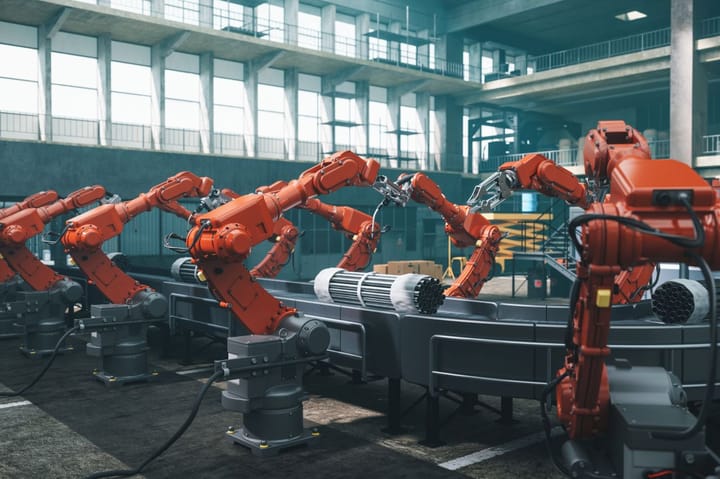
While venture capital and media attention fixate on humanoid robots as the next frontier, industrial automation has already achieved massive scale with millions of machines deployed across global manufacturing. The critical gap emerging is not technological but regulatory: existing robotic systems operate with fragmented safety standards and minimal oversight infrastructure. This mismatch between deployment velocity and governance frameworks poses systemic risk as automation deepens, suggesting that AI infrastructure policy must catch up to operational reality rather than chase speculative hardware.
Modelwire’s AI-generated summary of coverage from AI Business.
Modelwire analysis
Analyst takeOur AI-generated reading of the wider context and the next developments to watch.
The piece identifies that regulatory fragmentation, not robotics hardware maturity, is now the binding constraint on factory automation scaling. This reframes the actual bottleneck from engineering to governance infrastructure.
This connects directly to the pattern established in recent coverage around AI safety falling behind deployment velocity. OpenAI's GPT-6.1 Astra delay last month and the misalignment reporting portal both signal that frontier labs are beginning to treat safety and control as gatekeeping factors. Here, the same dynamic appears in industrial robotics: millions of machines already operate with minimal oversight, creating systemic risk that outpaces the humanoid hype cycle. The difference is that factory automation lacks even the basic disclosure infrastructure OpenAI has begun building. Enterprises betting on automation expansion now face a regulatory credibility gap that could reshape deployment timelines, similar to how behavioral safety testing is reshaping model release cadence.
Monitor whether OSHA or equivalent bodies in major manufacturing regions issue binding safety standards for autonomous factory systems within the next 12 months. If regulatory frameworks materialize before a major incident, it suggests governance is catching up; if a significant automation failure triggers emergency rulemaking instead, it confirms the lag thesis and signals higher downstream compliance costs for enterprises already deployed.
This interpretation is generated from the summary above and the archive coverage cited below. Our methodology · Report an error
Coverage behind this analysis
These archive entries ground the connection in our analysis. They are ordered by source publication date, with links to our coverage and the original sources.
·AI Business
OpenAI delays GPT-6.1 Astra over agent safety concerns
OpenAI's decision to postpone GPT-6.1 Astra signals a critical inflection point in how frontier labs manage autonomous agent deployment. The delay, triggered by safety testing failures, underscores the gap between capability scaling and runtime governance. This move matters because it validates a shift toward mandatory pre-release evaluation and enterprise-grade controls as table stakes for agent…
MentionsFactory automation systems · Industrial robotics · Manufacturing sector
How this coverage is produced
Modelwire uses AI to generate summaries and context from source headlines, snippets, and selected archive coverage. Automated checks do not verify every claim, and items are not routinely reviewed by a person before publication. Zacaria Solis operates the site. Read the linked source for the full evidence and report errors through our corrections process.
Modelwire summarizes, we don’t republish. AI Business originally reported this story as “Humanoid buildup overlooks the robots already running factories”. The full content lives on aibusiness.com. If you’re a publisher and want a different summarization policy for your work, see our takedown page.