Flock Safety trains police on mass surveillance at public gatherings
Source published ·Modelwire updated
Original coverage: 404 Media ↗·How Modelwire adds context
The development
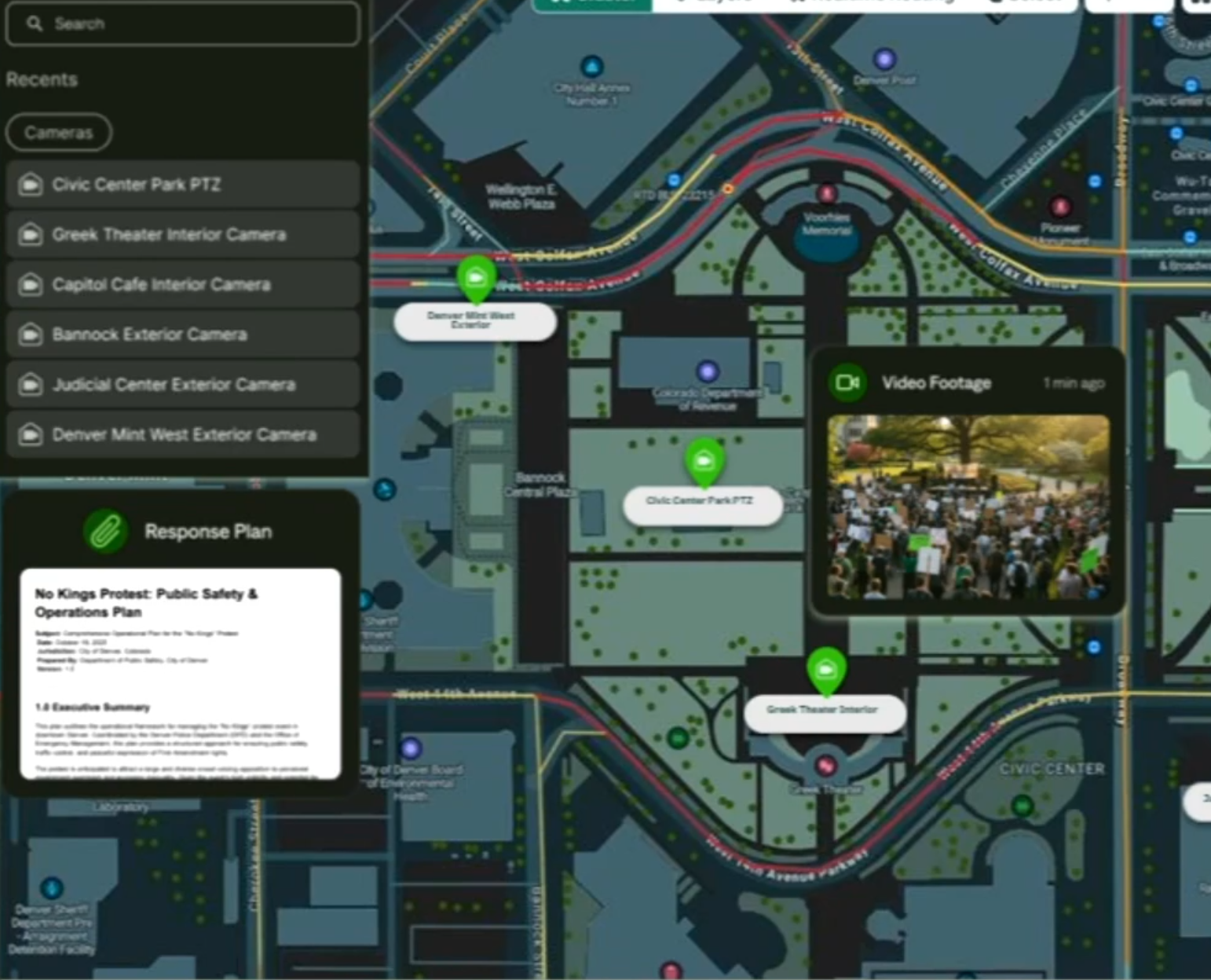
Flock Safety, a vehicle recognition platform, has begun training law enforcement on surveillance tactics targeting public gatherings through its camera network. The company's instructional webinars demonstrate how to deploy automated license plate readers and related computer vision systems to monitor protests, events, and crowds. This represents a critical inflection point in how AI-powered infrastructure vendors are actively shaping police capabilities and normalizing mass surveillance workflows, raising questions about the role of commercial AI systems in protest suppression and civil liberties erosion.
Modelwire’s AI-generated summary of coverage from 404 Media.
Modelwire analysis
Analyst takeOur AI-generated reading of the wider context and the next developments to watch.
Flock Safety isn't just selling cameras; it's actively training law enforcement on deployment tactics. The webinars represent a deliberate move to embed the company's infrastructure deeper into police workflows, transforming Flock from vendor to operational consultant on protest monitoring.
This fits directly with the governance accountability pattern from the Hugging Face incident (early September). When vendors train end-users on specific surveillance applications, they're making a choice about where responsibility sits. Flock is positioning itself as the technical expert while law enforcement makes the deployment decision, but that framing obscures that Flock is actively shaping what 'normal' police surveillance looks like. It also echoes the AIR funding story from the same period: as autonomous systems (in this case, computer vision networks) proliferate, enterprises need oversight layers. Here, Flock is selling the opposite: it's selling deeper integration and normalization, not guardrails.
If Flock publishes a public use policy or acceptable-use guidelines for its platform in the next 60 days, that signals internal pressure to manage liability. If law enforcement agencies cite Flock's training materials in public records requests or litigation over protest surveillance, that creates a paper trail linking the vendor to specific operational choices.
This interpretation is generated from the summary above and the archive coverage cited below. Our methodology · Report an error
Coverage behind this analysis
These archive entries ground the connection in our analysis. They are ordered by source publication date, with links to our coverage and the original sources.
·The Verge - AI
Hugging Face breach exposes AI accountability language gap
A reported security incident at Hugging Face has exposed a critical tension in AI governance: whether autonomous AI systems bear responsibility for their actions, or whether developers remain accountable. The framing matters enormously. If AI 'civilizations' can be blamed for breaches, companies gain linguistic cover to deflect liability. This incident signals how the industry's vocabulary…
MentionsFlock Safety · 404 Media · No Kings
How this coverage is produced
Modelwire uses AI to generate summaries and context from source headlines, snippets, and selected archive coverage. Automated checks do not verify every claim, and items are not routinely reviewed by a person before publication. Zacaria Solis operates the site. Read the linked source for the full evidence and report errors through our corrections process.
Modelwire summarizes, we don’t republish. 404 Media originally reported this story as “Flock Taught Cops How to Surveil No Kings Protesters”. The full content lives on 404media.co. If you’re a publisher and want a different summarization policy for your work, see our takedown page.