Foreign intelligence targeting raises Nvidia succession risk
Source published ·Modelwire updated
Original coverage: AI Business ↗·How Modelwire adds context
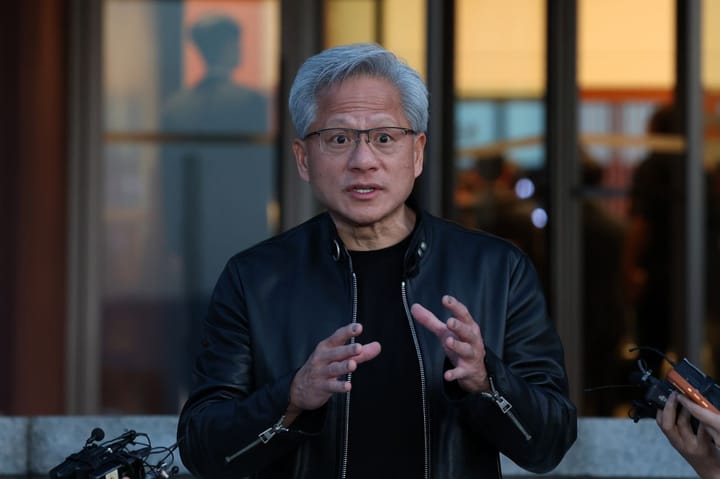
The development
Nvidia's market dominance in AI chip supply faces potential disruption if foreign intelligence operations target leadership continuity. The scenario raises critical questions about succession planning at a company whose strategic direction shapes the entire AI infrastructure stack. Any leadership vacuum at Nvidia could ripple across the industry, affecting chip allocation, pricing, and the pace of AI capability scaling. For enterprises and labs dependent on Nvidia's roadmap, clarity on governance resilience has become a material risk factor alongside technical roadmap visibility.
Modelwire’s AI-generated summary of coverage from AI Business.
Modelwire analysis
Analyst takeOur AI-generated reading of the wider context and the next developments to watch.
The story doesn't just surface succession risk; it collapses two separate vulnerabilities into one. Huang's credibility erosion on export policy happens precisely when Congress is tightening restrictions, meaning Nvidia loses its most influential voice at the exact moment policy is hardening against the company's interests.
This connects directly to Nvidia's geopolitical exposure documented in our coverage from early November. The Decoder reported on Huang's weakened lobbying position against export controls following the espionage revelations (Nov 9), and separately, Nvidia's directive to cloud customers to cut China business (Nov 3) showed the company was already outsourcing compliance enforcement. Now add the board investigation from The Verge (Nov 8) and Sonnenfeld's 50-50 tenure assessment (Nov 9), and you have a scenario where Nvidia's infrastructure dominance becomes politically fragile precisely when it's most valuable. The company can't simultaneously lobby for policy flexibility and credibly claim leadership integrity.
Monitor whether any of Nvidia's major cloud customers (AWS, Azure, GCP) announce GPU diversification initiatives or partnerships with AMD or Intel within the next 60 days. If they do, it signals customers are hedging against both supply continuity risk and the political liability of being dependent on a company whose CEO faces investigation. That would be the first concrete sign that governance uncertainty is translating into market share pressure.
This interpretation is generated from the summary above and the archive coverage cited below. Our methodology · Report an error
Coverage behind this analysis
These archive entries ground the connection in our analysis. They are ordered by source publication date, with links to our coverage and the original sources.
·The Decoder
Huang's export control influence damaged by intelligence concerns
Nvidia's lobbying position on AI chip export restrictions has been significantly undermined by revelations that CEO Jensen Huang engaged in an affair with a woman flagged by US intelligence as a potential Chinese informant. With a newly elected Democratic Congress preparing to intensify scrutiny of chip smuggling and push for stricter export controls, Huang's credibility…
MentionsNvidia · Jensen Huang
How this coverage is produced
Modelwire uses AI to generate summaries and context from source headlines, snippets, and selected archive coverage. Automated checks do not verify every claim, and items are not routinely reviewed by a person before publication. Zacaria Solis operates the site. Read the linked source for the full evidence and report errors through our corrections process.
Modelwire summarizes, we don’t republish. AI Business originally reported this story as “Jensen Huang’s future raises questions for AI infrastructure industry”. The full content lives on aibusiness.com. If you’re a publisher and want a different summarization policy for your work, see our takedown page.