Google expands TPU lineup with encrypted and high-memory variants
Source published ·Modelwire updated
Original coverage: The Decoder ↗·How Modelwire adds context
The development
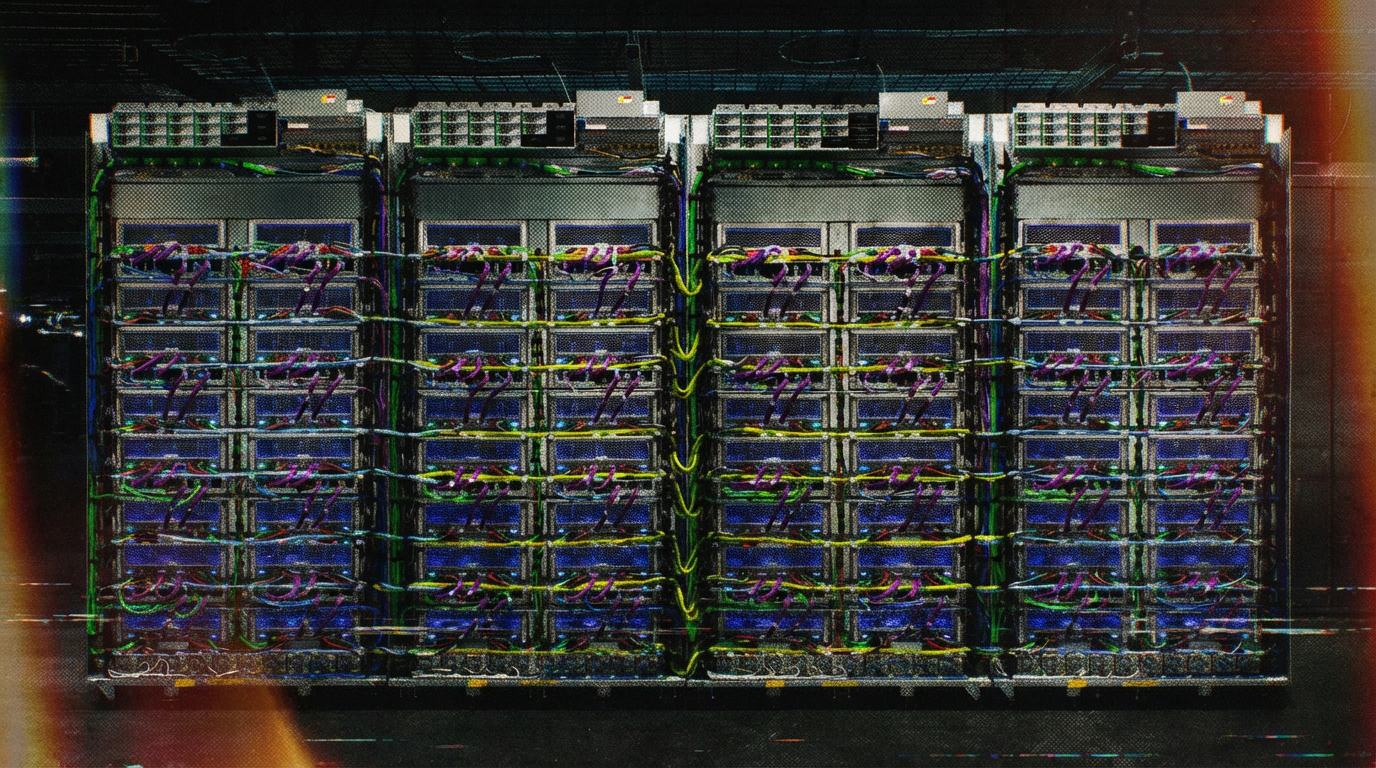
Google is shipping specialized TPU variants designed to compete directly with Nvidia's GPU dominance in AI infrastructure. The TPU 8tx adds encrypted processing for sensitive workloads, while the TPU 8i Max stacks two chips for doubled performance and memory on a single package. With nearly 100 external customers now deployed, Google is moving beyond internal use to position custom silicon as a viable alternative for enterprises seeking to reduce Nvidia dependency. This marks a strategic shift in how cloud providers are building differentiated AI infrastructure.
Modelwire’s AI-generated summary of coverage from The Decoder.
Modelwire analysis
Analyst takeOur AI-generated reading of the wider context and the next developments to watch.
The detail that deserves more attention than it gets is the customer number: nearly 100 external deployments means Google is no longer testing the market, it's actively building a customer base that creates switching costs and data on real workload performance outside Google's own infrastructure.
This move lands in a context where Nvidia's grip on enterprise AI hardware is visibly under pressure from multiple directions. The Decoder's November 3rd reporting on Nvidia steering cloud customers away from Chinese business showed how Nvidia is actively managing its customer relationships as a compliance instrument, which creates exactly the kind of vendor-dependency friction that makes a credible alternative more attractive to cloud operators. The espionage reporting around Nvidia's chip roadmap (The Verge, early November) further illustrates how much strategic value sits in whoever controls the dominant AI silicon. Google shipping four distinct TPU variants in a single year is a direct response to that concentration: it signals a product cadence designed to close the gap on workload coverage, not just raw performance.
Watch whether any of the roughly 100 external TPU customers are publicly named in the next two quarters. Named enterprise references would confirm real workload displacement from Nvidia; continued anonymity suggests the deployments remain experimental or contractually constrained.
This interpretation is generated from the summary above and the archive coverage cited below. Our methodology · Report an error
Coverage behind this analysis
These archive entries ground the connection in our analysis. They are ordered by source publication date, with links to our coverage and the original sources.
·The Decoder
Nvidia directs cloud providers to limit Chinese customer exposure
Nvidia is actively steering cloud service providers away from serving Chinese clients, signaling a shift in how AI infrastructure vendors navigate geopolitical constraints. This move reflects mounting pressure on semiconductor suppliers to comply with U.S. export controls while managing relationships with major cloud operators who depend on Nvidia's GPUs for AI workloads. The directive creates…
MentionsGoogle · TPU 8 · TPU 8tx · TPU 8i Max · Nvidia
How this coverage is produced
Modelwire uses AI to generate summaries and context from source headlines, snippets, and selected archive coverage. Automated checks do not verify every claim, and items are not routinely reviewed by a person before publication. Zacaria Solis operates the site. Read the linked source for the full evidence and report errors through our corrections process.
Modelwire summarizes, we don’t republish. The Decoder originally reported this story as “Google ships four TPU variants in one year as it ramps up competition with Nvidia”. The full content lives on the-decoder.com. If you’re a publisher and want a different summarization policy for your work, see our takedown page.