Knightscope retreats from fully autonomous security, reintegrates human guards
Source published ·Modelwire updated
Original coverage: 404 Media ↗·How Modelwire adds context
The development
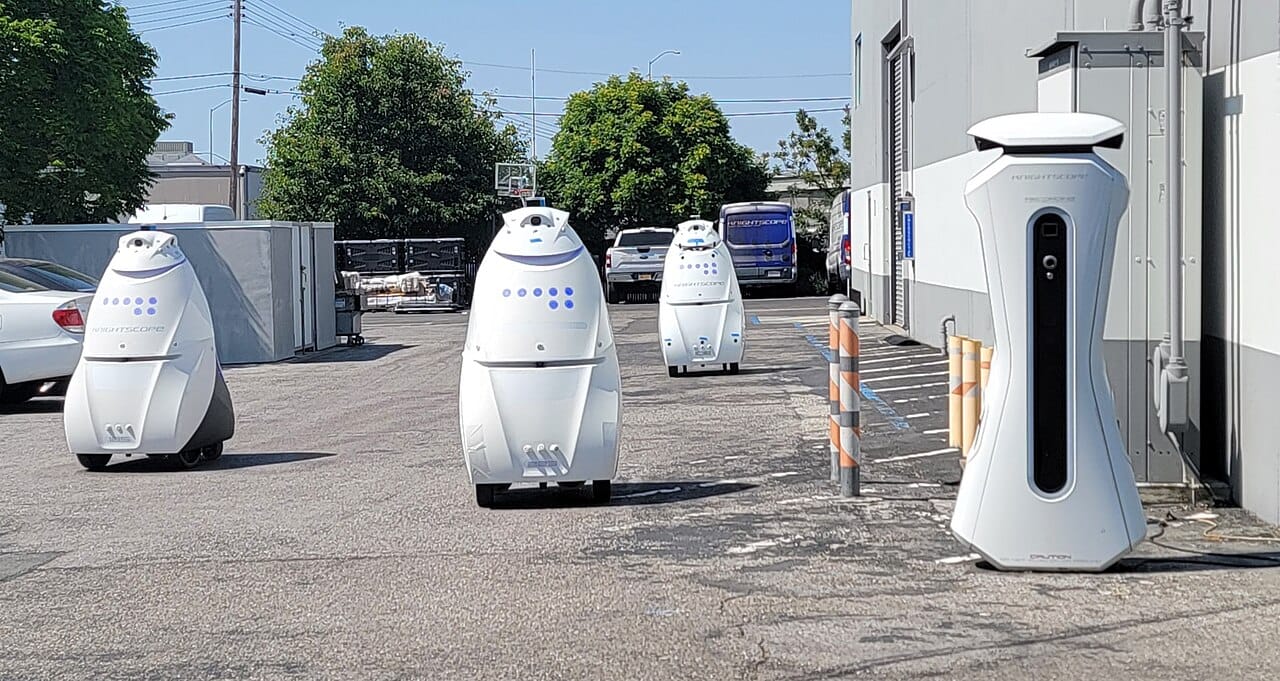
Autonomous security robotics, once positioned as a labor-replacement technology, is facing real-world deployment friction. Knightscope and peers are reversing course after contract cancellations, reintroducing human guards into their operational model. This signals a critical gap between AI/robotics capability and practical adoption: autonomous systems struggle with edge cases, liability, and client trust in high-stakes environments. The pivot underscores a broader pattern where automation hype collides with the messy reality of physical-world deployment, forcing companies to hybrid human-machine workflows rather than pure displacement.
Modelwire’s AI-generated summary of coverage from 404 Media.
Modelwire analysis
Analyst takeOur AI-generated reading of the wider context and the next developments to watch.
Knightscope's pivot isn't just a product adjustment; it's an admission that the labor-replacement thesis was commercially unviable even as the technology worked. The real story is which clients demanded humans back and why, which determines whether this is a temporary concession or a permanent market ceiling.
This connects directly to the Flock Safety pattern from early August. Just as Flock's sales team misrepresented surveillance capabilities to municipalities (per the 404 Media reporting), robotics vendors appear to have oversold autonomy to security clients. The gap between vendor claims and operational reality keeps surfacing across AI infrastructure. Add the Trump tariff pressure on robotics hardware from the same week, and Knightscope faces a triple bind: eroded client trust, policy friction on supply chains, and forced labor reintroduction that kills their unit economics. The hybrid model may be the only path to viability, but it also means these companies compete on service delivery, not technological differentiation.
If Knightscope's reintroduced human-guard contracts maintain higher retention rates than their autonomous-only deployments over the next two quarters, that confirms the hybrid model is a sustainable positioning rather than a temporary retreat. If they don't, expect further contract cancellations and potential consolidation in the sector.
This interpretation is generated from the summary above and the archive coverage cited below. Our methodology · Report an error
Coverage behind this analysis
These archive entries ground the connection in our analysis. They are ordered by source publication date, with links to our coverage and the original sources.
·404 Media
Flock Safety coached police to lobby for company interests over public concerns
Flock Safety, a surveillance technology vendor, circulated internal guidance coaching law enforcement agencies on how to lobby elected officials in favor of the company's interests rather than public concerns. The leaked playbook reveals a systematic effort to instrumentalize police departments as advocacy proxies, blurring the line between vendor interests and civic governance. This pattern reflects…
MentionsKnightscope · 404 Media
How this coverage is produced
Modelwire uses AI to generate summaries and context from source headlines, snippets, and selected archive coverage. Automated checks do not verify every claim, and items are not routinely reviewed by a person before publication. Zacaria Solis operates the site. Read the linked source for the full evidence and report errors through our corrections process.
Modelwire summarizes, we don’t republish. 404 Media originally reported this story as “The Roboguard Revolution is Short-Circuiting”. The full content lives on 404media.co. If you’re a publisher and want a different summarization policy for your work, see our takedown page.