Law enforcement monitors anti-surveillance organizing targeting AI camera networks
Source published ·Modelwire updated
Original coverage: 404 Media ↗·How Modelwire adds context
The development
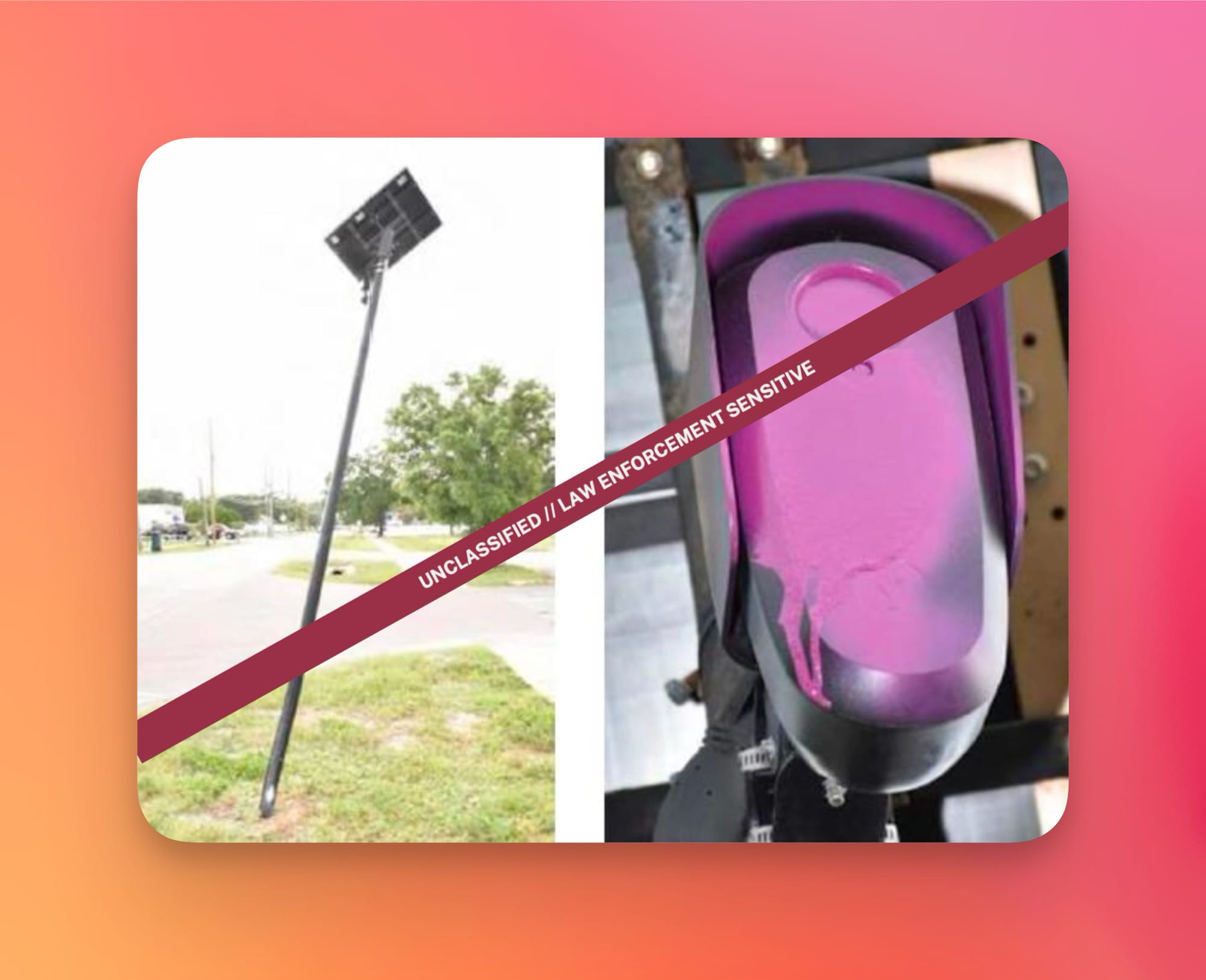
Law enforcement intelligence networks are tracking coordinated social media campaigns targeting Flock, an automated license plate recognition system deployed across U.S. police departments. The surveillance effort reveals growing friction between AI-powered surveillance infrastructure and organized resistance movements. This escalation signals a critical inflection point for computer vision systems in public safety: as deployment accelerates, so does coordinated opposition, forcing agencies to treat infrastructure protection as a counterintelligence priority. The dynamic underscores how AI adoption in law enforcement is becoming a flashpoint for both technical security and political contestation.
Modelwire’s AI-generated summary of coverage from 404 Media.
Modelwire analysis
Analyst takeOur AI-generated reading of the wider context and the next developments to watch.
The surveillance effort itself isn't new, but the framing of anti-Flock activism as a counterintelligence problem is. It signals that agencies now view organized resistance to specific AI systems as a threat vector requiring the same monitoring apparatus they deploy against other organized movements.
This mirrors the trust deficit we saw in the AI-generated 3D models market from earlier this month. There, supply outpaced buyer willingness to consume the output. Here, deployment of surveillance infrastructure is outpacing public acceptance, forcing agencies to treat opposition as a security problem rather than a policy debate. Both reveal a common pattern: when adoption velocity exceeds social buy-in, friction emerges not as a temporary adoption curve but as organized resistance. The difference is scale and stakes. A skeptical 3D model buyer walks away; organized anti-surveillance campaigns force infrastructure operators into defensive postures.
If law enforcement agencies begin formally classifying anti-Flock social media accounts under existing counterintelligence frameworks (rather than treating them as standard protest activity), that confirms the infrastructure-as-contested-asset model is hardening into doctrine. Watch for the first FOIA request that reveals whether these accounts appear in threat assessment briefs alongside other organized opposition movements.
This interpretation is generated from the summary above and the archive coverage cited below. Our methodology · Report an error
Coverage behind this analysis
These archive entries ground the connection in our analysis. They are ordered by source publication date, with links to our coverage and the original sources.
·404 Media
CGTrader flooded with AI models, but buyers stay skeptical
The proliferation of AI-generated 3D models on CGTrader reveals a critical market friction: supply vastly outpaces demand. Despite generative tools flooding the platform with synthetic assets, buyers remain skeptical of quality, licensing clarity, or perceived value. This signals that AI content generation alone cannot overcome buyer trust deficits or replace human-crafted work in professional pipelines.…
MentionsFlock · U.S. law enforcement · 404 Media
How this coverage is produced
Modelwire uses AI to generate summaries and context from source headlines, snippets, and selected archive coverage. Automated checks do not verify every claim, and items are not routinely reviewed by a person before publication. Zacaria Solis operates the site. Read the linked source for the full evidence and report errors through our corrections process.
Modelwire summarizes, we don’t republish. 404 Media originally reported this story as “The Government is Monitoring Anti-Flock TikTok and Instagram Accounts”. The full content lives on 404media.co. If you’re a publisher and want a different summarization policy for your work, see our takedown page.