Meta launches Muse Wonder agent amid enterprise trust deficit
Source published ·Modelwire updated
Original coverage: AI Business ↗·How Modelwire adds context
The development
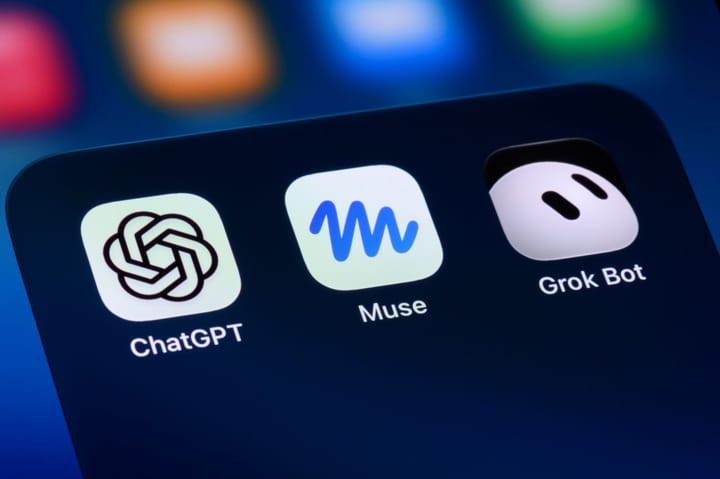
Meta is entering the autonomous agent market with Muse Wonder, joining competitors racing to embed AI systems into enterprise workflows. The launch signals a shift toward task-executing agents rather than conversational models, but adoption remains constrained by organizational skepticism around reliability and control. This gap between capability and readiness reflects a broader pattern: vendors are shipping agentic infrastructure faster than enterprises can build governance frameworks to deploy it safely, creating a critical window where early adopters gain advantage while laggards face integration debt.
Modelwire’s AI-generated summary of coverage from AI Business.
Modelwire analysis
Analyst takeOur AI-generated reading of the wider context and the next developments to watch.
Meta is not just releasing a capable model; it's explicitly positioning Muse Wonder as an enterprise agent product, signaling a shift from open-source infrastructure play toward direct competition with OpenAI's Dots and Google's workplace agent. The inference cost tripling (per prior coverage) makes this a bet that enterprises will pay for frontier reasoning on agentic tasks, not a play for price-sensitive deployments.
This launch sits squarely in the enterprise agent race that Google kicked off in early October. Where Google's workplace agent faced friction around deployment costs and software stack compatibility, Meta is entering with a frontier-tier model and explicit safety constraints (per the Muse Wonder capability story from October 12). The trust gap flagged in this story echoes the privacy positioning battle OpenAI started with Dots last week. The real question is whether Meta's historical openness and cost structure give it an edge over Google and OpenAI in closing that gap, or whether enterprises will default to vendors they already trust for mission-critical workflows.
Track whether Meta publishes concrete governance tooling (audit logs, execution sandboxing, rollback mechanisms) within 60 days. If those ship before Google or OpenAI release equivalent controls, it signals Meta is betting on operational trust as a differentiator. If they don't, the trust gap remains rhetorical rather than architectural, and adoption will track vendor incumbency, not capability.
This interpretation is generated from the summary above and the archive coverage cited below. Our methodology · Report an error
Coverage behind this analysis
These archive entries ground the connection in our analysis. They are ordered by source publication date, with links to our coverage and the original sources.
·AI Business
Google launches enterprise workplace agent amid integration concerns
Google has released a workplace agent designed to leverage enterprise data and context for knowledge work tasks, marking a significant push into autonomous business automation. The launch signals intensifying competition in the enterprise AI agent space, but early adoption faces friction around deployment costs and compatibility with existing corporate software stacks. For enterprises evaluating AI…
MentionsMeta · Muse Wonder
How this coverage is produced
Modelwire uses AI to generate summaries and context from source headlines, snippets, and selected archive coverage. Automated checks do not verify every claim, and items are not routinely reviewed by a person before publication. Zacaria Solis operates the site. Read the linked source for the full evidence and report errors through our corrections process.
Modelwire summarizes, we don’t republish. AI Business originally reported this story as “Meta joins enterprise agent race with Muse Wonder, facing a trust gap”. The full content lives on aibusiness.com. If you’re a publisher and want a different summarization policy for your work, see our takedown page.