Neura Robotics expands embodied AI data collection with Aachen facility
Source published ·Modelwire updated
Original coverage: AI Business ↗·How Modelwire adds context
The development
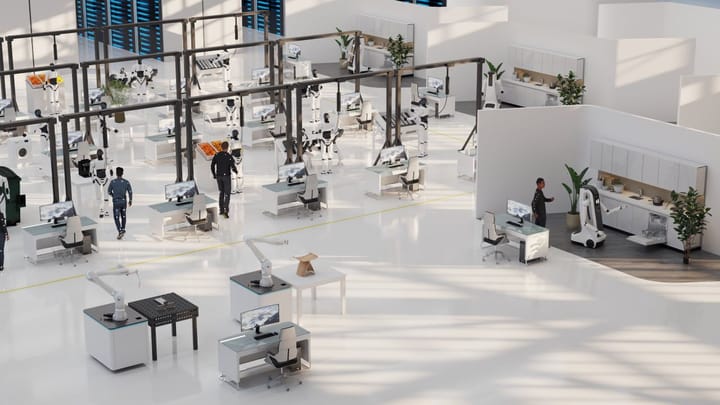
Neura Robotics is expanding its infrastructure for collecting embodied AI training data by establishing a dedicated facility at RWTH Aachen University. This move signals intensifying competition in the physical AI space, where companies are racing to accumulate diverse robotic interaction datasets needed to train next-generation models capable of real-world manipulation and reasoning. The partnership with a top-tier research institution underscores how robotics firms are embedding themselves within academic ecosystems to scale data collection while maintaining research credibility. For the AI landscape, this reflects a critical bottleneck: as foundation models plateau on text and synthetic data, the scarcity of high-quality embodied training data has become a key differentiator.
Modelwire’s AI-generated summary of coverage from AI Business.
Modelwire analysis
Analyst takeOur AI-generated reading of the wider context and the next developments to watch.
Neura isn't just collecting data; it's outsourcing that operation to a university partner. This model (dedicated facility at an academic institution rather than in-house) is the actual news, as it trades capital expenditure and hiring burden for research credibility and potential access to student labor and institutional compute.
This is largely disconnected from recent activity in the space, which has focused on foundation model releases and benchmark competitions. The embodied AI bottleneck Neura is addressing belongs to a different layer: the infrastructure race that precedes model training. We haven't yet covered the institutional partnership model as a competitive vector in robotics data collection, so this marks the first signal that companies are treating academic embedding as a scaling strategy rather than a one-off collaboration.
Monitor whether other robotics firms (Boston Dynamics, Figure, Sanctuary) announce similar university partnerships within the next 12 months. If three or more follow suit, the academic facility model becomes standard practice; if none do, Neura's approach may reflect capital constraints rather than strategic advantage.
This interpretation is generated from the summary above and available source metadata. Our methodology · Report an error
MentionsNeura Robotics · RWTH Aachen University
How this coverage is produced
Modelwire uses AI to generate summaries and context from source headlines, snippets, and selected archive coverage. Automated checks do not verify every claim, and items are not routinely reviewed by a person before publication. Zacaria Solis operates the site. Read the linked source for the full evidence and report errors through our corrections process.
Modelwire summarizes, we don’t republish. AI Business originally reported this story as “Neura Robotics to Open Physical AI Training Center”. The full content lives on aibusiness.com. If you’re a publisher and want a different summarization policy for your work, see our takedown page.