Nvidia leadership crisis exposes enterprise ROI skepticism
Source published ·Modelwire updated
Original coverage: AI Business ↗·How Modelwire adds context
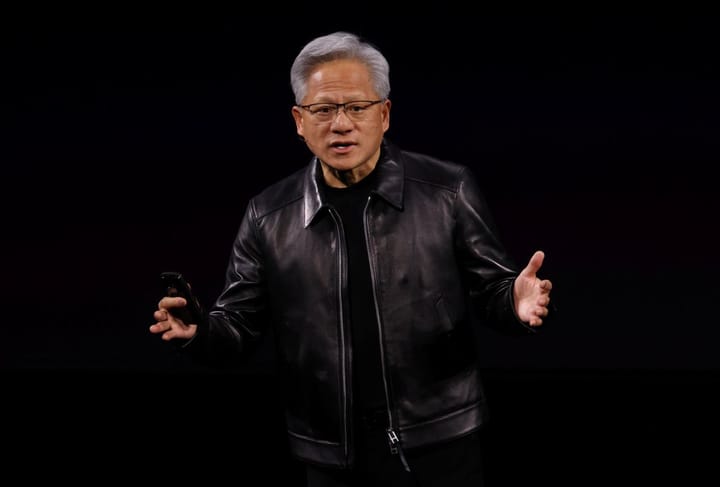
The development
Nvidia's leadership upheaval signals deeper structural concerns within enterprise AI adoption. While the GPU maker's market position remains intact, the incident underscores a critical gap between vendor promises and measurable business returns. Enterprises are increasingly scrutinizing AI spending as deployment costs mount without clear productivity gains or revenue attribution. This tension between hype and demonstrated ROI is reshaping how organizations evaluate infrastructure investments and vendor relationships, forcing the industry to move beyond capability benchmarks toward concrete financial accountability.
Modelwire’s AI-generated summary of coverage from AI Business.
Modelwire analysis
Analyst takeOur AI-generated reading of the wider context and the next developments to watch.
The summary frames this as an ROI accountability story, but the real news is organizational: Nvidia faces a leadership transition at the exact moment when its centralized decision-making on chip allocation, pricing, and roadmap has become a systemic chokepoint for the entire industry. This is a governance failure at a monopoly vendor, not a customer skepticism story.
Our coverage from the past three days has consistently flagged that Huang consolidated unprecedented power with no documented succession plan (WIRED, Nov 12). The Verge and AI Business both noted that leadership instability at Nvidia carries outsized weight for GPU supply, pricing, and strategic direction for foundation labs and cloud providers. This article adds the enterprise angle: organizations are now weaponizing ROI scrutiny to distance themselves from a vendor whose leadership credibility has collapsed. The scandal doesn't create the ROI gap; it just makes it politically safe for procurement teams to act on doubts they already had.
If Nvidia announces a successor from outside the company (not an internal promotion) within 60 days, that signals the board is prioritizing external credibility over continuity. If AMD or Intel announce major design wins with enterprises citing 'vendor stability' as a factor before Q1 2027, that confirms competitors are exploiting the window. Watch whether Nvidia's next quarterly guidance includes any language about customer concentration risk or delayed orders.
This interpretation is generated from the summary above and the archive coverage cited below. Our methodology · Report an error
Coverage behind this analysis
These archive entries ground the connection in our analysis. They are ordered by source publication date, with links to our coverage and the original sources.
·The Verge - AI
Huang's personal crisis exposes Nvidia's succession vacuum
Jensen Huang's personal conduct is now a material governance risk for Nvidia at a moment when the chipmaker's centralized leadership structure leaves the company vulnerable to succession disruption. Huang has consolidated unprecedented power as Nvidia's sole CEO in its history, with no documented plan for continuity. The convergence of personal scandal and organizational fragility matters…
MentionsNvidia · Jensen Huang
How this coverage is produced
Modelwire uses AI to generate summaries and context from source headlines, snippets, and selected archive coverage. Automated checks do not verify every claim, and items are not routinely reviewed by a person before publication. Zacaria Solis operates the site. Read the linked source for the full evidence and report errors through our corrections process.
Modelwire summarizes, we don’t republish. AI Business originally reported this story as “Jensen Huang’s scandal-fueled ouster exposes enterprise doubts about AI”. The full content lives on aibusiness.com. If you’re a publisher and want a different summarization policy for your work, see our takedown page.