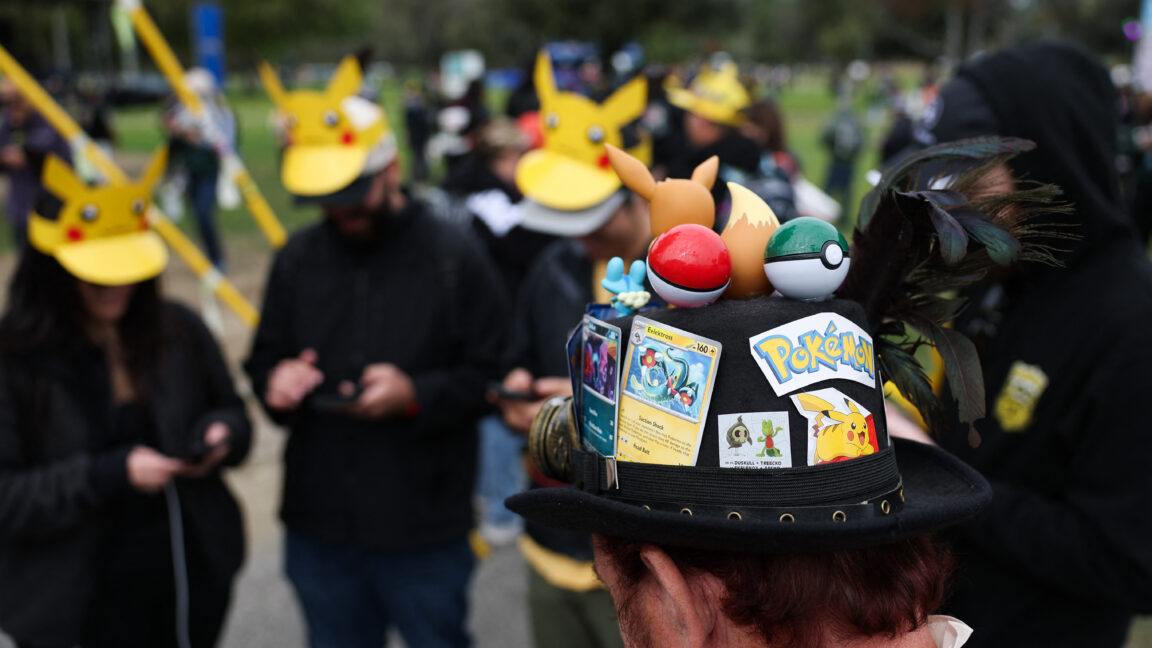
Pokémon Go players unwittingly contributed to tech with military drone uses
Source published ·Modelwire updated
Original coverage: Ars Technica - AI ↗·How Modelwire adds context
The development
Pokémon Go's massive location dataset, collected from millions of players over years, has become a training resource for AI systems with dual-use applications including military drone navigation. The incident highlights a critical tension in AI infrastructure: consumer apps generate vast geospatial training corpora that become valuable for both commercial and defense AI, often without explicit user consent or awareness. This raises questions about data provenance in foundation model training and whether gaming platforms should be treated as critical infrastructure for AI development.
Modelwire’s AI-generated summary of coverage from Ars Technica - AI.
Modelwire analysis
ExplainerOur AI-generated reading of the wider context and the next developments to watch.
The buried detail here is not that consumer data ends up in AI training, which is widely understood, but that geospatial data collected through gamified mechanics is particularly valuable for drone navigation because it encodes real-world traversability and landmark density at a scale no defense contractor could replicate independently.
This is largely disconnected from recent activity in our archive, as we have no prior coverage to anchor it to. It belongs, however, to a broader and underreported conversation about data provenance in foundation model training, specifically the gap between what terms-of-service agreements permit and what users reasonably expect when they open a consumer app. That gap has appeared in debates around web scraping and synthetic data, but the geospatial angle is distinct because the downstream application (autonomous navigation in contested environments) carries physical-world consequences that text or image data typically does not.
Watch whether Niantic or a comparable location-data company faces a formal regulatory inquiry under GDPR or a US state privacy law within the next 12 months specifically citing military end-use, since that would force a legal definition of whether gamified data collection constitutes informed consent for dual-use AI training.
This interpretation is generated from the summary above and available source metadata. Our methodology · Report an error
MentionsPokémon Go · Niantic · Ars Technica
How this coverage is produced
Modelwire uses AI to generate summaries and context from source headlines, snippets, and selected archive coverage. Automated checks do not verify every claim, and items are not routinely reviewed by a person before publication. Zacaria Solis operates the site. Read the linked source for the full evidence and report errors through our corrections process.
Modelwire summarizes, we don’t republish. The full content lives on arstechnica.com. If you’re a publisher and want a different summarization policy for your work, see our takedown page.