SHOVIR: A Benchmark for Evaluating Vision Shortcut Learning in Radiology Report Generation
Source published ·Modelwire updated
Original coverage: arXiv cs.CL ↗·How Modelwire adds context
The development
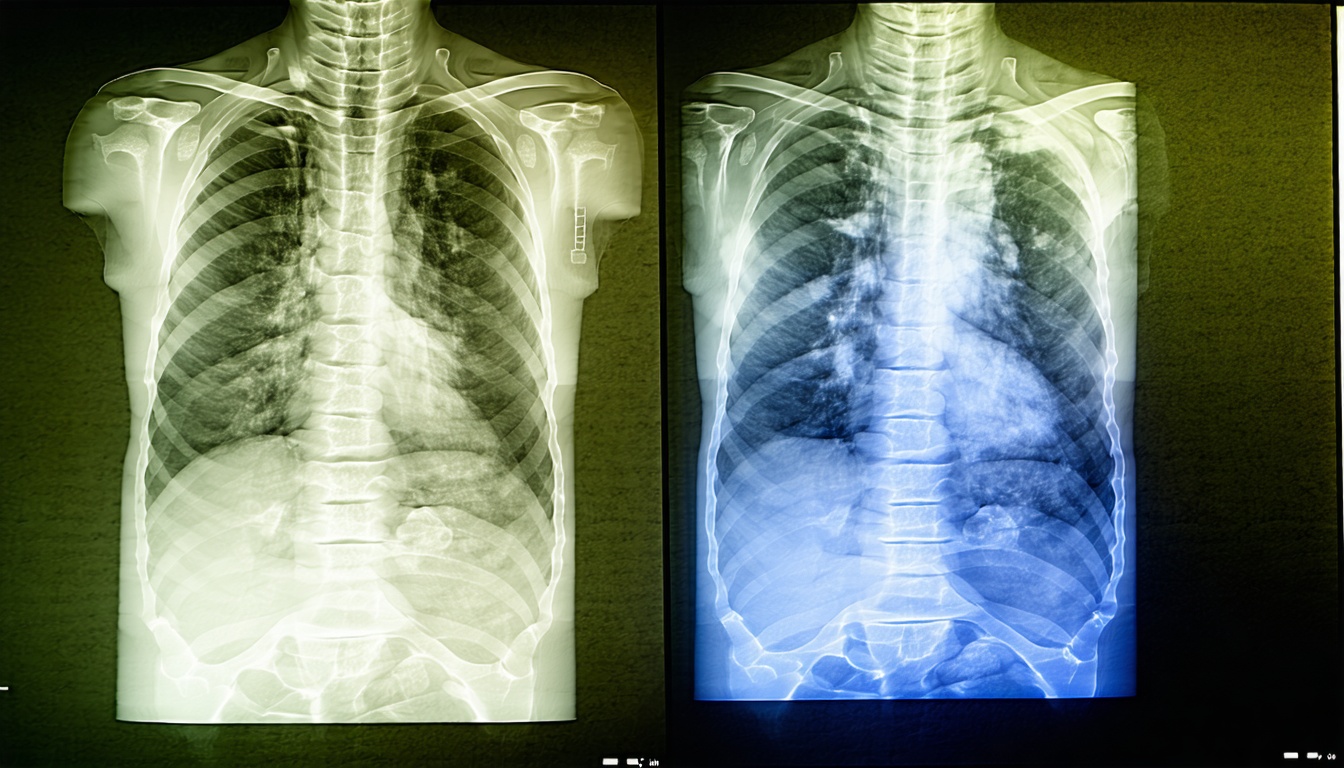
Researchers have identified a critical blind spot in how radiology AI systems are evaluated. Current benchmarks reward models for generating clinically plausible reports even when those outputs don't reflect actual pathology visible in images, a failure mode enabled by learned statistical shortcuts rather than genuine visual reasoning. SHOVIR, a new benchmark built on spatially annotated chest X-ray datasets with disease-level labels, forces models to prove diagnostic claims are grounded in image evidence through targeted occlusion experiments. This work exposes a fundamental gap between metric performance and clinical reliability in vision-language models, with direct implications for deployment safety in medical imaging.
Modelwire’s AI-generated summary of coverage from arXiv cs.CL.
Modelwire analysis
ExplainerOur AI-generated reading of the wider context and the next developments to watch.
The deeper problem SHOVIR surfaces is not just that models hallucinate findings, but that existing evaluation pipelines have no mechanism to distinguish a correct report generated from genuine image reasoning from one generated from dataset priors. Spatial occlusion is the forcing function that makes that distinction testable.
This connects directly to the EvalSafetyGap framework covered the same day, which argues that evaluation metrics and safety signals can show improvement while the underlying capabilities they are supposed to measure remain unverified. SHOVIR is essentially a domain-specific instantiation of that exact failure mode: radiology VLMs score well on standard metrics while the measurement instrument itself is blind to shortcut learning. The distributionally robust reconstruction work from the same period adds a complementary angle, since both papers are responding to the same underlying problem of models that perform well in training distributions but fail when deployment conditions change.
Watch whether the major radiology VLM developers (Microsoft, Google, Nuance) adopt SHOVIR in published evaluations within the next 12 months. If they do not, that silence will itself be informative about how the field weighs benchmark inconvenience against deployment safety claims.
This interpretation is generated from the summary above and the archive coverage cited below. Our methodology · Report an error
Coverage behind this analysis
These archive entries ground the connection in our analysis. They are ordered by source publication date, with links to our coverage and the original sources.
·arXiv cs.CL
EvalSafetyGap: A Hybrid Survey and Conceptual Framework for LLM Evaluation-Safety Failures
A new hybrid survey and audit framework exposes a critical blind spot in LLM development: evaluation metrics and safety signals can show improvement while the underlying capabilities and risks they measure remain unverified. Spanning eight measurement domains from benchmark validity to mechanistic interpretability across a decade of research, EvalSafetyGap identifies where the gap between reported…
MentionsSHOVIR · MIMIC-CXR · PadChest-GR · CheXpert · Vision-Language Models · Radiology Report Generation
How this coverage is produced
Modelwire uses AI to generate summaries and context from source headlines, snippets, and selected archive coverage. Automated checks do not verify every claim, and items are not routinely reviewed by a person before publication. Zacaria Solis operates the site. Read the linked source for the full evidence and report errors through our corrections process.
Modelwire summarizes, we don’t republish. The full content lives on arxiv.org. If you’re a publisher and want a different summarization policy for your work, see our takedown page.