Skild AI's single-video robot learning cuts deployment friction
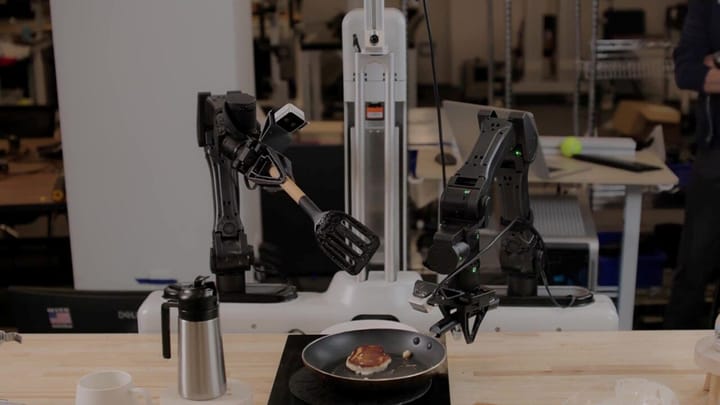
Skild AI's single-video learning capability represents a meaningful step toward reducing the engineering overhead in robot deployment. By enabling machines to acquire new behaviors from minimal visual examples, the startup addresses a critical bottleneck in scaling physical AI systems beyond controlled lab environments. Nvidia's backing signals confidence in this approach as a pathway to general-purpose robotics, where adaptability across diverse tasks becomes economically viable. This development matters because it shifts the labor model for robot training from manual programming toward data-driven inference, potentially accelerating adoption in manufacturing, logistics, and service sectors where task variety has historically required expensive retraining cycles.
Modelwire context
Skeptical readThe announcement doesn't clarify whether Skild's approach works across arbitrary visual conditions or requires curated input. Nvidia's backing is framed as validation, but it's also a signal that the company needs external credibility for a capability that remains unproven at scale outside controlled settings.
This story sits apart from recent coverage on AI infrastructure and governance. The California data center transparency mandate (late September) addresses the physical resource constraints that will ultimately limit how many robots can be trained and deployed simultaneously. Skild's efficiency claim is meaningless if the underlying compute infrastructure faces regulatory friction that drives up operational costs and fragmentation across regions. The robot learning problem is orthogonal to the infrastructure problem, but they're not independent.
If Skild publishes results on tasks outside its training domain (different lighting, camera angles, object categories) within the next six months, the single-video claim holds real weight. If the company only demonstrates performance on in-distribution tasks or requires domain-specific tuning per deployment, the labor savings narrative collapses and this becomes incremental engineering, not a bottleneck breakthrough.
Coverage we drew on
- Data centers are black boxes, but California wants to change that · The Verge - AI
This analysis is generated by Modelwire’s editorial layer from our archive and the summary above. It is not a substitute for the original reporting. How we write it.
MentionsSkild AI · Nvidia · physical AI
Modelwire Editorial
This synthesis and analysis was prepared by the Modelwire editorial team. We use advanced language models to read, ground, and connect the day’s most significant AI developments, providing original strategic context that helps practitioners and leaders stay ahead of the frontier.
Modelwire summarizes, we don’t republish. AI Business originally reported this story as “Nvidia-backed Skild AI teaches robots new tasks from a single video”. The full content lives on aibusiness.com. If you’re a publisher and want a different summarization policy for your work, see our takedown page.