Stellantis, Wayve and Uber to Develop Global Robotaxi
Source published ·Modelwire updated
Original coverage: AI Business ↗·How Modelwire adds context
The development
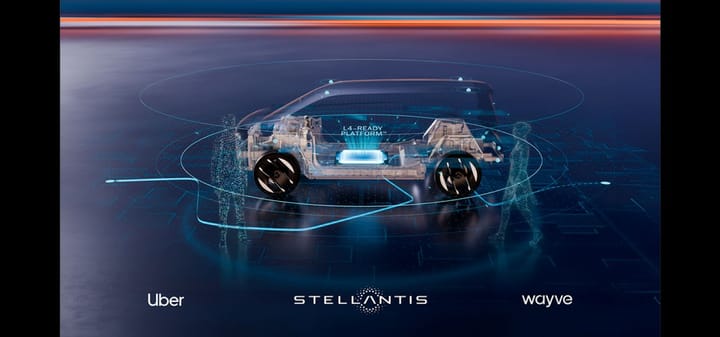
Stellantis, Wayve, and Uber are joining forces to accelerate autonomous vehicle deployment at scale, combining automotive manufacturing expertise with Wayve's end-to-end learning approach and Uber's ride-hailing network. This partnership signals a critical shift in how AI-driven robotaxi systems move from research into production, leveraging deep learning for perception and decision-making across global markets. The collaboration matters because it bridges the gap between AI capability and real-world deployment infrastructure, potentially reshaping the competitive landscape for autonomous mobility and forcing other players to reconsider their own AV stacks and go-to-market strategies.
Modelwire’s AI-generated summary of coverage from AI Business.
Modelwire analysis
Analyst takeOur AI-generated reading of the wider context and the next developments to watch.
The buried detail here is Wayve's specific position in this arrangement. Unlike Waymo or Cruise, Wayve has built its stack on end-to-end neural approaches rather than modular sensor fusion, which means Stellantis and Uber are betting that a less interpretable but more generalizable architecture can scale across diverse global markets faster than more established competitors.
This is largely disconnected from recent activity in our archive, as we have no prior coverage of Wayve, Stellantis AV programs, or Uber's autonomous vehicle partnerships to anchor against. The story belongs to a broader competitive thread involving OEM-software-network triads, a structure that mirrors how traditional automakers have responded to the difficulty of owning the full AV stack internally. The Stellantis role is particularly worth noting: the company has struggled with its broader strategic direction recently, and a high-profile AV partnership could serve operational or investor-relations purposes beyond pure technical ambition.
Watch whether Wayve announces a defined commercial pilot city with Uber by end of 2026. A named market with a launch date would indicate this is an operational program; continued vagueness about geography would suggest the partnership is still at the term-sheet stage.
This interpretation is generated from the summary above and available source metadata. Our methodology · Report an error
MentionsStellantis · Wayve · Uber · robotaxi
How this coverage is produced
Modelwire uses AI to generate summaries and context from source headlines, snippets, and selected archive coverage. Automated checks do not verify every claim, and items are not routinely reviewed by a person before publication. Zacaria Solis operates the site. Read the linked source for the full evidence and report errors through our corrections process.
Modelwire summarizes, we don’t republish. The full content lives on aibusiness.com. If you’re a publisher and want a different summarization policy for your work, see our takedown page.