Streamer Realtime Deepfakes Himself into Mr. Beast, Says He Loves 'Touching Little Boys'
Source published ·Modelwire updated
Original coverage: 404 Media ↗·How Modelwire adds context
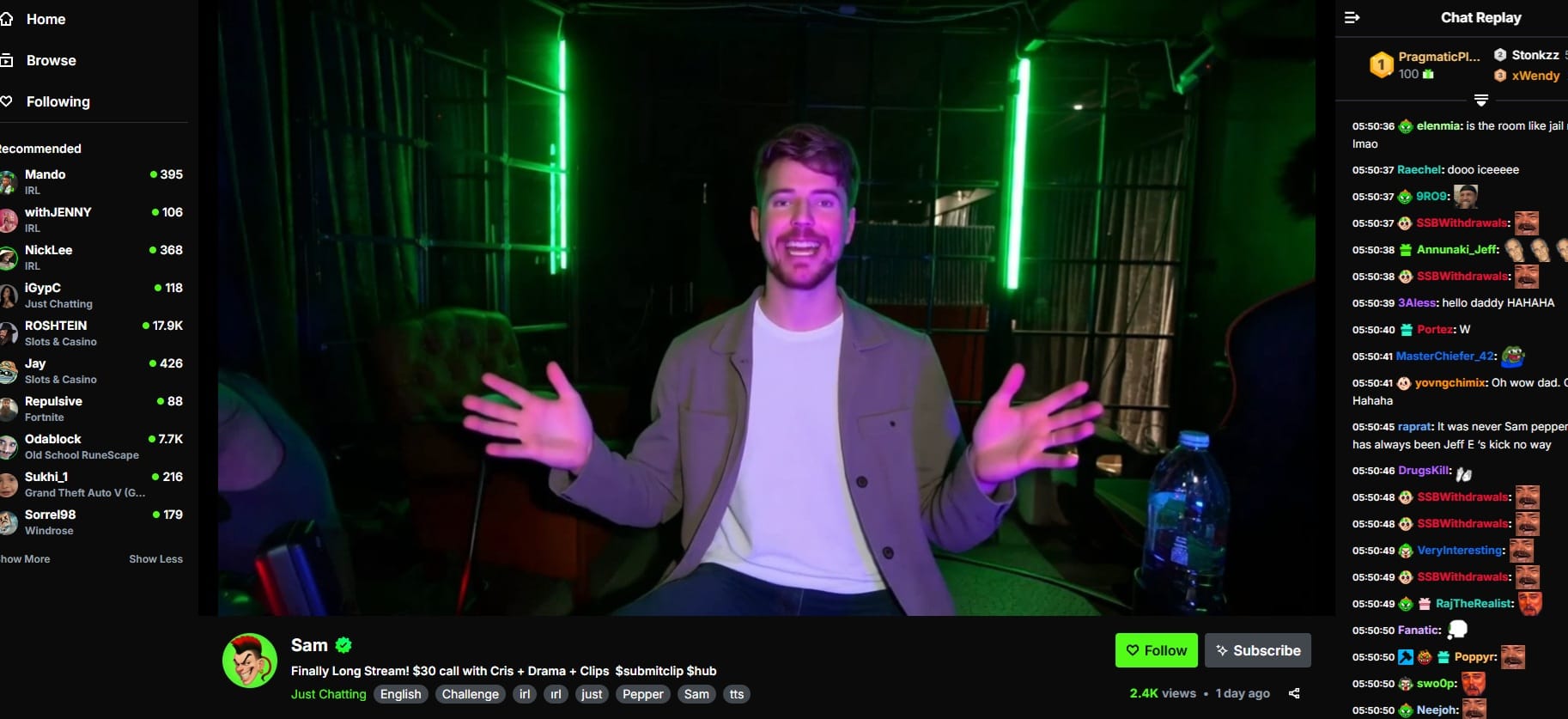
The development
Delulu, a deepfake tool marketed to streamers, enables real-time face-swapping into public figures and other content creators. The incident highlights how accessible generative video has become for entertainment contexts, while raising immediate concerns about impersonation, defamation, and the absence of friction between capability and misuse. This reflects a widening gap between synthetic media tooling maturity and platform governance, forcing streaming platforms and AI vendors to confront liability and moderation at scale.
Modelwire’s AI-generated summary of coverage from 404 Media.
Modelwire analysis
ExplainerOur AI-generated reading of the wider context and the next developments to watch.
The detail that gets buried in the outrage cycle is the word 'real-time': this isn't a post-production deepfake requiring render time and technical skill, but a live, low-latency swap that any streamer can run during a broadcast, which collapses the window platforms have historically relied on for moderation intervention.
Modelwire has no prior coverage to anchor this to directly, so it sits in a broader pattern worth naming: the synthetic media governance problem has largely been discussed in the context of still images and short-form video, where detection pipelines have at least had time to mature. Live-stream deepfakes are a different surface entirely. Platforms like Twitch and YouTube built their trust-and-safety stacks around reactive moderation, clip review, and DMCA-style takedown flows, none of which are designed for identity fraud that resolves in seconds during a live session. The Delulu incident is less about one bad actor and more about what happens when a capability outpaces every institutional assumption that was supposed to contain it.
Watch whether Twitch or YouTube issues explicit policy language specifically covering real-time synthetic identity impersonation within the next 60 days. Silence past that point would confirm that platforms are treating this as a one-off content moderation problem rather than a tooling-class policy gap.
This interpretation is generated from the summary above and available source metadata. Our methodology · Report an error
MentionsDelulu · 404 Media · MrBeast · George Floyd · Jeffrey Epstein
How this coverage is produced
Modelwire uses AI to generate summaries and context from source headlines, snippets, and selected archive coverage. Automated checks do not verify every claim, and items are not routinely reviewed by a person before publication. Zacaria Solis operates the site. Read the linked source for the full evidence and report errors through our corrections process.
Modelwire summarizes, we don’t republish. The full content lives on 404media.co. If you’re a publisher and want a different summarization policy for your work, see our takedown page.