Taxonomy-aware deep learning for hierarchical marine species classification in underwater imagery
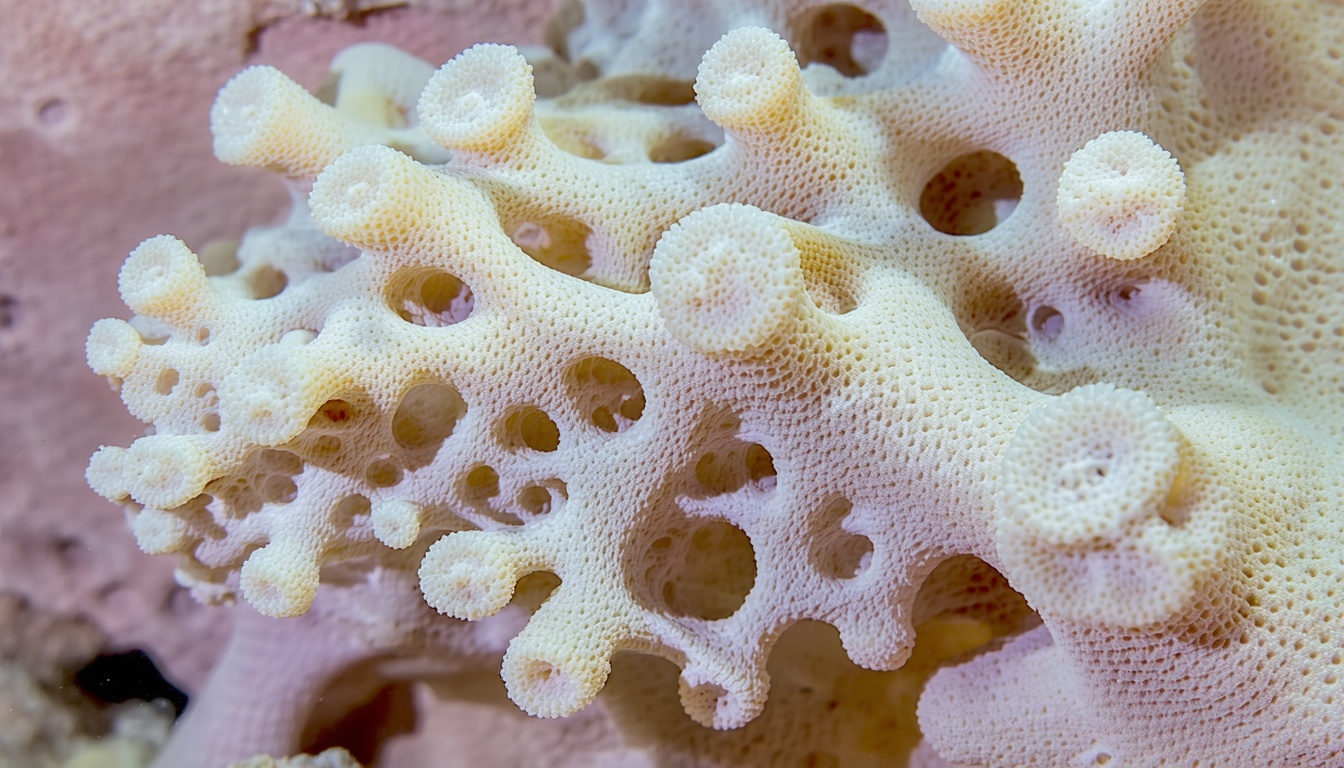
Researchers have developed a taxonomy-aware deep learning framework that treats marine species classification as a hierarchical prediction problem rather than flat multi-class learning. By aligning loss functions and inference rules to biological taxonomy, the system handles the practical reality of underwater datasets where many specimens can only be identified to genus level rather than species. This approach addresses a recurring challenge in domain-specific computer vision: leveraging structured domain knowledge to improve robustness when training data is sparse, noisy, or inconsistently labeled. The work signals growing sophistication in how ML systems can encode real-world constraints into architecture and training, relevant beyond marine biology to any classification task with natural hierarchies.
Modelwire context
ExplainerThe key insight is that the framework treats prediction uncertainty differently at each taxonomic level. When a specimen can only be identified to genus, the model learns to output valid probability distributions over that constrained set rather than forcing a false species-level guess, which reduces both error and calibration drift.
This connects directly to the FedReLa work from the same day, which also tackles imbalanced and heterogeneous label quality in distributed settings. Both papers solve the same upstream problem: training data that doesn't fit the assumptions of standard classifiers. Where FedReLa uses re-labeling to correct skewed boundaries across federated clients, this work embeds domain structure into the loss function itself. The marine biology application is narrower, but the principle of letting real-world constraints reshape the learning objective rather than forcing data to fit the algorithm is the same pattern emerging across both papers.
If FathomNet 2025 (the dataset mentioned in the entities) releases a public leaderboard showing genus-level predictions outperforming species-level ones on held-out test sets by >5 percentage points, that confirms the hierarchy actually improves robustness. If the gains disappear when evaluated only on specimens that have full species labels, the method is just hiding label noise rather than learning something structural about taxonomy.
Coverage we drew on
- FedReLa: Imbalanced Federated Learning via Re-Labeling · arXiv cs.LG
This analysis is generated by Modelwire’s editorial layer from our archive and the summary above. It is not a substitute for the original reporting. How we write it.
MentionsFathomNet 2025 · taxonomy-aware deep learning · Bayesian inference · marine species classification
Modelwire Editorial
This synthesis and analysis was prepared by the Modelwire editorial team. We use advanced language models to read, ground, and connect the day’s most significant AI developments, providing original strategic context that helps practitioners and leaders stay ahead of the frontier.
Modelwire summarizes, we don’t republish. The full content lives on arxiv.org. If you’re a publisher and want a different summarization policy for your work, see our takedown page.