Uber and Wayve to Launch London’s First AI Robotaxis
Source published ·Modelwire updated
Original coverage: AI Business ↗·How Modelwire adds context
The development
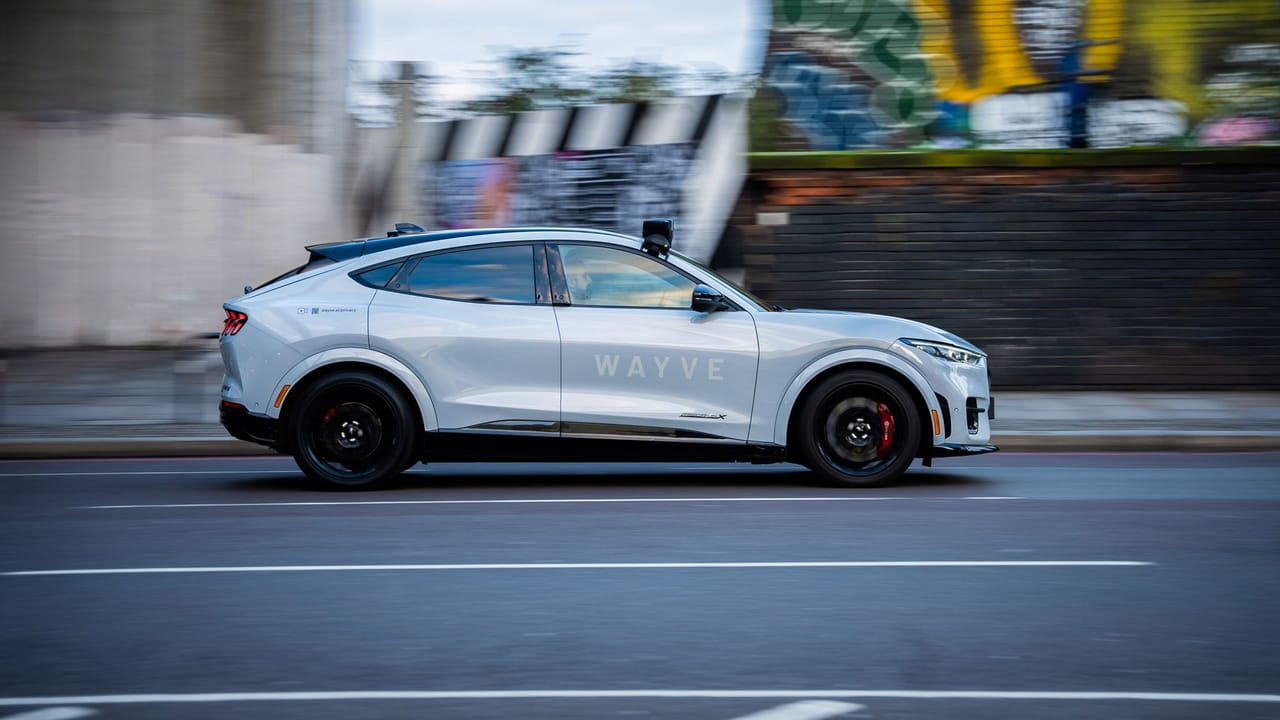
Uber and Wayve's London deployment marks a critical inflection point for autonomous vehicle commercialization in a major Western city. The partnership combines Wayve's end-to-end deep learning stack with Uber's ride-hailing infrastructure, creating a real-world testbed for AI-driven mobility at scale. Expansion into Tokyo signals confidence in the technology's cross-geography robustness and suggests the autonomous taxi market is transitioning from pilot phase to operational rollout. This move pressures legacy automakers and competing AV platforms to accelerate deployment timelines.
Modelwire’s AI-generated summary of coverage from AI Business.
Modelwire analysis
Analyst takeOur AI-generated reading of the wider context and the next developments to watch.
What the summary doesn't surface is that Wayve's end-to-end approach, which trains a single neural network across the full driving task rather than modular pipelines, has been a deliberate architectural bet against the industry consensus. London's notoriously complex road conditions make it a harder proving ground than the structured grids where most AV competitors have accumulated miles, which means success or failure here carries more signal than a comparable rollout in, say, Phoenix.
The Uber-Wayve deal belongs to a broader pattern of capital concentration in AI infrastructure that Modelwire has tracked closely. Alphabet's move to raise $80 billion for AI buildout (covered via TechCrunch, early June) illustrated how sustained operational scale is now the primary competitive lever. Wayve securing Uber's ride-hailing distribution is a different expression of the same logic: technical capability alone doesn't win the market, you need the infrastructure layer too. The OpenAI and Anthropic IPO filings from this same week are less directly connected, though they do reflect the same investor conviction that AI commercialization timelines have compressed enough to justify public-market exposure.
Watch whether Waymo or a legacy automaker AV program announces a comparable Western European city deployment within the next 12 months. If they don't, it suggests the Uber distribution advantage is harder to replicate than it looks from the outside.
This interpretation is generated from the summary above and the archive coverage cited below. Our methodology · Report an error
Coverage behind this analysis
These archive entries ground the connection in our analysis. They are ordered by source publication date, with links to our coverage and the original sources.
·TechCrunch - AI
Alphabet plans to raise $80 billion to pay for AI buildout
Alphabet's $80 billion capital raise signals an aggressive bet on AI infrastructure dominance. The stock sale underscores how compute and datacenter buildout have become the primary competitive lever in the AI race, forcing even the largest tech firms to mobilize massive balance sheets. This move reflects a landscape shift where model capability alone no longer…
MentionsUber · Wayve · London · Tokyo
How this coverage is produced
Modelwire uses AI to generate summaries and context from source headlines, snippets, and selected archive coverage. Automated checks do not verify every claim, and items are not routinely reviewed by a person before publication. Zacaria Solis operates the site. Read the linked source for the full evidence and report errors through our corrections process.
Modelwire summarizes, we don’t republish. The full content lives on aibusiness.com. If you’re a publisher and want a different summarization policy for your work, see our takedown page.