Unitree IPO marks humanoid robotics' transition to public markets
Source published ·Modelwire updated
Original coverage: AI Business ↗·How Modelwire adds context
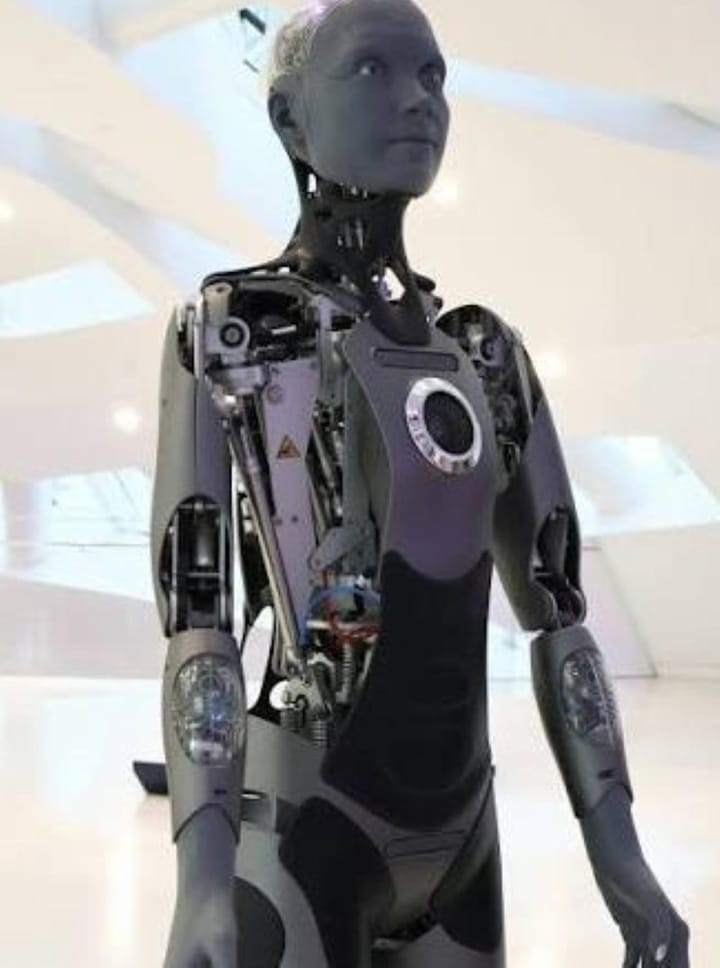
The development
Unitree's market debut signals investor confidence in embodied AI as a commercializable category. The robotics firm's IPO validates the shift from research-stage humanoid development toward production-scale manufacturing and deployment. This milestone matters because it establishes a public-market comparable for robotics-as-infrastructure, potentially unlocking capital for competing teams and signaling that hardware-software integration at scale can command investor appetite alongside pure software plays.
Modelwire’s AI-generated summary of coverage from AI Business.
Modelwire analysis
Analyst takeOur AI-generated reading of the wider context and the next developments to watch.
Unitree's IPO success doesn't just validate robotics demand; it establishes a valuation precedent for companies betting on local hardware deployment. The real signal is whether public markets will pay for robots that operate semi-autonomously at the edge rather than as cloud-dependent services.
This timing matters alongside Hugging Face's LFM2.5 quantization release from the same day. That checkpoint work directly addresses the cost and latency problem embodied AI companies face: running capable models on robot hardware without constant API calls back to inference servers. Unitree's capital raise now funds the integration layer that makes those quantized models practical at scale. If investors are betting on Unitree's manufacturing roadmap, they're implicitly betting that edge-deployed models (not just cloud robotics) can reach production viability.
Track whether Unitree's next earnings call or product roadmap explicitly mentions local model inference or edge deployment as a cost lever. If the company doesn't cite inference efficiency as a competitive advantage within two quarters, the IPO may have been driven by manufacturing scale alone rather than the software-hardware integration thesis the summary implies.
This interpretation is generated from the summary above and the archive coverage cited below. Our methodology · Report an error
Coverage behind this analysis
These archive entries ground the connection in our analysis. They are ordered by source publication date, with links to our coverage and the original sources.
·Hugging Face
Hugging Face releases quantized LFM2.5 checkpoints via distillation
Hugging Face has released quantized checkpoints of LFM2.5 using Q4_0 compression derived from quantization-aware distillation, a technique that trains models to compress efficiently while maintaining performance. This represents a practical advance in making frontier-scale models deployable on consumer and edge hardware without prohibitive memory overhead. The release signals growing maturity in post-training optimization workflows, enabling…
MentionsUnitree
How this coverage is produced
Modelwire uses AI to generate summaries and context from source headlines, snippets, and selected archive coverage. Automated checks do not verify every claim, and items are not routinely reviewed by a person before publication. Zacaria Solis operates the site. Read the linked source for the full evidence and report errors through our corrections process.
Modelwire summarizes, we don’t republish. AI Business originally reported this story as “Unitree Shares Surge in Stock Market Debut”. The full content lives on aibusiness.com. If you’re a publisher and want a different summarization policy for your work, see our takedown page.