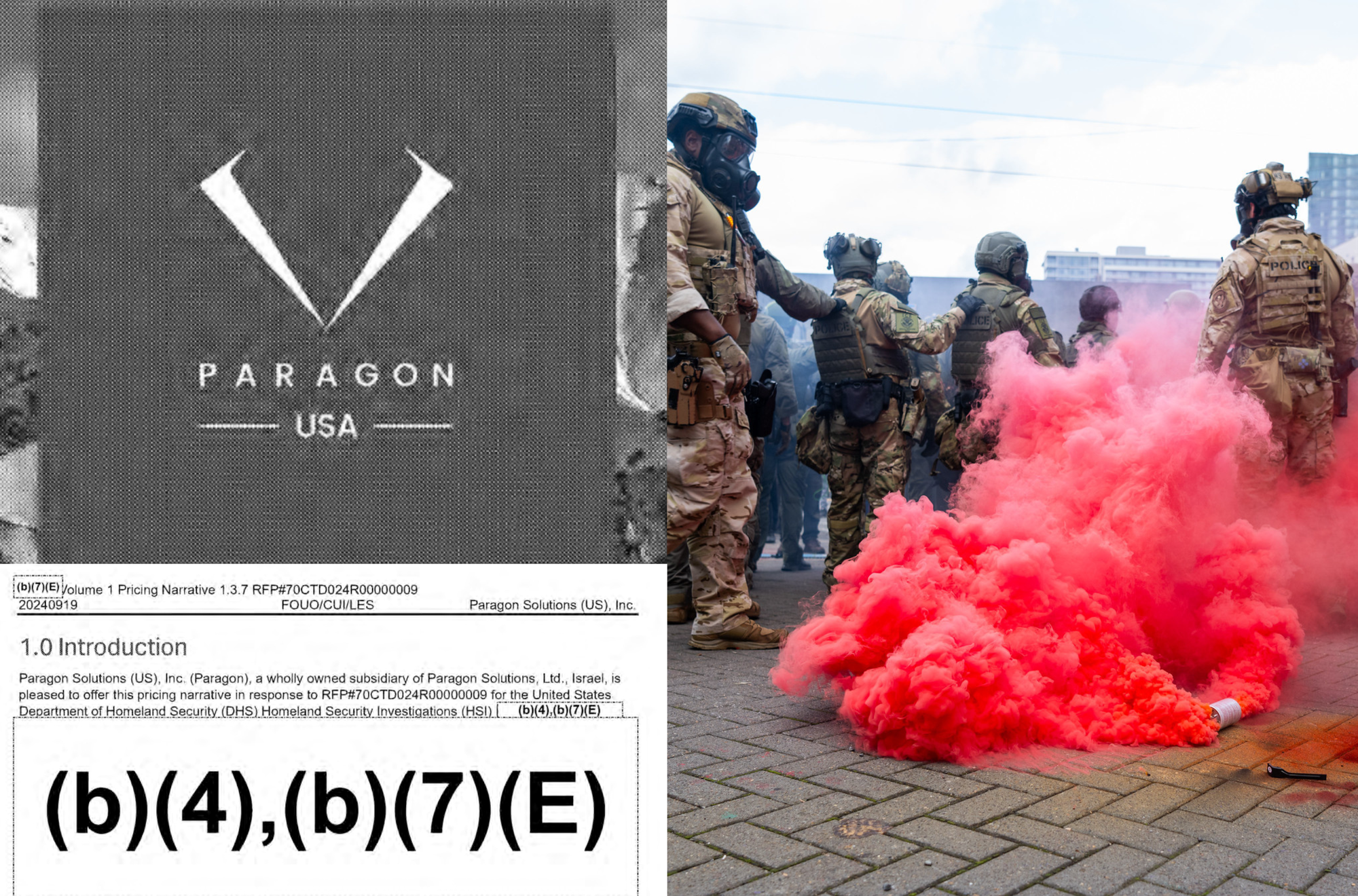
We Sued ICE to Get Its Spyware Contract. The Agency Is Redacting Essentially Everything
Source published ·Modelwire updated
Original coverage: 404 Media ↗·How Modelwire adds context
The development
A legal challenge to U.S. Immigration and Customs Enforcement's use of Paragon spyware raises questions about surveillance infrastructure and government opacity. The software's ability to penetrate encrypted messaging systems and extract data remotely mirrors capabilities increasingly embedded in AI-driven security and monitoring tools. The agency's aggressive redaction of contract details signals a broader pattern where government procurement of invasive technologies outpaces public accountability mechanisms, creating precedent for how AI surveillance systems operate beyond regulatory oversight.
Modelwire’s AI-generated summary of coverage from 404 Media.
Modelwire analysis
Analyst takeOur AI-generated reading of the wider context and the next developments to watch.
The real story isn't that ICE used Paragon spyware, which was already reported, but that the contract redactions are so extensive they prevent any meaningful assessment of scope, cost, or renewal terms. That level of opacity makes independent oversight structurally impossible, not just politically inconvenient.
This connects directly to the Import AI 459 piece from this same cycle, which flagged that AI oversight is operationally difficult even when institutions are trying in good faith. ICE's redaction posture suggests that in adversarial or indifferent cases, oversight doesn't just lag, it gets actively blocked. The pattern also rhymes with the Meta AI account-access incident covered by 404 Media: in both cases, the accountability gap isn't a technical failure but a governance one, where deployment outran the controls meant to constrain it. Anthropic's confidential S-1 filing adds a counterpoint worth noting: private companies entering public markets face mandatory disclosure regimes that government agencies simply don't.
Watch whether 404 Media's FOIA litigation produces any unredacted contract terms within the next six months. If the court sides with ICE's redaction claims, it sets enforceable precedent that spyware procurement details qualify as protected law enforcement sensitive information, closing off this disclosure pathway for future challenges.
This interpretation is generated from the summary above and available source metadata. Our methodology · Report an error
MentionsICE · Paragon · 404 Media
How this coverage is produced
Modelwire uses AI to generate summaries and context from source headlines, snippets, and selected archive coverage. Automated checks do not verify every claim, and items are not routinely reviewed by a person before publication. Zacaria Solis operates the site. Read the linked source for the full evidence and report errors through our corrections process.
Modelwire summarizes, we don’t republish. The full content lives on 404media.co. If you’re a publisher and want a different summarization policy for your work, see our takedown page.