Ford had to hire back former engineers to fix mistakes made by its automated systems
Source published ·Modelwire updated
Original coverage: The Verge - AI ↗·How Modelwire adds context
The development
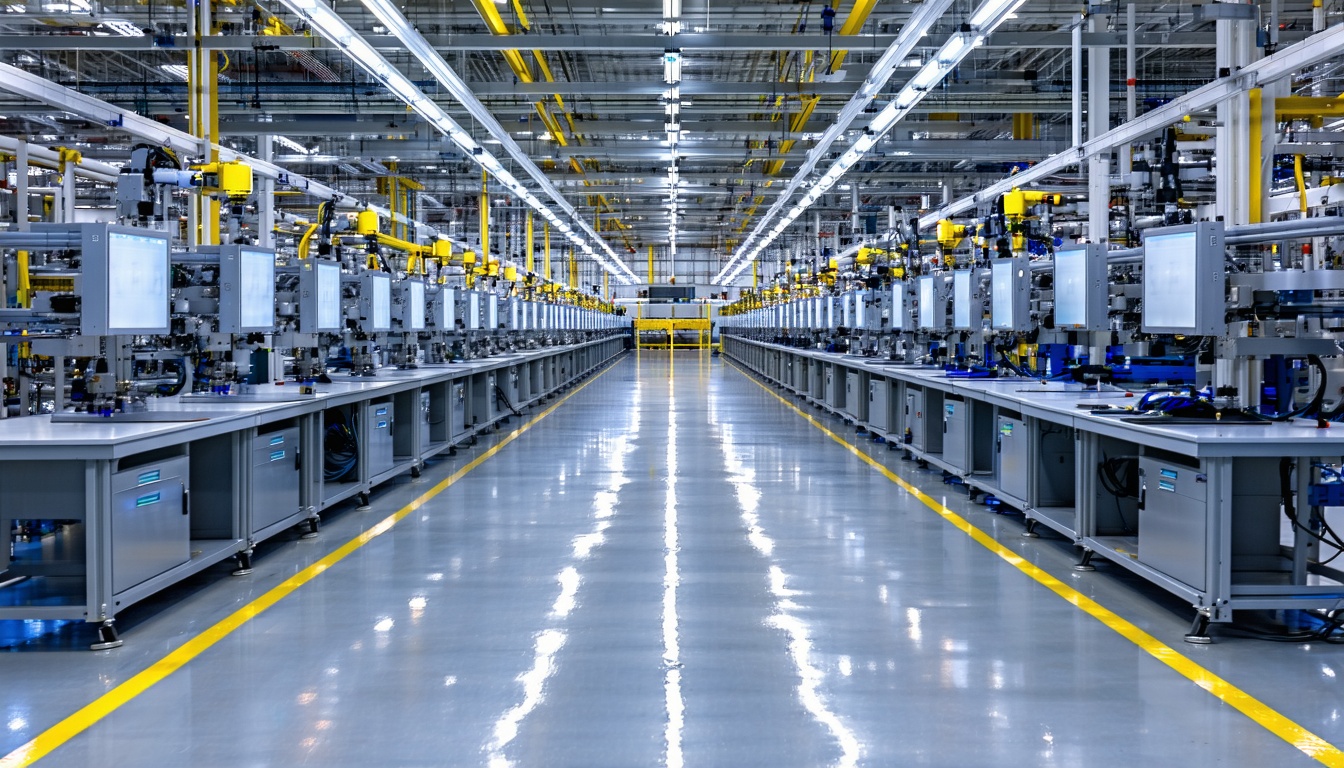
Ford's climb to top-tier quality rankings masks a deeper lesson about automation's limits in manufacturing. The automaker discovered that its production and design automation systems introduced errors severe enough to require rehiring displaced engineers for remediation. This reversal signals a critical inflection point: enterprises deploying AI-driven workflows without adequate human oversight and validation loops face compounding technical debt. The incident underscores that automation quality depends less on algorithmic sophistication than on integration discipline, human-in-the-loop architecture, and fallback protocols. For manufacturing and enterprise AI adoption broadly, the story validates skepticism toward full-stack automation without staged rollout and continuous human verification.
Modelwire’s AI-generated summary of coverage from The Verge - AI.
Modelwire analysis
Analyst takeOur AI-generated reading of the wider context and the next developments to watch.
The buried detail here is sequencing: Ford didn't catch these errors during rollout, it caught them after quality rankings had already slipped enough to register with JD Power, meaning the feedback loop was slow enough to cause measurable reputational and operational damage before any correction began.
Ford's reversal sits in direct tension with the infrastructure-first bets dominating current coverage. Amazon's fresh $13 billion India commitment (covered here this week) reflects a thesis that more compute and broader deployment capacity is the right lever to pull right now. Ford's experience complicates that framing: raw deployment scale doesn't resolve the integration discipline problem, and enterprises absorbing more AI infrastructure without building parallel human validation capacity may be accelerating the same failure mode Ford just paid to unwind. The related coverage doesn't map cleanly onto manufacturing specifically, but the capital allocation logic is shared across sectors.
Watch whether Ford publicly revises its automation rollout methodology in its next earnings call or supplier communications. If it does, that gives other manufacturers a concrete template to benchmark against and signals the rehiring was a policy shift, not a one-time patch.
This interpretation is generated from the summary above and the archive coverage cited below. Our methodology · Report an error
Coverage behind this analysis
These archive entries ground the connection in our analysis. They are ordered by source publication date, with links to our coverage and the original sources.
·TechCrunch - AI
Amazon ups India bet with fresh $13B AI infrastructure investment
Amazon is doubling down on India's AI infrastructure race with a $13 billion commitment, signaling that regional compute capacity has become a strategic battleground beyond Silicon Valley. This move reflects a broader shift where hyperscalers are decoupling AI development from US-only infrastructure, partly to navigate geopolitical constraints and capture emerging markets. For practitioners and investors,…
MentionsFord · JD Power
How this coverage is produced
Modelwire uses AI to generate summaries and context from source headlines, snippets, and selected archive coverage. Automated checks do not verify every claim, and items are not routinely reviewed by a person before publication. Zacaria Solis operates the site. Read the linked source for the full evidence and report errors through our corrections process.
Modelwire summarizes, we don’t republish. The full content lives on theverge.com. If you’re a publisher and want a different summarization policy for your work, see our takedown page.