Google's SynthID AI watermarking tech is being adopted by OpenAI, Nvidia, and more
Source published ·Modelwire updated
Original coverage: Ars Technica - AI ↗·How Modelwire adds context
The development
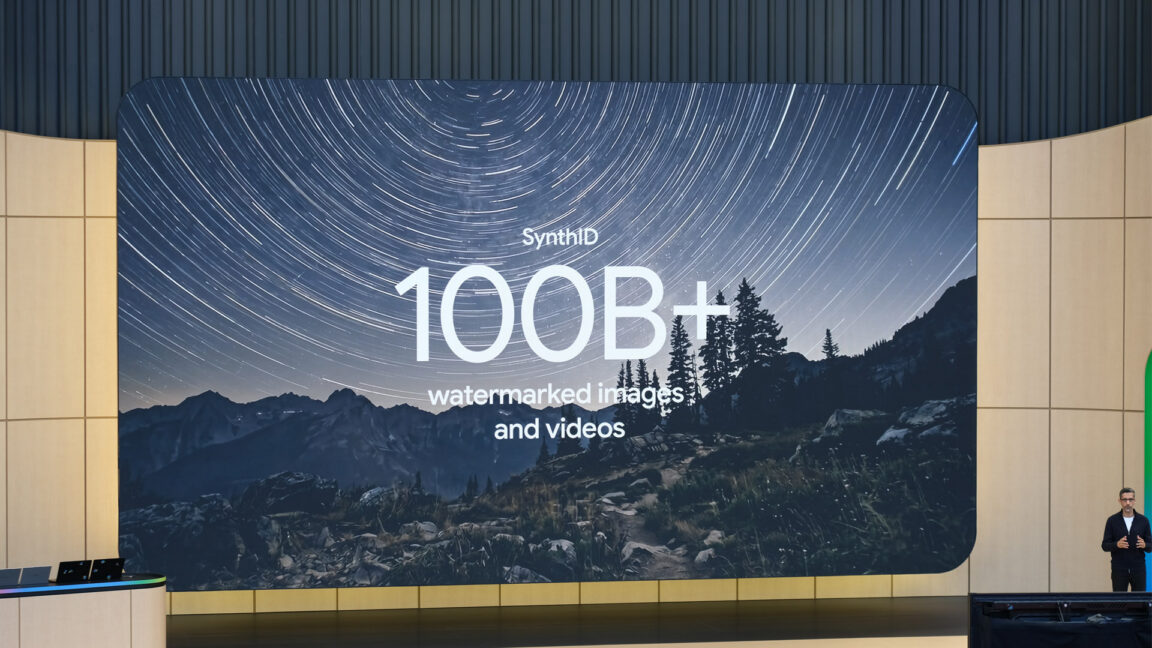
Google's SynthID watermarking technology is gaining traction across the AI industry as OpenAI, Nvidia, and other major players adopt it to authenticate AI-generated content. This cross-industry adoption signals a shift toward standardized provenance mechanisms as synthetic media becomes harder to distinguish from authentic material. The move reflects growing pressure to embed verifiability into AI systems at scale, addressing a critical gap in content attribution that affects both enterprise deployment and public trust in AI outputs.
Modelwire’s AI-generated summary of coverage from Ars Technica - AI.
Modelwire analysis
Analyst takeOur AI-generated reading of the wider context and the next developments to watch.
The more consequential detail here isn't adoption breadth but what adoption actually means: SynthID becoming a de facto industry standard gives Google a quiet infrastructure position inside competitors' content pipelines, a structural advantage that has nothing to do with model quality.
This story sits in a different lane from recent Modelwire coverage. The OlmoEarth v1.1 piece from Hugging Face (May 19) focused on efficiency gains in open-weight models, and the provenance question doesn't map cleanly onto that work since open-weight releases carry their own attribution challenges that watermarking alone doesn't resolve. What this story actually connects to is a broader pattern: as synthetic content volume grows, the infrastructure layer around AI outputs (attribution, verification, audit trails) is becoming a distinct competitive surface, separate from model capability itself. Companies that own that layer early gain leverage over how outputs are trusted and traced across the industry.
Watch whether any major open-source project or standards body (C2PA being the obvious candidate) formally endorses or forks SynthID's spec within the next six months. If they do, Google's position hardens into something close to a reference standard. If they don't, this remains a consortium arrangement that a competing coalition could displace.
This interpretation is generated from the summary above and the archive coverage cited below. Our methodology · Report an error
Coverage behind this analysis
These archive entries ground the connection in our analysis. They are ordered by source publication date, with links to our coverage and the original sources.
·Hugging Face
OlmoEarth v1.1: A more efficient family of models
Allenai's OlmoEarth v1.1 represents a meaningful step toward practical open-source model efficiency. The update signals that the open research community is closing the gap on inference cost and training overhead, two persistent friction points for enterprises evaluating alternatives to proprietary systems. For teams building on open weights, this release matters because efficiency gains directly translate…
MentionsGoogle · SynthID · OpenAI · Nvidia
How this coverage is produced
Modelwire uses AI to generate summaries and context from source headlines, snippets, and selected archive coverage. Automated checks do not verify every claim, and items are not routinely reviewed by a person before publication. Zacaria Solis operates the site. Read the linked source for the full evidence and report errors through our corrections process.
Modelwire summarizes, we don’t republish. The full content lives on arstechnica.com. If you’re a publisher and want a different summarization policy for your work, see our takedown page.