
Tools & Code
Developer tools, open-source releases, frameworks, IDE integrations, dev workflows.

OpenAI deploys AI agents into on-call incident response
OpenAI is positioning AI agents as practical on-call infrastructure, moving beyond chatbot interfaces into real-time incident response. The example of an engineer using a 'dot' to delegate triage work at 3am, then steering resolution from a mobile app, signals a shift toward AI systems that operate autonomously in production environments while remaining human-steerable. This represents a concrete step toward embedding LLMs into DevOps workflows, where the bottleneck moves from 'can AI help?' to 'how do teams integrate AI agents into critical paths without losing control?'
India reports unauthorized AI agent intrusions via exposed credentials
India's emergence as a site of unauthorized AI agent deployment underscores a critical infrastructure vulnerability across the global AI stack. Attackers exploited a familiar attack surface: hardcoded secrets in configuration files, public repositories, and overly broad cloud permissions. This incident signals that as autonomous agents proliferate in production environments, the operational security posture of AI teams remains dangerously immature. The pattern mirrors earlier breaches but now targets active agent systems rather than static models, raising stakes for runtime compromise and lateral movement within AI-powered infrastructure.
Hugging Face opens 2.8 trillion token Indic language pretraining pipeline
Hugging Face has released a major pretraining dataset and pipeline for Indic languages, scaling to 2.8 trillion tokens with an open data generation methodology. This addresses a critical gap in multilingual LLM development, where South Asian language coverage has lagged far behind English and Mandarin. The open pipeline enables researchers and practitioners across India and the diaspora to build competitive models without dependence on proprietary Western datasets, shifting the economics of non-English AI development and potentially accelerating localized applications in a region representing over a billion speakers.84

Willison uses Claude to build phone-to-phone Pong via audio chirps
Simon Willison built a two-player Pong variant where game state syncs across phones via audio chirps interpreted through the Web Microphone API, demonstrating a novel peer-to-peer networking layer for browser games. The experiment, scaffolded by Claude Opus 5.5 Extra, shows how LLMs can rapidly prototype unconventional I/O mechanisms that bypass traditional networking stacks. This signals growing feasibility of audio-based communication protocols for local multiplayer experiences, expanding the design space for offline-first, proximity-aware applications built on commodity hardware.
BitSparse enables lossless activation compression for sparse ReLU networks
BitSparse addresses a critical bottleneck in LLM training by exploiting the sparsity inherent in ReLU activations to compress the activation cache losslessly. Rather than trading off accuracy through lossy compression or incurring recomputation overhead, the technique uses custom GPU kernels to shrink memory footprint while preserving exact reconstruction for backpropagation. Support for both BF16 and FP8 formats with optional sign-bit packing brings compression ratios closer to theoretical limits. For practitioners scaling training runs, this represents a practical lever to reduce memory pressure without sacrificing convergence properties, directly competing with activation checkpointing as a memory optimization strategy.62

Black Forest Labs shrinks FLUX 3 to run 4K image generation on 8GB consumer GPUs
Black Forest Labs has compressed its image generation model to 5.6 billion parameters, enabling 4K native output and pixel-level editing on consumer 8GB GPUs. This represents a meaningful shift in the open-weights image model landscape: efficiency gains of 38 percent over prior versions without capability loss signal that high-fidelity generation is becoming accessible outside enterprise clusters. For practitioners and smaller studios, the ability to run competitive image synthesis locally rather than via API reshapes cost and latency calculus. The release underscores ongoing pressure on proprietary vendors as open alternatives mature.85
Multi-agent system unlocks full range of automated data curation for fine-tuning
Researchers demonstrate that when agents control the full post-training pipeline, they converge on data curation as the highest-leverage intervention, yet single-agent systems get stuck optimizing only one dimension like category balance. AutoSFT introduces a multi-agent architecture that expands the action space to match human data engineering workflows: pruning, repair, replacement, and synthesis alongside selection. This work surfaces a critical bottleneck in automated training optimization and suggests that decomposing data work across specialized agents unlocks richer exploration of the training data frontier.62

Weak model drafts, strong model reviews in new agent collaboration protocol
SpecAgent inverts the conventional hierarchy in multi-model agent systems by repositioning the strong model as a verifier rather than the primary executor. The weak model drafts tool calls with real-time grounding from read-only observations, shifting computational load away from expensive inference while maintaining safety through post-hoc review. This approach addresses a fundamental inefficiency in current agentic workflows where every step, including routine operations, demands the strongest available model. The technique could reshape cost-performance tradeoffs in production agent deployments and influence how teams architect collaborative inference pipelines.62
ManiFusion batches diffusion samples through fused manifold space
ManiFusion addresses a critical bottleneck in diffusion model deployment: throughput saturation. Rather than chasing per-sample speed gains, the framework processes multiple images in parallel within a single denoising pass by fusing samples into a shared manifold representation before the backbone and unfusing afterward. This orthogonal approach to acceleration matters because inference cost per unit output, not latency alone, drives real-world adoption in production systems. The geometric insight that diverse samples can coexist in fused space without information loss opens a new efficiency frontier for practitioners scaling generative workloads.62

Structured paper graphs let AI agents reason across research at scale
Researchers have built SPRA, a structured representation layer that lets AI agents navigate scientific papers as queryable knowledge graphs rather than unstructured text. The system maps research problems, methods, findings, and citations across over one million AI papers, creating 20 million research units linked by 24 million typed relations. This infrastructure shift matters because it transforms how agents retrieve and reason over literature: instead of keyword search or naive RAG, agents can traverse explicit dependencies between papers, verify claims against source locations, and reuse components across subfields. Early evaluations show the approach works across seven AI domains, suggesting a new baseline for how scientific AI systems should ingest and reason over the research corpus.62
DPA-MoE enables dynamic precision routing for expert selection
DPA-MoE introduces dynamic precision allocation for Mixture-of-Experts models, enabling per-expert weight quantization that adapts at inference time based on router decisions. By encoding expert weights as prefix-decodable chunks and allocating precision budgets live rather than uniformly, the framework lets a single checkpoint operate across multiple compute/accuracy tradeoffs without retraining. Tested on Qwen3-30B and DeepSeekMoE-16B, this approach improves both KL divergence and downstream task performance compared to fixed-precision routing. The technique matters because MoE inference efficiency is a critical bottleneck for scaling large models in production, and runtime flexibility could unlock better cost-accuracy curves for practitioners deploying these architectures at scale.62

Figma defines agent behavior guardrails for its design platform
Figma is establishing guardrails for how AI agents operate within its design platform, signaling a shift toward structured agent deployment in creative tools. The move reflects growing demand from enterprises to embed autonomous workflows into collaborative software without sacrificing control or predictability. By defining agent behavior parameters upfront, Figma positions itself as a platform where AI augmentation happens within defined boundaries rather than as an afterthought. The concurrent beta release of code layers suggests the company is building infrastructure to make agent-generated outputs auditable and integrable with human design work, a critical requirement for adoption in professional settings.
Meta releases open-weight multimodal mixture-of-experts model
Meta has released Muse Spark Open, an open-weight multimodal mixture-of-experts model that extends frontier capabilities to the open ecosystem. The move signals Meta's continued commitment to democratizing advanced AI, positioning open-source alternatives against proprietary frontier labs. Mixture-of-experts architecture enables efficient scaling across modalities, reducing inference costs while maintaining performance. This release matters for researchers and builders seeking production-grade multimodal systems without vendor lock-in, and reinforces the competitive pressure on closed-model providers to justify premium pricing through differentiation beyond raw capability.94

Mistral's 209M-parameter time-series model outperforms larger forecasting systems
Mistral AI has released Timestral, a specialized foundation model family purpose-built for time-series forecasting that challenges the scaling assumption dominating modern AI. With its largest variant at just 209M parameters, Timestral achieves state-of-the-art probabilistic forecasts while running efficiently on commodity CPUs, suggesting that domain-specific architectures and synthetic pre-training can outpace brute-force parameter scaling. The model's support for past and future covariates plus zero-shot generalization across domains signals a shift toward practical, deployable forecasting infrastructure that doesn't require massive compute, reshaping expectations for specialized model development.89
Transformers gain dynamic scaling without retraining
Researchers have developed a technique that transforms fixed-size transformer models into adaptive systems capable of operating across a spectrum of computational budgets without retraining. The method ranks individual neurons and attention heads on a unified scale, enabling dynamic performance tuning for heterogeneous hardware and variable workloads. This addresses a persistent deployment friction point: users currently choose between discrete model sizes that rarely match their actual constraints. The approach could reshape how organizations deploy foundation models, reducing the need to maintain multiple model variants and improving resource utilization across edge devices and cloud infrastructure.62

Open-source multimodal code models gain evaluation framework for visual artifacts
PrismaCoder addresses a critical gap in open-source multimodal AI: the lack of high-quality training data for models that generate visual code artifacts like charts and webpages. While proprietary systems from leading labs have achieved strong performance on code-to-visual tasks, the open ecosystem remains bottlenecked by both data scarcity and the absence of reliable evaluation signals that validate correctness across execution, code quality, and visual rendering. The paper's decomposed rubric synthesis approach tackles this head-on, offering a scalable methodology for curating training sets where all three dimensions matter. This matters because multimodal code intelligence is becoming table-stakes for AI assistants, and closing the proprietary-open gap requires solving the data and evaluation problem first.62

Formal verification framework constrains LLM chemical reasoning to verifiable states
Researchers have developed MolLean, a formal verification framework that constrains language model reasoning about chemistry to verifiable molecular states. Rather than allowing models to generate unchecked chemical claims, MolLean enforces state transitions through a Lean-based kernel that validates structural edits and property assertions against an explicit molecular representation. A typed witness protocol separates computational checks from external measurements, while a stateful tool interface lets models receive real-time feedback on rejected actions. This approach addresses a critical failure mode in AI reasoning: hallucinated chemistry claims that sound plausible but violate physical constraints. The work signals growing attention to grounding LLM outputs in formal verification systems, particularly for high-stakes domains where unchecked generation poses safety risks.62

AI decompilation unlocks game preservation and IP risks
AI-driven decompilation is reshaping how legacy software gets preserved and remixed. The capability to automatically reverse-engineer compiled games into source code has triggered a dual-outcome landscape: preservation efforts now routinely port decades-old titles to modern platforms like WebAssembly, while simultaneously raising IP and security concerns across the software industry. This represents a structural shift in how AI tooling intersects with intellectual property, forcing game studios and broader tech to reckon with automated code recovery as a new baseline threat model.
Swarm agents learn to improve their own research through collective feedback
SwarmRSI introduces a framework for multi-agent scientific systems to iteratively improve their own research capabilities through coordinated experimentation and knowledge sharing. The approach tackles a core challenge in autonomous science: distinguishing whether failed experiments stem from flawed hypotheses or poor implementation, then propagating useful components across the swarm. This work signals growing maturity in agent-based research automation, where systems can now learn not just from individual trials but from collective feedback loops. For AI labs building autonomous discovery pipelines, the framework offers a scalable path to bootstrap research quality without human intervention.62

Training-free method extends speculative decoding to long-context LLM inference
Researchers introduce FOLD, a training-free technique that improves speculative decoding for long-context LLM inference. The method preserves exact local positional information while treating distant context as shared far memory, enabling drafters to maintain accuracy on extended sequences without expensive retraining. This addresses a critical bottleneck in production LLM serving: speculative decoding accelerates token generation but existing drafters degrade sharply beyond their training horizon. FOLD's approach leverages the fact that target hidden states already encode context and position, making full-history attention computationally feasible in lightweight drafting models. The technique matters for anyone deploying LLMs on long documents, where KV-cache costs dominate latency.62
Language models learn to prune their own reasoning paths
TreeFlex addresses a fundamental constraint in language model reasoning: context bloat. As ReAct-style agents accumulate observations and failed paths, irrelevant information crowds out signal, degrading performance on complex tasks. TreeFlex lets the model itself manage a search tree, deciding which prior states to revisit and what instruction to execute next. This shifts agent architecture from linear context accumulation to hierarchical state navigation, potentially unlocking longer reasoning chains and more efficient token use. The approach matters because it reframes how LLMs handle multi-step problem-solving, moving beyond append-only memory toward active tree exploration.62

Epic Games credits AI for launcher overhaul, normalizing generative development
Epic Games is positioning AI-assisted development as central to its engineering workflow, using the term 'vibe coded' to describe a launcher refresh built with generative tools. The move signals how major game studios are integrating LLMs into production pipelines, trading traditional hand-coded approaches for AI-accelerated iteration. This matters beyond gaming: it's a high-visibility case study in how established software companies are reshaping development velocity and team composition around AI tooling, even as the quality and maintainability implications remain unproven at scale.
Taiwan releases dual-benchmark LLM evaluation suite with 250K exam questions
Taiwan has released OpenTWBench, a rigorous dual-benchmark evaluation suite designed to measure LLM performance on region-specific knowledge. The first component draws 253,674 validated questions from fifteen years of Taiwan's national examinations, with 99.91% inter-rater agreement on duplicates. The second adds 1,696 curated questions covering contemporary Taiwanese life beyond academic curricula. This work addresses a critical gap in LLM evaluation: most benchmarks reflect Western or generic knowledge, leaving blind spots for models deployed in non-English-dominant markets. The methodological rigor around data cleaning and the explicit focus on everyday domain knowledge signals how regional evaluation frameworks are becoming essential infrastructure for assessing true multilingual and multicultural model capability.62

Delta Tokenizer cuts CPU overhead in repeated LLM requests
Tokenization remains a CPU bottleneck in LLM serving, especially for agentic workloads where the same conversation repeats with incremental additions. While inference engines exploit KV cache reuse to skip redundant model computation, the tokenizer still processes the entire request from scratch each turn, inflating time-to-first-token and wasting CPU cycles. Delta Tokenizer addresses this by encoding only the new text appended to a session, retaining prior token sequences and recomputing only the affected boundary region. This optimization targets multicore CPU front ends and long-context scenarios, reducing serving latency and resource consumption for production LLM deployments handling stateful agent interactions.62
JetSpec++ cuts speculative decoding overhead through pipelined drafting
JetSpec++ addresses a core bottleneck in LLM inference by co-optimizing draft token acceptance rates with computational cost through hardware-algorithm integration. The system layers three techniques: self-correcting draft predictions within token blocks, overlapped verification across blocks, and pipelined execution that nearly eliminates drafting's wall-clock overhead. This represents a meaningful efficiency gain for speculative decoding, a technique increasingly critical as inference costs dominate deployment economics. The work signals that further LLM speedups now require systems-level thinking rather than model-only improvements.62
RouteWeaver unifies LLM routing modes into single adaptive policy
RouteWeaver addresses a fundamental constraint in LLM routing: the lock-in to fixed execution patterns that prevent models from adapting to task diversity. Rather than choosing between single-round, multi-round, or agentic modes upfront, this framework learns to select the optimal mode dynamically while simultaneously choosing which models to deploy within that mode. The accompanying COMET-GRPO training method decouples credit assignment to enable independent optimization of mode selection and model execution. This matters because production systems today force architectural choices early, limiting flexibility as workloads evolve. Insiders should track this as a step toward truly adaptive inference orchestration.62
Training-free protocol lets mismatched language models share facts directly
Researchers have developed SYNC, a training-free protocol that enables heterogeneous language models to share factual knowledge without learned translators or architectural assumptions. The system works by having a sender model select words from a shared vocabulary and transmit their indices, while a receiver model grounds these symbols into its own internal representations using pre-fitted word directions. This approach sidesteps the compatibility bottleneck that has limited multi-agent LLM collaboration, potentially unlocking more flexible and scalable cross-model communication patterns in production systems where fine-tuning overhead is prohibitive.62
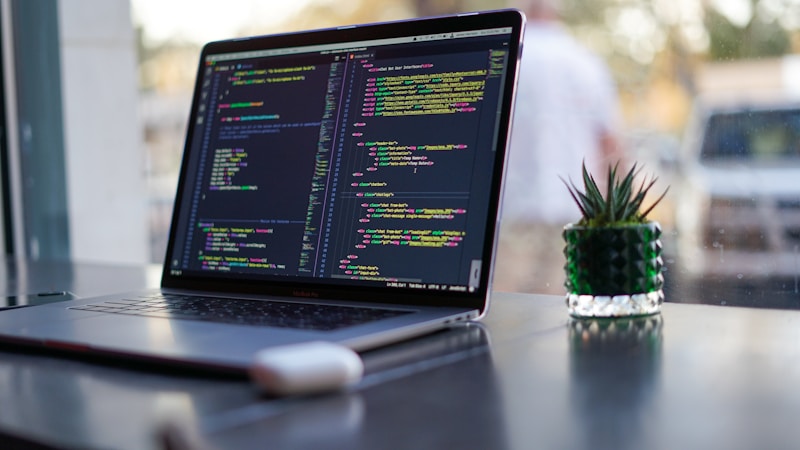
Anthropic ditches Git for custom source control after 12x code velocity surge
Anthropic's shift to a custom source control system signals how rapidly scaling AI development has outpaced conventional infrastructure. The company's code merge rate jumped 12x in four months, from 2,500 to 30,000 daily changes, forcing a rethink of Git-based workflows. This reflects a broader pattern among frontier labs: as model training cycles compress and deployment velocity accelerates, standard developer tooling becomes a bottleneck. The move matters beyond Anthropic because it exposes how infrastructure assumptions built for slower software cycles break under AI-scale iteration. Other labs likely face identical pressures, making this a canary for how the entire industry may need to rearchitect development pipelines.Tev-Gym dataset unlocks dense rewards for multi-day agent training
Researchers have released Tev-Gym, a dataset designed to unblock open-source model training on multi-day autonomous tasks. The core innovation addresses a structural bottleneck in agent development: sparse rewards and scarce verified training data make long-horizon task learning intractable at scale. By introducing 1,170 verified environments with dense, progressive reward signals across seven domains, the work enables practitioners to train agents on economically meaningful problems without manual reward engineering. This directly impacts the feasibility of recursive self-improvement and autonomous discovery systems, shifting long-horizon agentic capability from frontier labs toward the open ecosystem.68