Humanoid robot makers hit supply chain wall amid U.S.-China friction
Source published ·Modelwire updated
Original coverage: AI Business ↗·How Modelwire adds context
The development
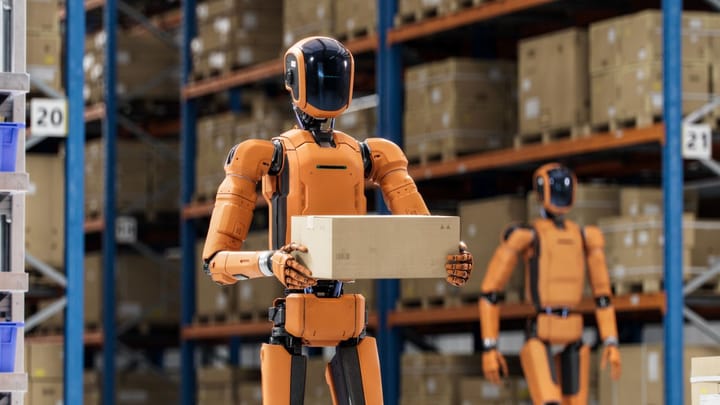
Humanoid robot manufacturers face a critical supply chain inflection point as production scales collide with geopolitical fragmentation. Western makers are discovering that scaling beyond prototype volumes exposes dependency on Chinese component suppliers, while U.S.-China trade tensions now threaten access to alternatives. This bottleneck could reshape robotics timelines and force either vertical integration, nearshoring investments, or acceptance of higher unit costs. The constraint matters beyond hardware: it signals how physical AI systems face different scaling barriers than software, potentially slowing deployment of embodied AI into real-world tasks.
Modelwire’s AI-generated summary of coverage from AI Business.
Modelwire analysis
Analyst takeOur AI-generated reading of the wider context and the next developments to watch.
The supply chain bottleneck isn't just a logistics problem; it's forcing a strategic choice between three incompatible paths (vertical integration, nearshoring, or accepting cost disadvantage), and manufacturers can't pursue all three simultaneously. This means winners and losers will emerge not from better robotics but from better supply positioning.
This directly extends the credibility gap flagged in our October 7th piece on humanoid manufacturing. That story showed task-specific robots already outperform general-purpose humanoids in real factories. Now we're learning that scaling humanoids into production volumes exposes a second layer of friction: even if the robots worked better, Western makers can't manufacture them at competitive cost. The supply constraint compounds the operational one. Meanwhile, the regulatory precedent from California's robot cage match enforcement signals that embodied AI systems face institutional friction beyond just engineering. Together these stories suggest the humanoid timeline isn't constrained by capability alone but by manufacturing economics and regulatory permission.
If a Western humanoid manufacturer announces a nearshoring facility in Mexico or Eastern Europe within the next 18 months, that signals acceptance of the cost-premium path. Conversely, if Chinese suppliers begin offering long-term component contracts locked to Western buyers at fixed prices before Q2 2027, that would indicate the market is solving access through contractual rather than geographic solutions. Either outcome tells us whether the bottleneck forces structural industry reorganization or remains a temporary friction point.
This interpretation is generated from the summary above and the archive coverage cited below. Our methodology · Report an error
Coverage behind this analysis
These archive entries ground the connection in our analysis. They are ordered by source publication date, with links to our coverage and the original sources.
·AI Business
Specialized robots outperform humanoid hype in manufacturing
The robotics industry faces a credibility gap as humanoid machines dominate headlines while specialized automation systems quietly drive real factory productivity. This piece examines why task-specific robots outperform general-purpose humanoids in manufacturing contexts and explores barriers preventing Western adoption of proven automation technologies. The analysis suggests the AI and robotics sectors risk misallocating capital and…
MentionsHumanoid robots · Chinese suppliers · Western manufacturers · U.S.-China trade tensions
How this coverage is produced
Modelwire uses AI to generate summaries and context from source headlines, snippets, and selected archive coverage. Automated checks do not verify every claim, and items are not routinely reviewed by a person before publication. Zacaria Solis operates the site. Read the linked source for the full evidence and report errors through our corrections process.
Modelwire summarizes, we don’t republish. AI Business originally reported this story as “Humanoid bottlenecks emerge amid US-China tensions”. The full content lives on aibusiness.com. If you’re a publisher and want a different summarization policy for your work, see our takedown page.