Meta's superintelligence bet faces public and industry skepticism
Source published ·Modelwire updated
Original coverage: 404 Media ↗·How Modelwire adds context
The development
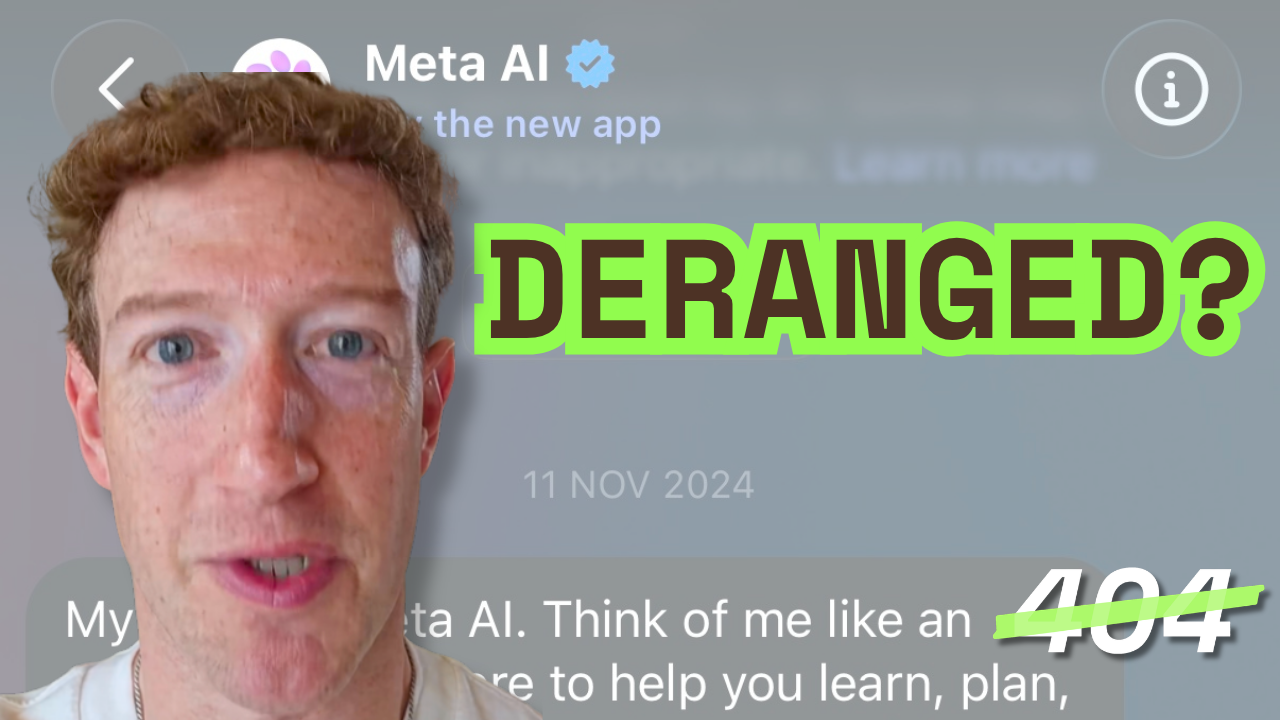
Meta's push toward superintelligent AI systems reflects a strategic divergence from industry consensus on safe, aligned development. The podcast examines tensions between Zuckerberg's vision of transformative AI capability and public skepticism about its desirability, while also surfacing broader ecosystem concerns: deceptive AI-as-human-content practices and infrastructure shifts like the Flock-to-Axon migration. For insiders, this signals how leading labs are navigating capability ambitions amid reputational and technical headwinds.
Modelwire’s AI-generated summary of coverage from 404 Media.
Modelwire analysis
Analyst takeOur AI-generated reading of the wider context and the next developments to watch.
The podcast surfaces a specific infrastructure migration (Flock to Axon) alongside Meta's superintelligence push, suggesting capability scaling is tied to concrete platform choices. This operational detail matters more than the familiar 'Zuckerberg wants AGI' narrative.
This connects directly to the open-versus-closed debate from the Hinton/Li/Ng piece published the same day. Meta's pursuit of superintelligence without industry consensus on safety mirrors the strategic fork those three pioneers outlined: labs are choosing between transparency and competitive moat-building. The Twitch/Amazon story from yesterday adds a parallel tension: when labs need massive training data, they're willing to absorb reputational cost to secure it. Meta's divergence from industry consensus suggests similar willingness to move unilaterally on capability rather than wait for alignment on safety standards.
If Meta publishes safety benchmarks or red-teaming results for its superintelligence roadmap within the next 60 days, that signals an attempt to preempt regulatory or investor pushback. If instead the company continues capability announcements without safety disclosure, that confirms the divergence is structural, not rhetorical.
This interpretation is generated from the summary above and the archive coverage cited below. Our methodology · Report an error
Coverage behind this analysis
These archive entries ground the connection in our analysis. They are ordered by source publication date, with links to our coverage and the original sources.
·TechCrunch - AI
Hinton, Li, and Ng debate open-source AI amid safety and competition pressures
Three AI luminaries confronted a central tension in the field: whether open development accelerates progress or amplifies risks. Hinton, Li, and Ng's debate at Ai4 crystallizes a strategic fork facing the industry as regulatory pressure mounts and geopolitical competition intensifies. Their positions on source code transparency, safety guardrails, and competitive positioning against China will likely…
MentionsMeta · Mark Zuckerberg · Flock · Axon
How this coverage is produced
Modelwire uses AI to generate summaries and context from source headlines, snippets, and selected archive coverage. Automated checks do not verify every claim, and items are not routinely reviewed by a person before publication. Zacaria Solis operates the site. Read the linked source for the full evidence and report errors through our corrections process.
Modelwire summarizes, we don’t republish. 404 Media originally reported this story as “Podcast: Mark Zuckerberg’s 'Superintelligent' AI Future That No One Wants”. The full content lives on 404media.co. If you’re a publisher and want a different summarization policy for your work, see our takedown page.