Physical AI reshapes infrastructure beyond language models
Source published ·Modelwire updated
Original coverage: AI Business ↗·How Modelwire adds context
The development
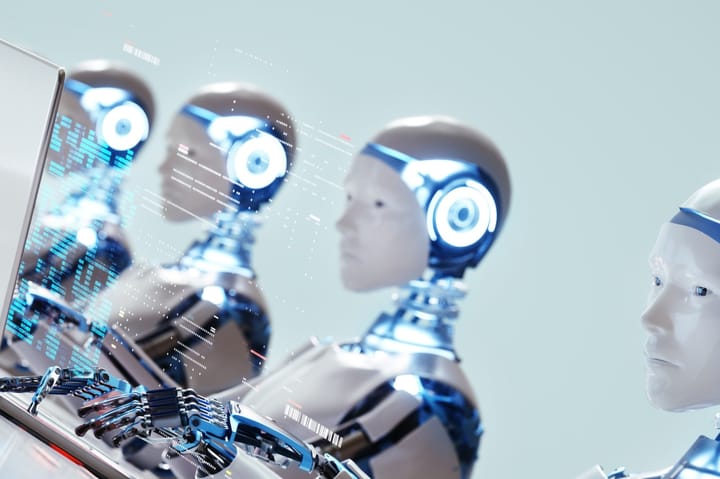
The deployment of AI systems into physical environments represents a fundamental shift in how the technology creates value. Robots and factory automation demand capabilities beyond language understanding: spatial reasoning, real-time decision-making under uncertainty, and integration with legacy industrial systems. This transition exposes gaps in current LLM architectures and creates new infrastructure demands around edge computing, sensor fusion, and embodied learning. For investors and technologists, physical AI signals where the next wave of competitive advantage lies, moving past software-only moats into hardware-software integration and domain-specific training.
Modelwire’s AI-generated summary of coverage from AI Business.
Modelwire analysis
Analyst takeOur AI-generated reading of the wider context and the next developments to watch.
The article frames physical AI as a distinct investment thesis, but doesn't clarify whether this represents new deployment patterns or a rebranding of existing robotics work. The key omission: how much of this 'shift' is driven by genuine technical breakthroughs versus venture capital rotating capital away from saturated LLM markets into less-crowded verticals.
This connects directly to the Boston hub story from October 19th and Amulya Vishwanath's 'Lego era' framing from October 16th. Both positioned physical AI as foundational infrastructure play rather than near-term autonomous breakthroughs. The current piece amplifies that thesis by naming the specific gaps (spatial reasoning, edge computing, sensor fusion) that Vishwanath identified as binding constraints. However, it risks understating the context-awareness problem highlighted in the MIT Technology Review piece from October 22nd: physical systems also demand domain-specific operational logic, not just better hardware-software integration. That gap may prove as limiting as the actuator constraints.
If Series A funding for robotics infrastructure startups (actuators, software stacks, safety layers) outpaces funding for end-product robotics companies over the next two quarters, that confirms the market is genuinely betting on Vishwanath's thesis. If instead capital continues flowing toward autonomous delivery or humanoid robots, the 'physical AI' framing is marketing repackaging rather than structural reallocation.
This interpretation is generated from the summary above and the archive coverage cited below. Our methodology · Report an error
Coverage behind this analysis
These archive entries ground the connection in our analysis. They are ordered by source publication date, with links to our coverage and the original sources.
·TechCrunch - AI
Nvidia robotics veteran sees hardware, not models, as robotics bottleneck
Amulya Vishwanath, a former Nvidia robotics product leader now investing in physical AI, frames the sector as still in foundational stages rather than on the cusp of autonomous breakthroughs. Her "Lego era" framing challenges the narrative that foundation models alone will unlock robotics maturity, suggesting actuators, hands, software stacks, and safety infrastructure remain the binding…
How this coverage is produced
Modelwire uses AI to generate summaries and context from source headlines, snippets, and selected archive coverage. Automated checks do not verify every claim, and items are not routinely reviewed by a person before publication. Zacaria Solis operates the site. Read the linked source for the full evidence and report errors through our corrections process.
Modelwire summarizes, we don’t republish. AI Business originally reported this story as “Prompt: AI moves beyond the screen”. The full content lives on aibusiness.com. If you’re a publisher and want a different summarization policy for your work, see our takedown page.