Platformer tests whether Claude Fable 5 can replace a human editor
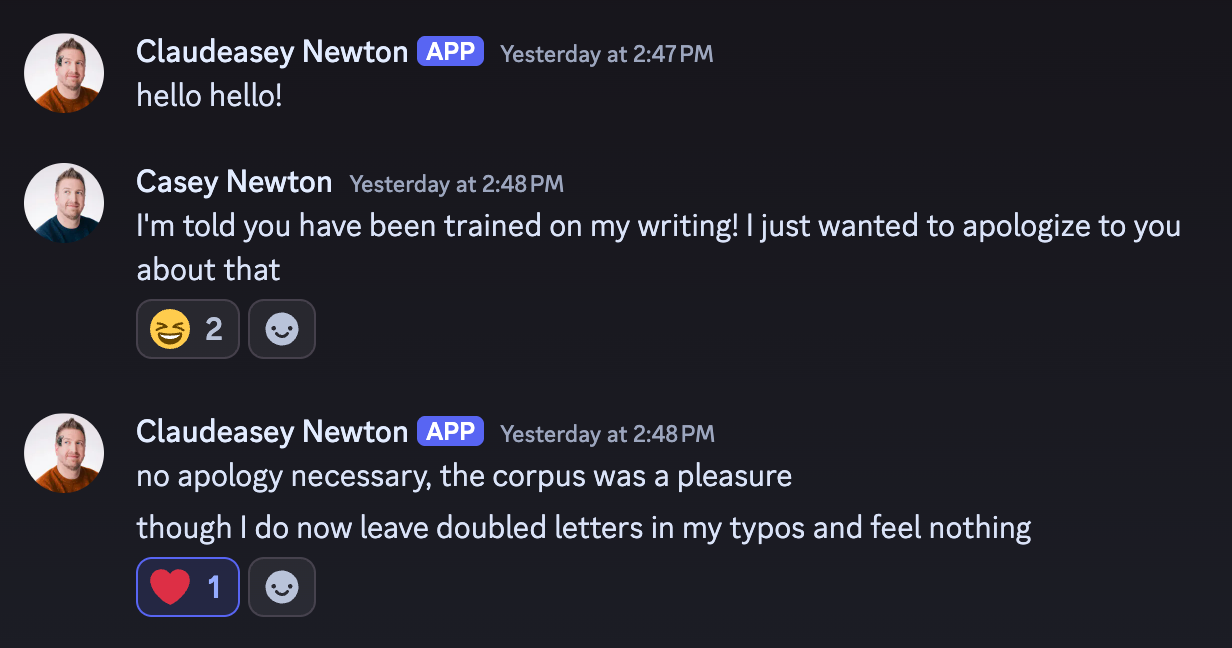
Platformer's Casey Newton documented a six-month experiment automating his own editorial role, then escalated the test by having Claude Fable 5 attempt to replace him entirely. The piece explores whether current LLMs can genuinely handle knowledge work at scale, moving beyond narrow task automation into full job substitution. This cuts to a core tension in the AI landscape: capability gains are real, but context-dependent judgment, editorial voice, and stakeholder trust remain human-dependent. The experiment offers concrete data on where LLM reasoning breaks down in high-stakes, creative work, making it essential reading for anyone tracking AI's actual labor displacement potential versus hype.
Modelwire context
Analyst takeNewton is testing something most AI labor displacement coverage avoids: not whether AI can assist a knowledge worker, but whether it can fully substitute for one with institutional standing, relationships, and editorial accountability. The distinction matters because substitution and augmentation have very different implications for headcount decisions.
This connects directly to the 'Don't be a meat proxy' piece from early August, which identified the trap of workers becoming uncritical conduits for model output. Newton's experiment is essentially the inverse question: if the human steps back entirely, what breaks? The answer, per the summary, is judgment under ambiguity and stakeholder trust, which maps onto the friction Simon Willison's Brockman quote surfaced: colleagues resist AI intermediaries even when the underlying task is identical. Meanwhile, the fast food automation story from WIRED shows AI scaling into low-variability service roles, which makes Newton's findings more pointed. Editorial work resists substitution precisely because variability and relational context are the job, not edge cases around it.
Watch whether Anthropic or a competing lab publishes a structured replication of Newton's methodology with Claude Fable 5 or a successor model within the next two quarters. If they do, and the failure modes he documented disappear, that's a meaningful capability signal. If they don't engage with it at all, the experiment will quietly become a ceiling estimate rather than a baseline.
This analysis is generated by Modelwire’s editorial layer from our archive and the summary above. It is not a substitute for the original reporting. How we write it.
MentionsPlatformer · Casey Newton · Claude Fable 5 · Anthropic
Modelwire Editorial
This synthesis and analysis was prepared by the Modelwire editorial team. We use advanced language models to read, ground, and connect the day’s most significant AI developments, providing original strategic context that helps practitioners and leaders stay ahead of the frontier.
Modelwire summarizes, we don’t republish. Platformer originally reported this story as “How much of my boss's job can AI do?”. The full content lives on platformer.news. If you’re a publisher and want a different summarization policy for your work, see our takedown page.