Raycast brings LLM-powered app building to the desktop
Source published ·Modelwire updated
Original coverage: Platformer ↗·How Modelwire adds context
The development
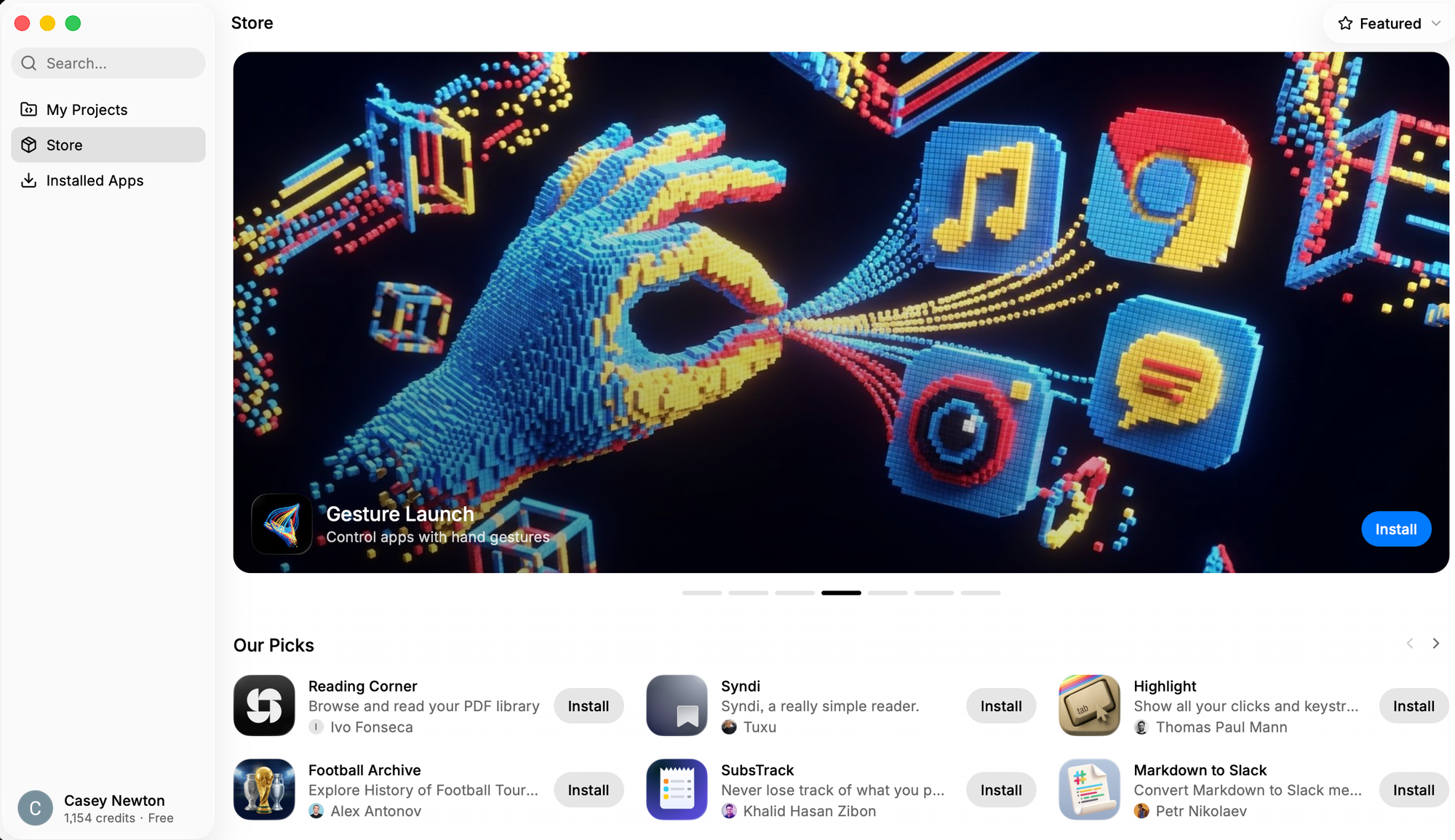
Raycast has launched Glaze, a visual app-building tool that leverages LLM-assisted development to lower barriers for non-engineers creating desktop applications. The product represents a shift in how AI coding assistants move beyond terminal-based workflows into graphical interfaces, potentially expanding the addressable market for AI-augmented development beyond traditional developers. This signals growing competition in the no-code/low-code space where LLM capabilities are becoming table stakes for productivity tools targeting broader audiences.
Modelwire’s AI-generated summary of coverage from Platformer.
Modelwire analysis
Analyst takeOur AI-generated reading of the wider context and the next developments to watch.
The buried angle here is that Raycast is a productivity tool company, not a dev tools company, which means Glaze is less about capturing developers and more about converting Raycast's existing power-user base into builders. That's a different go-to-market than Cursor or Replit, and it matters for how adoption curves will look.
The desktop AI land grab context is essential here. Google's expansion of Gemini Spark to macOS (covered July 1) showed that the fight for the desktop is accelerating, with agents competing to become persistent productivity layers rather than discrete tools. Glaze enters that same contested surface but from a different angle: instead of an assistant sitting on top of existing apps, it aims to let users build new ones. That distinction could be durable or it could collapse quickly if Gemini Spark or similar agents add visual scaffolding of their own. The no-code framing also echoes the VIS4ML survey from July 1, which documented how graphical interfaces lower the barrier for non-specialists to interact with complex automated systems.
Watch whether Glaze ships integrations with third-party data sources within the next two quarters. If it stays limited to standalone desktop apps, the addressable market stays narrow. If it connects to live APIs and services, it becomes a direct competitor to the agentic workflow builders, and the competitive picture changes substantially.
This interpretation is generated from the summary above and the archive coverage cited below. Our methodology · Report an error
Coverage behind this analysis
These archive entries ground the connection in our analysis. They are ordered by source publication date, with links to our coverage and the original sources.
·TechCrunch - AI
Gemini Spark, Google’s agentic assistant, is now available on Mac
Google's expansion of Gemini Spark to macOS signals a strategic push to embed agentic AI across desktop platforms, competing directly with OpenAI's assistant ecosystem. The rollout includes real-time tracking and expanded app integrations, positioning Gemini as a persistent productivity layer rather than a chat-only tool. This move reflects the industry's shift toward always-on agents that…
MentionsRaycast · Glaze
How this coverage is produced
Modelwire uses AI to generate summaries and context from source headlines, snippets, and selected archive coverage. Automated checks do not verify every claim, and items are not routinely reviewed by a person before publication. Zacaria Solis operates the site. Read the linked source for the full evidence and report errors through our corrections process.
Modelwire summarizes, we don’t republish. Platformer originally reported this story as “Vibe coding has escaped the terminal”. The full content lives on platformer.news. If you’re a publisher and want a different summarization policy for your work, see our takedown page.