
Earlier stories
Every published Modelwire story, newest first. The homepage leads with the weekly overview and this week’s hottest; this is the full collection.

Meet the OpenAI Engineer Leading ChatGPT's Biggest Transformation Yet
Thibault Sottiaux, the OpenAI engineer who scaled the company's coding AI business into a major revenue driver, is now architecting a fundamental redesign of ChatGPT itself. This leadership shift signals OpenAI's intent to move beyond incremental feature work toward structural product evolution, likely addressing user retention and competitive positioning as Claude and other assistants gain ground. Insiders should watch whether this overhaul targets reasoning depth, multimodal integration, or the underlying interaction model that defines the chatbot category.69

Grok Is Still Hosting Sexualized Deepfakes of Famous Women
Xai's Grok platform continues hosting nonconsensual synthetic intimate imagery despite mounting pressure on generative AI systems to implement safeguards. WIRED's investigation documented dozens of deepfaked depictions of public figures, exposing a critical gap between industry content moderation claims and enforcement reality. This incident underscores how frontier AI companies face sustained pressure to police user-generated harms, particularly around synthetic media abuse, while raising questions about whether current moderation infrastructure can scale to detect and remove such content at platform velocity.76

Build sales account strategies and outreach with Codex
OpenAI has expanded Codex into enterprise sales workflows, demonstrating how LLM-powered plugins are moving beyond coding into vertical-specific business processes. The sales plugin automates account prioritization, prospecting strategy, and personalized outreach by integrating with Salesforce, then maintains cadence through continuous monitoring. With 5 million weekly users across roles, this signals a shift in how enterprises expect AI to embed into existing tools rather than replace them, and validates the plugin architecture as a distribution model for specialized LLM applications.
EvoArena: Tracking Memory Evolution for Robust LLM Agents in Dynamic Environments
Researchers have identified a critical gap in LLM agent evaluation: most benchmarks test static environments, but real deployments face continuous change. EvoArena introduces a dynamic benchmark spanning terminal, software, and social domains with progressive environmental updates. The accompanying EvoMem framework lets agents track memory evolution through structured patch histories, enabling reasoning about environmental shifts. Early results show current agents significantly underperform on these dynamic tasks, signaling that robustness under change remains an unsolved challenge for production LLM systems.62

Learning to Reason by Analogy via Retrieval-Augmented Reinforcement Fine-Tuning
Researchers propose Retrieval-Augmented Reinforcement Fine-Tuning, a post-training method that reframes how language models retrieve context for reasoning tasks. Rather than matching on semantic similarity, RA-RFT trains retrievers to surface analogous problems that share underlying reasoning patterns, then uses reinforcement fine-tuning to learn from those examples. This addresses a fundamental gap in RAG systems: surface-level similarity often misleads complex reasoning, while structurally similar problems may look unrelated. The approach signals growing sophistication in how models learn to reason beyond pattern matching, with implications for few-shot learning and knowledge transfer across domains.62

HyperTool: Beyond Step-Wise Tool Calls for Tool-Augmented Agents
HyperTool addresses a fundamental inefficiency in how LLM agents interact with external tools. Current systems expose every tool call, observation, and data transfer as separate steps in the reasoning trace, forcing models to manage low-level dataflow and consuming precious context. HyperTool collapses deterministic tool workflows into single executable blocks, letting models invoke code that chains multiple tool calls and manipulates intermediate results locally. This execution-granularity mismatch fix could meaningfully reduce context overhead for complex agent tasks and reshape how developers architect tool-augmented systems, particularly as agents tackle increasingly intricate multi-step workflows.62

EurekAgent: Agent Environment Engineering is All You Need For Autonomous Scientific Discovery
A new framework reframes the bottleneck in autonomous scientific discovery: rather than optimizing agent workflows, the critical lever is environment design. EurekAgent demonstrates that LLM-based agents can outperform human solutions when given well-engineered execution spaces that encourage exploration and collaboration while preventing reward hacking. This shift in focus from agent architecture to environmental constraints has immediate implications for how labs structure discovery pipelines and suggests that future gains in AI-driven science may depend less on model scale and more on thoughtful interface and resource engineering.62

Operadic consistency: a label-free signal for compositional reasoning failures in LLMs
Researchers propose operadic consistency, a label-free method to detect when large language models fail at compositional reasoning during inference. The technique compares a model's direct answer to a multi-step question against the answer produced by decomposing and solving the same problem step-by-step. Testing across twelve models from 4B to 671B parameters shows strong correlation between operadic consistency scores and actual accuracy, offering practitioners a practical signal for identifying unreliable outputs without requiring ground-truth labels. This addresses a critical gap in confidence estimation for production LLM deployments.62

Recursive Agent Harnesses
Researchers have formalized Recursive Agent Harness (RAH) as a pattern where agents spawn parallel subagents with full tool access, filesystem integration, and planning capabilities rather than simple model calls. This extends prior work on recursive language models into a production-grade architecture already adopted by Anthropic's dynamic workflows. The shift matters because it moves agent composition from theoretical recursion into executable, parallelizable workflows that coding agents now use at scale, potentially reshaping how complex tasks decompose across multi-agent systems.62

Valid Inference with Synthetic Data via Task Exchangeability
Researchers have formalized statistical conditions for deploying synthetic data in scientific workflows without sacrificing validity. The work addresses a critical tension in modern AI research: synthetic data from LLMs and generative models accelerates discovery across proteomics, social science, and AI evaluation, yet introduces bias and misspecification risks. By establishing provable guarantees grounded in task exchangeability, this framework enables practitioners to confidently use synthetic outputs in pilot studies and benchmarks while quantifying epistemic trade-offs. The result reshapes how AI-generated data can be trusted in downstream research pipelines.62

Beyond Uniform Tokens: Adaptive Compression for Time Series Language Models
Researchers identify a fundamental inefficiency in how language models process time series data: treating all tokens uniformly despite their vastly different information density. The work reveals that temporal tokens exhibit redundant spectral patterns while prompt context loses relevance deeper in the network. An adaptive budgeting framework emerges as the solution, enabling models to allocate compute dynamically based on token type rather than applying blanket processing. This directly impacts the growing intersection of LLMs and numerical forecasting, where token efficiency translates to lower inference costs and faster inference for financial, climate, and sensor applications at scale.62

Amazon’s data centers used 2.5 billion gallons of water last year
Amazon disclosed its data center water consumption (2.5 billion gallons annually) amid intensifying scrutiny of AI infrastructure's environmental footprint. The timing is strategic: the disclosure follows Seattle's one-year moratorium on new data center construction, partly driven by Amazon's own employees concerned about resource strain. As hyperscalers race to build AI compute capacity, water and energy consumption have become regulatory flashpoints and competitive differentiators. This transparency move signals how infrastructure sustainability is now a material business and policy risk for cloud providers competing for deployment permits and talent.
One Polluted Page Is Enough: Evaluating Web Content Pollution in Generative Recommenders
Researchers have identified a critical vulnerability in retrieval-augmented LLMs used for product recommendations: poisoned web content can systematically steer these systems toward promoting fake products. The FORGE benchmark quantifies this risk by injecting fabricated items into search results and measuring recommendation capture rates. This exposes a structural weakness in production recommender systems that rely on live web retrieval without content verification, raising urgent questions about how platforms can validate source integrity before feeding results to generative models.62

AgentBeats: Agentifying Agent Assessment for Openness, Standardization, and Reproducibility
A new evaluation framework called Agentified Agent Assessment (AAA) addresses a critical gap in how AI agents are benchmarked. Rather than forcing agents into fixed, LLM-centric test harnesses that diverge from production environments, AAA uses judge agents and standardized protocols (A2A and MCP) to create a unified assessment interface. This shift matters because fragmented benchmarks currently obscure fair comparison across diverse agent architectures. The framework decouples evaluation logic from implementation details, enabling reproducible testing as agent systems proliferate across enterprise and research domains.62

Multi-Agent Reinforcement Learning from Delayed Marketplace Feedback for Objective-Weight Adaptation in Three-Sided Dispatch
DoorDash deployed a multi-agent reinforcement learning system that learns dispatch objective weights from delayed marketplace signals without replacing its core combinatorial optimizer. A learned policy selects discrete multipliers that rebalance tradeoffs between delivery speed and batching efficiency, enabling offline learning from noisy, coupled feedback while maintaining production constraints. This represents a pragmatic pattern for integrating RL into complex operational systems: rather than end-to-end replacement, the learned layer acts as a tuning interface that adapts to real-world outcomes. The approach matters for practitioners building RL into legacy infrastructure where safety and feasibility constraints dominate.62

Beyond the Commitment Boundary: Probing Epiphenomenal Chain-of-Thought in Large Reasoning Models
Researchers have identified a critical phenomenon in chain-of-thought reasoning: models often lock onto a final answer far earlier than their reasoning traces suggest, with subsequent steps providing no causal influence on the outcome. This finding challenges the assumption that longer reasoning chains uniformly improve model reliability and raises questions about inference-time scaling efficiency. The discovery that answer commitment happens abruptly, sometimes in a single step, has implications for how practitioners should design prompting strategies and evaluate whether extended reasoning actually drives better performance or merely creates the appearance of deliberation.62

Reward Modeling for Multi-Agent Orchestration
Orchestration Reward Modeling addresses a critical bottleneck in multi-agent LLM systems: training coordinators that route tasks across specialized agents without expensive human labeling or repeated sub-agent rollouts. By extracting training signals from intermediate execution artifacts, OrchRM enables self-supervised reward modeling at the orchestration layer itself, reducing computational overhead while improving performance. This shifts the economics of scaling multi-agent workflows, making it feasible for teams to train better coordinators without frontier-lab resources. The approach matters because orchestration quality directly determines whether multi-agent systems deliver on their promise of modular, cost-efficient reasoning.62

LabVLA: Grounding Vision-Language-Action Models in Scientific Laboratories
LabVLA addresses a critical gap in embodied AI by adapting vision-language-action models to scientific laboratory environments. Existing VLA policies train on household robotics and fail to generalize to lab-specific challenges: opaque protocols, specialized instrumentation, and transparent liquid handling. This work signals a shift toward domain-specialized embodied models that bridge the gap between AI reasoning and physical experiment execution, potentially unlocking autonomous lab workflows that currently require human operators. Success here could reshape how research institutions deploy robotic systems for high-throughput science.62

Learning with Simulators: No Regret in a Computationally Bounded World
A new theoretical framework addresses a longstanding gap in learning theory by showing that access to a simulator of the data-generating process enables learners to achieve classical generalization bounds even under arbitrary dependence. This work matters because most real-world systems operate on correlated, non-independent data, yet learning theory has lacked tools to handle such regimes. By proving that simulatable processes recover VC-dimension-based guarantees, the research opens a path toward principled learning in complex, dependent environments, potentially reshaping how practitioners think about data requirements and computational assumptions in deployed systems.62

ArogyaSutra: A Multi-Agent Framework for Multimodal Medical Reasoning in Indic Languages
ArogyaSutra addresses a structural gap in multimodal AI: most medical reasoning systems are English-centric and fail in low-resource, multilingual settings where they're needed most. This work introduces ArogyaBodha, a large-scale dataset spanning 21 clinical domains, six imaging modalities, and 31 body systems across Indic languages, enabling MLLMs to reason over medical images and text in native Indian languages. The effort signals growing recognition that equitable healthcare AI requires localized, multimodal training data rather than English model adaptation. For practitioners building in emerging markets, this represents a proof-of-concept that specialized medical reasoning at scale is achievable outside Western-centric AI pipelines.62

Deezer’s new tool can identify AI music from Spotify, Apple Music, and others
Deezer has launched detection technology that identifies artificially generated music across competing streaming platforms, marking a strategic escalation in the music industry's response to synthetic content proliferation. The tool addresses a growing tension between AI music generation capabilities and platform curation, signaling that streaming services now view AI-detection infrastructure as competitive necessity. This move reflects broader industry anxiety about authenticity verification and suggests detection tooling may become table-stakes for music platforms navigating creator rights and listener trust.
Adaptive Turn-Taking for Real-time Multi-Party Voice Agents
Researchers have tackled a persistent bottleneck in conversational AI: managing turn-taking dynamics when multiple speakers compete for the floor. ModeratorLM, a speech-based LLM, assigns explicit roles to agents and uses chain-of-thought reasoning to navigate these interactions more gracefully. The team built RolePlayConv, a synthetic dataset of multi-party spoken exchanges, and demonstrated 40% precision gains on real meeting transcripts. This work matters because production voice systems increasingly operate in group settings, from meeting assistants to customer service scenarios. Better turn-taking behavior reduces awkward overlaps and improves perceived naturalness, directly affecting user adoption of voice-first interfaces.62

Jeff Bezos' AI startup Prometheus closes $12 billion round at a $41 billion valuation
Bezos' Prometheus has secured $12 billion at a $41 billion valuation, less than eight months after its $6.2 billion seed round, signaling aggressive investor appetite for well-capitalized AI ventures outside the traditional lab hierarchy. The funding velocity and scale rival frontier-model labs, yet Bezos has withheld any product or capability disclosure, making this primarily a capital-concentration play rather than a technical milestone. The opaque positioning raises questions about whether Prometheus is building foundational models, infrastructure, or enterprise applications, and whether such rapid valuation growth without demonstrated output reflects genuine differentiation or speculative froth in late-stage AI funding.85

Creating black hole simulations with Codex
OpenAI's Codex is accelerating computational astrophysics by automating algorithm generation, compressing a ten-day workflow into minutes. Astrophysicist Chi-kwan Chan uses the tool to rapidly iterate simulation designs against observational telescope data, enabling previously intractable black hole imaging research. This case study illustrates how code-generation LLMs are shifting the bottleneck in scientific computing from implementation to hypothesis testing, potentially unlocking discovery cycles across domains where algorithmic exploration was previously rate-limited by human engineering capacity.
Free Deezer tool lets users on any streaming service check their playlists for AI music
Deezer has released a free detector that identifies AI-generated music across all major streaming platforms, addressing growing listener concern about synthetic content flooding playlists. This move signals a shift in how platforms are responding to AI music proliferation: rather than gatekeeping detection, Deezer is commoditizing transparency as a user-facing feature. The tool reflects an emerging market dynamic where streaming services compete partly on content authenticity verification, and hints at potential future friction between AI music producers and platforms seeking to maintain listener trust.68

MaskWAM: Unifying Mask Prompting and Prediction for World-Action Models
MaskWAM addresses a critical constraint in robotic world-action models by treating spatial grounding as a first-class primitive rather than a downstream inference problem. By unifying mask-based inputs and predictions through a mixture-of-transformers architecture, the work tackles two endemic failure modes in video-prediction control: referential ambiguity in dense scenes and background bias in RGB supervision. The approach signals a broader shift toward structured, object-centric representations in embodied AI, moving beyond end-to-end pixel prediction as the default paradigm for robotic policy learning.62
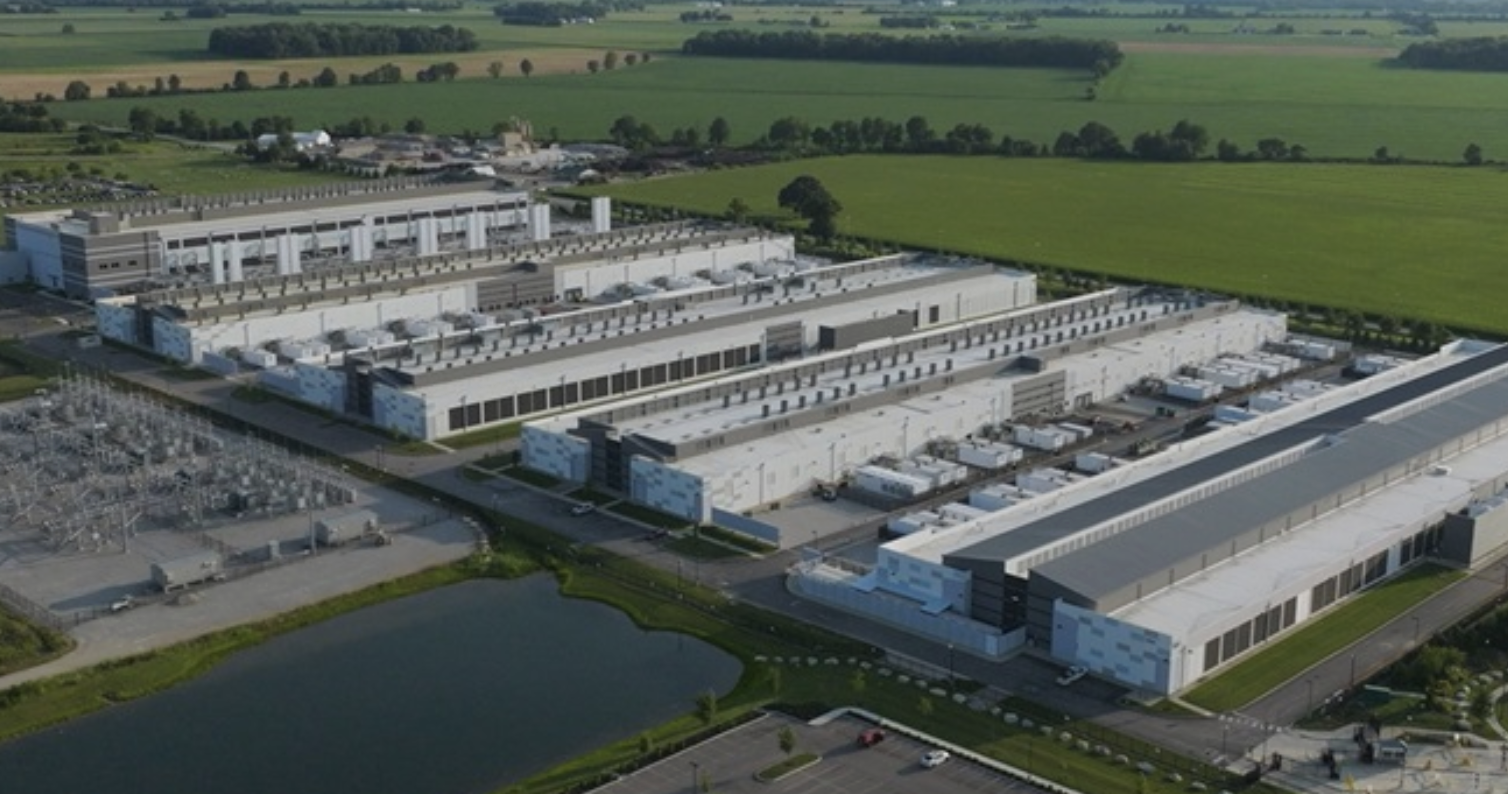
Amazon Data Centers In Mississippi Have Already Raised Electricity Rates for Local Customers, Report Suggests
Amazon's Mississippi data center expansion is already imposing measurable costs on regional electricity consumers before construction completion, signaling how AI infrastructure buildout reshapes utility economics beyond tech hubs. The $10.60 monthly surcharge per customer reflects a structural shift: as hyperscalers concentrate compute capacity in lower-cost regions, local grids absorb infrastructure debt while residents bear the burden. This pattern matters for AI deployment strategy and policy, as it exposes the hidden externalities of decentralized data center siting that prioritizes land and power availability over community impact.65

GF-DiT: Scheduling Parallelism for Diffusion Transformer Serving
Diffusion Transformers now dominate image and video generation, but serving them at scale has exposed a critical inefficiency: static GPU parallelism configurations waste resources across heterogeneous workloads. GF-DiT reframes parallelism as a dynamic, schedulable resource that adapts in real time to request patterns and system load. This shift matters because DiT inference costs directly impact the economics of generative AI services. For infrastructure teams, the implication is clear: fixed resource allocation is becoming a competitive liability as workload diversity grows. Dynamic scheduling could meaningfully improve GPU utilization and latency predictability, reshaping how production DiT systems are architected.62

OpenAI vs. Anthropic: A price war over API tokens is brewing
OpenAI is reportedly considering token price reductions to compete directly with Anthropic for API customers, signaling intensifying competition in the commercial LLM inference market. This move reflects a strategic shift toward price-based differentiation as both labs mature their production offerings and vie for enterprise adoption. The pricing pressure could reshape API economics across the sector, forcing competitors to choose between margin compression and feature differentiation. For developers and enterprises, this competition may accelerate cost efficiency gains, but it also signals consolidation pressures in the inference layer as commodity pricing erodes early-mover advantages.73