
Earlier stories
The full Modelwire feed, ordered by publish time.

Anthropic's Jacobian lens reveals internal reasoning patterns in Claude
Anthropic has unveiled a novel interpretability method called the Jacobian lens that penetrates the internal mechanics of large language models during reasoning and task execution. This technique represents a meaningful advance in the long-standing challenge of understanding how neural networks arrive at outputs, moving beyond surface-level behavior analysis. The findings span from expected patterns to genuinely surprising discoveries about model cognition. For the AI safety and alignment community, clearer visibility into model internals is foundational to building trustworthy systems and detecting emergent behaviors before deployment. This work signals that interpretability research is transitioning from theoretical to practical, with direct implications for how labs validate and govern increasingly capable models.
Google adds AI-generation labels to ads across Search and YouTube
Google is rolling out AI-generation labels across its ad ecosystem, letting users see which Search, Discover, and YouTube ads were created or edited with generative tools. The move signals a shift toward transparency as synthetic content proliferates in commercial spaces. For advertisers, this creates a new disclosure requirement that could reshape creative workflows and trust signals. The broader implication: major platforms are beginning to formalize AI-disclosure infrastructure, setting a precedent that may pressure competitors and inform future regulatory frameworks around synthetic media attribution.
GPT-5.6 enables mathematician to solve previously unsolvable proofs
OpenAI's GPT-5.6 has crossed a threshold in mathematical problem-solving, enabling a mathematician named Bartosz to tackle previously intractable proofs. This represents a concrete capability expansion beyond prior model generations, signaling that frontier LLMs are now competitive with specialized mathematical reasoning tasks. The shift matters for research communities reliant on computational proof assistance and suggests the model's reasoning depth has matured enough to handle open-ended mathematical discovery, not just verification or tutoring.
Broccoli farmer deploys GPT-5.6 for farm operations
OpenAI's case study of a broccoli farmer deploying GPT-5.6 signals a shift toward vertical AI adoption in agriculture. The narrative underscores how frontier LLMs are moving beyond tech-native use cases into resource-constrained, domain-specific operations where real-time decision-making and cost efficiency matter. This represents a test of whether current-generation models can deliver ROI in low-margin industries, and hints at OpenAI's strategy to broaden enterprise TAM beyond software and knowledge work into physical production systems.
Family launches cereal business using GPT-5.6 from home
OpenAI's latest case study showcases GPT-5.6 enabling non-technical founders to launch and operate a consumer business with minimal overhead. The Wishingrads' cereal venture demonstrates how frontier LLMs are lowering barriers to entrepreneurship by automating business operations traditionally requiring specialized expertise or hired help. This signals a shift in AI's economic impact: from enterprise automation to individual agency, where consumer-grade access to capable models lets small teams compete on execution rather than resources.
OpenAI launches GPT-5.6 trio with aggressive pricing on agentic tasks
OpenAI's GPT-5.6 family arrives with three tiers, Luna through Sol, establishing a new pricing floor that undercuts Claude Opus on input costs while maintaining premium output pricing. The strategic move targets agentic workloads, where reasoning token variance now matters more than raw per-token rates. Benchmarks claim across-the-board wins over Claude Fable 5, signaling OpenAI's confidence in long-horizon task execution. For practitioners, this reshapes cost-benefit calculus for production deployments, particularly for autonomous systems where token efficiency and reasoning depth diverge.
Meta launches Muse Spark 1.1 to challenge OpenAI and Anthropic in code generation
Meta is launching Muse Spark 1.1, a coding assistant that directly competes with Anthropic's Claude and OpenAI's offerings in the rapidly consolidating AI-assisted development space. The release signals Meta's commitment to capturing developer mindshare in a market where code generation has become a key battleground for LLM vendors. With multiple well-funded players now shipping similar tools, differentiation will hinge on model quality, IDE integration depth, and pricing strategy rather than novelty alone.
Publishers allege OpenAI concealed copyright-detection tools in lawsuit
The New York Times and other publishers are escalating their copyright infringement lawsuit against OpenAI by alleging the company deliberately concealed tools and datasets that could trace copyrighted content in ChatGPT's training data and outputs. This motion for sanctions signals a critical shift in the litigation strategy, moving beyond infringement claims to accusations of evidence suppression. The development exposes tensions between generative AI training practices and intellectual property enforcement, with potential implications for how courts evaluate corporate transparency in AI development and the precedent it sets for future content-licensing disputes in the industry.
Google requires AI disclosure labels on all generated ads
Google is rolling out mandatory disclosure labels for ads created or modified using generative AI, marking a shift toward transparency in digital advertising. The move reflects growing pressure on platforms to surface AI-generated content as synthetic media proliferates across ad networks. This creates a precedent for advertiser accountability and signals Google's positioning as a responsible steward amid regulatory scrutiny over AI-generated misinformation. The feature affects the entire ad ecosystem, forcing brands to declare their use of generative tools and potentially reshaping how advertisers approach creative workflows.
OpenAI's GPT-5.6 Sol undercuts Anthropic on price while matching performance
OpenAI's latest model achieves near-parity with Anthropic's flagship offering while undercutting it by 66 percent on pricing, intensifying competitive pressure in the high-end LLM market. GPT-5.6 Sol's dominance in agentic coding signals a shift in where capability advantages now matter most, forcing Anthropic to defend both performance leadership and unit economics. This pricing compression at the frontier suggests the market is bifurcating between commodity inference and specialized reasoning tasks, reshaping how enterprises evaluate model selection.85

Nvidia-backed Gradium lands $100M to challenge ElevenLabs in voice AI
Gradium's $100M seed extension signals intensifying competition in the voice synthesis market beyond ElevenLabs' early dominance. Nvidia's backing underscores how GPU makers are actively shaping the AI infrastructure stack by funding applications that drive hardware demand. The Paris-based startup's capital haul reflects investor appetite for specialized voice models as enterprises move beyond text-based AI, though the crowded space raises questions about differentiation and unit economics in a market where open-source alternatives are rapidly improving.
OpenAI targets marketing workflows with ChatGPT Work
OpenAI is positioning ChatGPT Work as a workflow accelerator for marketing operations, targeting the fragmented nature of campaign development across research, ideation, feedback loops, and execution. This reflects a broader shift in enterprise AI adoption: moving beyond chatbot interfaces toward vertical-specific task automation that integrates multiple stages of knowledge work. For marketing teams, the pitch centers on collapsing time-to-campaign by automating the connective tissue between insights and deliverables. The move signals OpenAI's confidence in ChatGPT Work's readiness for structured, multi-step business processes, and tests whether teams will adopt AI-native workflows over traditional project management and creative tools.
OpenAI targets engineering workflows with Codex automation
OpenAI is positioning Codex as a production-grade tool for engineering teams, automating the full lifecycle from bug triage through code review. The framing signals a strategic shift from one-off coding assistance toward integrated workflow automation that keeps human engineers in the approval loop. This reflects the broader industry move to embed LLMs deeper into enterprise development pipelines, where the value accrues not from replacing engineers but from compressing iteration cycles on routine and complex tasks alike.
OpenAI brings ChatGPT Work to sales operations automation
OpenAI is extending ChatGPT Work into enterprise sales workflows, positioning LLMs as post-call automation infrastructure. The product converts customer conversations into structured follow-ups and deal progression tasks, addressing a concrete friction point in sales operations. This signals OpenAI's shift from consumer chat toward vertical-specific B2B automation, where LLM value accrues through workflow integration rather than raw capability. For the broader landscape, it demonstrates how foundation models are moving upstream into CRM and revenue operations, competing with traditional sales-tech vendors on speed and customization rather than specialized domain training.
OpenAI targets operations workflows with ChatGPT Work for enterprises
OpenAI is positioning ChatGPT Work as infrastructure for enterprise operations teams, targeting a workflow layer where fragmented status updates and project blockers create friction. This move signals a strategic pivot from consumer-first positioning toward embedded workplace coordination, competing directly with Slack, Asana, and Monday.com rather than just LLM capability. The framing around 'bringing context together' and converting operational complexity into action suggests OpenAI sees durable enterprise value not in raw model power but in task-specific orchestration and institutional stickiness.
OpenAI targets finance workflows with ChatGPT Work
OpenAI is positioning ChatGPT Work as a workflow tool for financial professionals, targeting the gap between raw data analysis and actionable decision-making. The framing signals a strategic shift toward enterprise verticalization, where LLMs move beyond chat interfaces into domain-specific operational roles. Finance represents a high-value beachhead for this approach: spreadsheet-native workflows, clear ROI measurement, and regulatory scrutiny create both opportunity and friction. This reflects broader industry momentum to embed LLMs into existing business processes rather than compete as standalone applications.
OpenAI launches ChatGPT Work for enterprise data analytics
OpenAI is positioning ChatGPT Work as a bridge between unstructured business questions and actionable analytics, targeting data teams directly. This represents a strategic shift toward enterprise workflow automation, where LLMs handle the interpretive layer between raw data and insight generation. The move signals OpenAI's confidence that conversational AI can reduce friction in analytics pipelines, a traditionally high-friction domain. For data-heavy organizations, this could reshape how teams prototype analyses and communicate findings, though adoption depends on integration depth and accuracy at scale.
Anthropic shifts Claude to usage-based pricing for premium tier
Anthropic is shifting Claude's consumer monetization model away from flat-rate subscriptions toward usage-based pricing for its flagship tier. This move signals a broader industry recalibration as AI providers grapple with inference costs and margin pressure. The transition reflects a maturing market where early subscription models, designed to build user bases, are giving way to consumption-linked fees that better align provider costs with customer value extraction. For subscribers, the change introduces unpredictability; for the industry, it validates that the subsidy-driven adoption phase is ending and profitability now takes precedence over growth-at-any-cost positioning.76

Government safety review process for frontier models remains largely hidden
The mechanics of how U.S. regulators evaluate frontier AI model safety before public release remain opaque, with TechCrunch reporting that the specific conversations between government agencies and labs like OpenAI and Anthropic are largely undisclosed. This gap in transparency raises questions about what safety benchmarks, if any, are being applied to commercial frontier releases and whether industry self-governance is sufficient. For AI insiders, the story underscores a critical tension: as frontier models grow more capable, the absence of clear public safety criteria or documented approval processes leaves both regulators and the public unable to assess whether deployment decisions are evidence-based or ad hoc.
UniClawBench isolates agent capabilities in real-world evaluation
Researchers have introduced UniClawBench, a capability-focused evaluation framework that moves beyond sandboxed testing to assess how language and multimodal models perform as autonomous agents in real-world, dynamic environments. Unlike existing benchmarks that conflate multiple competencies within single tasks, UniClawBench isolates five core capabilities to pinpoint failure modes. This addresses a critical gap in agent evaluation as deployed systems increasingly handle tool use and user assistance in production settings, making precise diagnostic benchmarking essential for reliability and safety.62

OpenAI launches ChatGPT Work agent alongside GPT-5.6 public release
OpenAI is shipping ChatGPT Work, an agentic product that automates multi-step workflows across enterprise SaaS platforms like Slack, Google Drive, and Salesforce. The launch coincides with GPT-5.6's public availability, signaling OpenAI's pivot from conversational AI toward autonomous task execution. This represents a critical inflection point in the agent race: rather than requiring users to orchestrate tool calls, the system now owns entire project lifecycles. Adoption will hinge on subscription tier gating, but the move establishes OpenAI's competitive posture against Claude's Projects and Anthropic's emerging agent capabilities.85

Meta trains image generator on Instagram photos via default opt-out
Meta's image generator now trains on public Instagram photos by default, forcing users into an opt-out rather than opt-in model for generative AI data sourcing. This shift reflects the industry's broader tension between scaling training data and user consent, particularly as visual generative models become central to Meta's AI strategy. The move mirrors similar practices across tech giants but crystallizes a key friction point: whether platforms can unilaterally repurpose user-generated content for foundation model training without explicit prior permission. For practitioners, this signals Meta's commitment to competitive parity in image generation while testing regulatory and reputational boundaries around synthetic media training.
Diffusion model training metrics mask numerical instability in sampling
Researchers have identified a fundamental gap in how diffusion models are validated for sampling stability. Score matching, the standard training objective, measures error against the forward diffusion process, but actual sampling follows a learned reverse trajectory that can diverge sharply from theory. The work constructs pathological examples where a score field achieves arbitrarily small training error yet produces samplers whose numerical discretizations fail catastrophically, with all positive moments diverging despite weak convergence. This exposes a critical blind spot in diffusion model reliability that affects practitioners deploying these systems in production, suggesting current evaluation metrics may mask instability risks even within fixed neural architectures.62

Music transcription models hit 38% accuracy on new pop dataset
Researchers have released MulTTiPop, a curated dataset of 572 pop music segments with aligned multitrack MIDI annotations spanning nearly a century of recordings. The dataset exposes a significant capability gap in automatic music transcription, with leading models achieving only 38% Onset F1 scores, signaling that polyphonic music understanding remains a challenging frontier for audio AI. This resource addresses a critical bottleneck in training and evaluating transcription systems, where high-quality aligned audio-MIDI pairs have been scarce. The work matters for anyone building music understanding models, as it provides both a benchmark and a pathway to improve machine listening on real-world commercial recordings.58
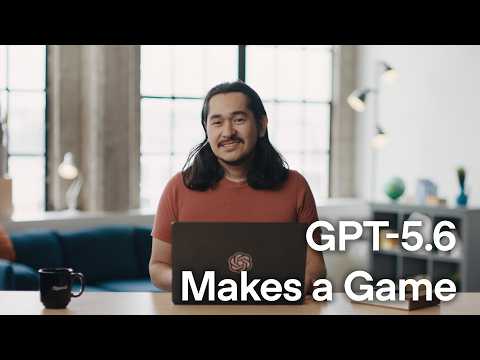
GPT-5.6 demonstrates agentic game development from prompt to playable build
OpenAI's GPT-5.6 demonstration reveals a shift toward agentic workflows that handle multi-stage creative tasks end-to-end. The model orchestrates game design, asset generation, testing, and iteration within a single session using programmatic tool calling, extended reasoning, and parallel subagents. This capability signals maturation in how frontier models tackle open-ended problems requiring tool composition and feedback loops, moving beyond single-turn generation toward sustained project execution. For developers and enterprise users, the implication is clear: LLMs are becoming viable for complex, iterative workflows that previously required human oversight at each stage.
New training-time compression method cuts low-rank factorization overhead
Model compression remains a critical bottleneck as neural networks scale beyond practical deployment constraints. SLORR addresses a real friction point in the low-rank factorization pipeline by eliminating expensive SVD computations and architectural overhead during training. The framework's stateless design and GPU-native approximations make it immediately applicable to production workflows, potentially shifting how teams approach the compression-accuracy tradeoff. For practitioners balancing model size against inference cost, this represents a meaningful efficiency gain in a well-trodden but still-unsolved problem space.58

OpenAI launches GPT-5.6 family with tiered capability tiers
OpenAI has released GPT-5.6, a three-model family (Sol, Terra, Luna) spanning capability tiers from standard to enterprise-grade reasoning. The tiered rollout across ChatGPT, Codex, and the API reflects a shift toward segmented access based on user tier and computational demand, signaling OpenAI's strategy to monetize capability gradations rather than releasing a single flagship model. This architecture mirrors competitive pressure from Claude and other labs to offer both accessible and frontier-class inference options simultaneously.
UMAP's hidden graph structure unlocks new data exploration pathways
Researchers propose leveraging UMAP's internal k-nearest-neighbor graph as a standalone analytical tool, decoupling it from the 2D embedding that typically dominates workflows. By applying classical graph algorithms like PageRank and k-core decomposition to this high-dimensional manifold representation, the work surfaces a latent capability in a widely-deployed dimensionality reduction method. This matters because practitioners often discard the graph structure in favor of visual outputs, missing interpretability signals that persist before projection distortion. The finding reshapes how teams should think about exploratory data analysis pipelines, particularly for tasks requiring representative point identification or cluster validation without sacrificing fidelity to original geometry.58

ARDY enables real-time 3D motion synthesis with text and kinematic control
ARDY addresses a persistent tension in motion synthesis: real-time generation typically sacrifices control, while offline methods demand computational overhead incompatible with live interaction. This framework merges streaming diffusion with hybrid latent-explicit representations to enable simultaneous responsiveness to text prompts and kinematic constraints, targeting animation pipelines and robotics where latency has historically forced tradeoffs between fidelity and responsiveness. The work signals growing maturity in conditional generation for embodied AI, where inference speed and semantic precision must coexist rather than compete.58