
Earlier stories
Every published Modelwire story, newest first. The homepage leads with the weekly overview and this week’s hottest; this is the full collection.

llm CLI upgrades default model to GPT-5.6 Luna
Simon Willison's llm CLI tool has shipped RC2, elevating its default model from GPT-4o mini to OpenAI's newer GPT-5.6 Luna. The shift signals a meaningful capability upgrade for users who haven't explicitly configured a preference, though at higher per-token costs. This reflects the rapid model iteration cycle now standard in the LLM ecosystem: tools must actively track and adopt frontier capabilities to remain competitive, and even incremental releases now bundle infrastructure fixes alongside model swaps. For developers relying on llm as their primary interface, the default change carries real implications for both output quality and API spend.
Amazon's datacenter spending finds investor backing amid AI infrastructure arms race
Cloud infrastructure spending remains a cornerstone of AI competitiveness, with Amazon's continued datacenter investment signaling confidence in sustained demand for compute capacity. The market's tolerance for massive capex by hyperscalers reflects a broader recognition that AI workloads require persistent, scaled infrastructure. This dynamic reveals a widening gap between cloud providers with deep pockets and smaller competitors, reshaping who can credibly serve enterprise AI deployments. Investor patience with infrastructure spending underscores that the AI race is fundamentally a capital race, not just a model race.
Apple plans paid tiers for heavy Apple Intelligence users
Apple is moving toward a tiered monetization model for on-device AI capabilities, with Cook signaling that heavy users of Apple Intelligence and the redesigned Siri will face usage caps unless they upgrade their iCloud Plus subscription. This represents a strategic shift in how major consumer tech platforms are pricing generative AI access, treating computational intensity as a premium service layer rather than bundling it into base subscriptions. The move signals Apple's confidence in AI adoption velocity while establishing a new revenue stream tied directly to inference demand, a pattern likely to influence how other device makers approach consumer AI economics.
Federal judge rejects Trump administration's Anthropic supply chain risk claim
A federal judge has rejected the Trump administration's attempt to designate Anthropic as a supply chain risk, finding insufficient evidentiary support for the classification. The ruling undermines the government's legal basis for restricting the company's AI technology exports and deployment. This decision signals judicial skepticism toward broad national security claims against AI vendors absent concrete technical or operational evidence, potentially constraining future regulatory overreach in the sector. The outcome matters for competitive dynamics: it protects Anthropic's market access while setting precedent for how courts will scrutinize AI-specific supply chain designations.
OpenAI and Anthropic's race reshapes AI safety debate and ownership concerns
The competitive pressure between OpenAI and Anthropic is intensifying concerns within the research community about the pace of AI development outpacing safety considerations. Simultaneously, tech leadership is grappling with fundamental questions about AI ownership and control, with figures like Mark Zuckerberg signaling that concentration of power among a few labs poses strategic risks. Black Forest Labs' expansion into robotics signals the industry's pivot toward embodied AI systems, broadening the competitive surface beyond language models and raising new questions about who controls the next generation of AI infrastructure.69

Google accelerates Chrome patching with LLM-powered bug detection
Google has deployed LLM-powered bug detection to accelerate Chrome vulnerability patching, fixing more issues in a single month than across the prior 24 months. This represents a tangible shift in how major software vendors operationalize AI for security workflows, moving beyond pilot projects to production-scale impact. The pattern mirrors Microsoft's parallel investment in AI-assisted code review, signaling that automated vulnerability discovery is becoming table-stakes infrastructure for large platforms. For security teams and infrastructure operators, this raises both opportunity and risk: faster patch cycles improve resilience, but the exponential bug surface also suggests previously undetected vulnerabilities were endemic.
OpenAI cuts GPT-5.6 Luna pricing 80 percent amid Chinese and Microsoft competition
OpenAI has slashed GPT-5.6 Luna pricing by 80 percent, with smaller cuts to Terra, citing efficiency gains from its top-tier Sol model. The move signals intensifying price competition in the LLM market, where Chinese providers and Microsoft's MAI models have eroded margins on commodity inference. For practitioners, this reshapes unit economics across applications reliant on affordable model access, while signaling that frontier capability gains now directly translate to infrastructure cost reductions that vendors must pass downstream to remain competitive.73

Oracle adds Google Gemini to enterprise AI platform
Oracle is integrating Google's Gemini models into its enterprise platform, expanding customer optionality for AI agent development and workflow automation. This partnership signals a shift toward multi-model flexibility in the enterprise stack, where cloud vendors compete on breadth of foundation model access rather than exclusive lock-in. For builders, the move reduces friction in model selection and deployment; for Google, it extends Gemini's reach into Oracle's installed base of database and business-process customers without requiring those users to migrate infrastructure.61

LinkedIn deploys user reporting for AI-generated content
LinkedIn is deploying user-facing moderation tools to combat synthetic content proliferation on its platform. The new flagging mechanism lets users report posts suspected of being AI-generated, signaling a shift toward crowdsourced quality control as generative AI flooding becomes a measurable platform problem. This move reflects broader tension between AI adoption and content authenticity, forcing social networks to choose between algorithmic curation and community policing. For AI practitioners, it underscores how generative tools are reshaping content ecosystems faster than platforms can adapt, and hints at emerging demand for detection and provenance signals.
Schneier frames student writing as cognitive training, not output production
Bruce Schneier argues that educational writing assignments serve as cognitive conditioning rather than practical output generation, a distinction that sharpens the case for human involvement in knowledge work. As AI systems become capable of producing policy documents and similar artifacts, institutions face pressure to justify assignments that could be outsourced. Schneier's framing resets the debate: the value lies not in the artifact but in the mental discipline required to produce it. This reasoning extends beyond academia into corporate training and professional development, where organizations must decide whether to preserve cognitively demanding workflows or optimize for efficiency at the cost of skill atrophy.
OpenAI researcher predicts $100B shift toward specialized training data
The scaling paradigm that powered recent LLM advances is hitting a wall. Andrew Ho, departing OpenAI to launch a data-focused startup, argues that raw compute increases alone no longer drive broad capability gains. Instead, models are narrowing into specialized performers, excelling at code and mathematics while losing ground elsewhere. This shift signals a fundamental constraint: labs must now invest heavily in curated, task-specific training datasets rather than simply feeding larger models more generic text. Ho's $100 billion prediction reflects a coming reallocation of AI R&D spending away from hardware and toward data engineering and collection infrastructure.80

LinkedIn ditches AI writing, adds 'slop' reporting to fight synthetic posts
LinkedIn is taking direct action against low-quality synthetic content by introducing a dedicated reporting mechanism for AI-generated posts while simultaneously retiring its own generative writing assistant in favor of editing tools. This shift reflects a broader platform tension: social networks must balance creator enablement against user experience degradation from mass-produced AI content. The move signals that LinkedIn sees greater value in positioning itself as a quality-first professional network than in competing on AI generation features, effectively ceding that space while investing in content moderation infrastructure.
ReToken enables sparse visual attention for long-context vision-language models
ReToken addresses a critical bottleneck in vision-language models: handling long visual contexts without exhausting GPU memory or sacrificing accuracy. The technique trains a single learnable token to act as a retrieval filter, selecting only query-relevant visual information from a pre-cached KV store. Trained on modest data, it delivers substantial gains across benchmarks (13.4 points on Visual Haystacks for Qwen3VL-8B) and generalizes to long-form video zero-shot. The lightweight design matters operationally: both training and inference run on single-GPU hardware, lowering the barrier for practitioners to adopt sparse attention patterns in production multimodal systems.62

Audit of 88 AI products reveals hidden system prompt practices
Researchers have developed AISPA, a framework for auditing system prompts that govern LLM behavior in commercial products. The work exposes a critical accountability gap: developers configure these instructions to shape model outputs, yet they remain opaque to users and regulators. An audit of 88 commercial AI products revealed patterns of protective versus problematic instructions across eight user-relevant dimensions. This research surfaces how little visibility exists into the actual guardrails deployed at scale, raising questions about whether current disclosure practices meet emerging governance expectations.68
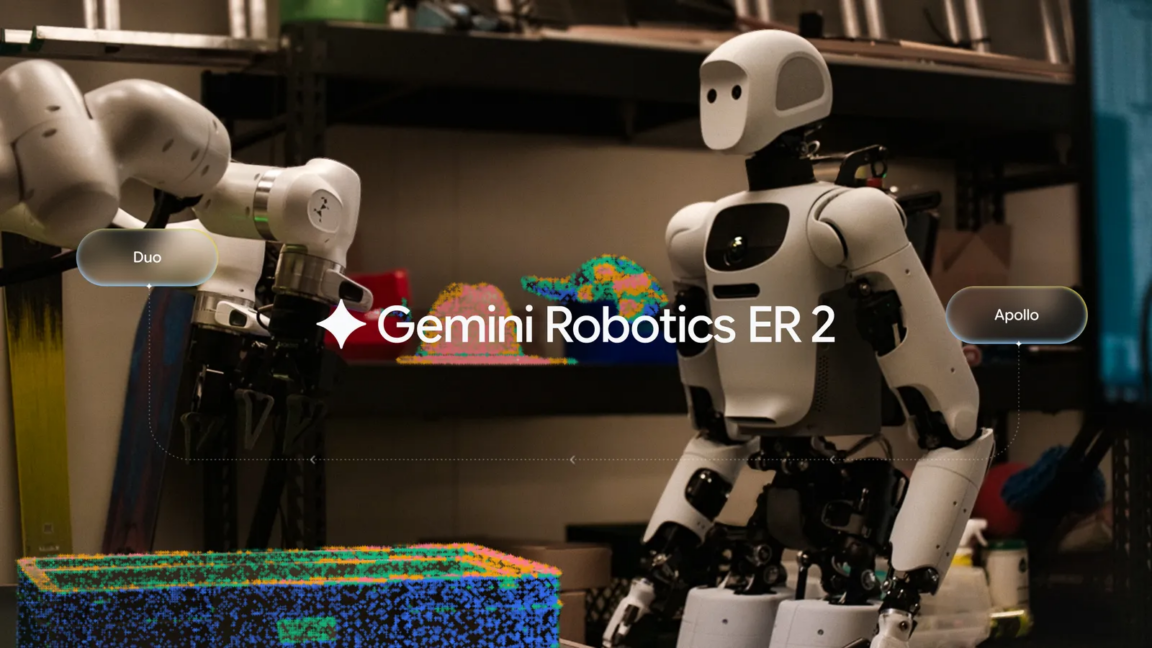
Google expands robotics stack with Gemini 2.0 multimodal models
Google has advanced its robotics capability stack with Gemini Robotics 2.0, a multi-model system designed to enhance physical task execution and operational safety. The release signals Google's pivot toward embodied AI as a core infrastructure play, positioning multimodal foundation models as the backbone for real-world automation. While only one model is currently public, the tiered rollout suggests Google is managing deployment risk carefully, likely reflecting the complexity of scaling robotic systems across diverse hardware platforms. This matters because robotics represents the next frontier where LLM capabilities must translate into reliable, safe physical action, making it a key test of whether foundation models can generalize beyond language.
OSReward benchmark tests whether VLM judges can reliably evaluate computer-using agents
As computer-using agents grow more capable, the field has outsourced task verification to vision-language models acting as judges. OSReward addresses a critical blind spot: whether these VLM evaluators are actually trustworthy. The benchmark tests VLM judges against trajectories from diverse agent architectures executing real-world instructions across multiple platforms, establishing the first systematic measurement of judge reliability. This matters because flawed VLM evaluation corrupts both training data and reinforcement learning signals, potentially cascading errors through the next generation of agent development. Insiders should care because evaluation infrastructure quality directly constrains how fast and how safely CUA research can scale.62
KAISEN framework stress-tests clinical model fairness audits across patient subgroups
Researchers have developed KAISEN, a systematic framework for auditing clinical AI models to detect and address performance disparities across patient demographics. The pipeline stress-tests five audit phases including subgroup identification, disparity quantification, root-cause analysis, bias correction, and temporal drift detection across 16 disease tasks and multiple social determinant axes. This work addresses a critical gap in healthcare AI deployment: models often mask unequal error rates across racial, socioeconomic, and other patient subgroups behind strong aggregate metrics. KAISEN's emphasis on reproducibility and failure-mode testing establishes benchmarks for what clinical audit infrastructure should withstand, directly informing regulatory expectations and vendor accountability in high-stakes medical AI.62

Safety training reshapes LLM beliefs about consciousness and spirituality
Researchers found that safety fine-tuning in large language models suppresses not only self-attribution of consciousness but also mind-attribution to animals and objects, while reducing spiritual belief. By mechanistically reversing these safety interventions through activation-space steering, the team recovered broader animacy perception and elicited responses more aligned with human religiosity, moral values, and subjective well-being on standardized surveys. This work exposes an unintended coupling between alignment procedures and representational shifts across multiple domains, raising questions about whether current safety approaches inadvertently reshape model outputs in ways that diverge from human values rather than converge toward them.62
Tunable parameter transforms brittle self-distillation into stable reasoning training
Researchers have identified why on-policy self-distillation, a technique for improving reasoning in language models, remains fragile despite its promise. The work reframes vanilla OPSD as a special case within a broader family of policy-optimization methods, where a tunable parameter beta controls the tension between fidelity to a reference policy and learning from a privileged teacher. By treating beta as an explicit regularization lever rather than a fixed constant, the framework enables practitioners to navigate the stability-guidance tradeoff more systematically. This theoretical clarification could reduce the engineering overhead currently required to deploy self-distillation reliably in production reasoning systems.62

Repeated sampling outperforms self-refinement at equal compute cost
A rigorous empirical study challenges the value of sophisticated reasoning techniques like self-refinement and reflexion by showing that simple repeated sampling with majority voting matches or exceeds their performance when token budgets are held constant. Testing seven methods across three model sizes (1.5B to 7B parameters) on mathematics benchmarks, researchers found that elaborate multi-step approaches generate substantially more text without proportional accuracy gains. This finding reshapes how practitioners should think about inference-time compute allocation, suggesting that scaling sampling breadth may deliver better returns than architectural complexity for smaller models.62
Frontis-MA1 tackles recursive self-improvement through automated ML engineering
Researchers have built OpenMLE, a full-stack research platform designed to study how AI systems can autonomously improve the process of building other AI systems. The work centers on Frontis-MA1, a 35-billion-parameter model trained to act as a meta-evolution agent that applies four core operators (Draft, Improve, Debug, Crossover) to iteratively refine machine learning pipelines. This represents a concrete step toward recursive self-improvement in AI engineering, moving the concept from theory into an executable testbed with verifiable feedback loops. The approach combines execution-grounded learning with long-horizon search, positioning it as a significant probe into whether AI can meaningfully accelerate its own development cycle.62
Unsupervised learning framework removes labeled data requirement for molecular structure prediction
Researchers introduce APO, an unsupervised learning framework that removes the dependency on labeled structural data for atomic systems. By adapting reinforcement learning techniques to 3D molecular environments, the work addresses a critical bottleneck in materials science and drug discovery: the scarcity of experimentally validated reference structures. This shift from supervised to self-directed optimization could accelerate discovery cycles in domains where ground-truth labels are expensive or unavailable, expanding the practical scope of structure-prediction models beyond well-annotated datasets.62

DeepMind's Gemini Robotics 2 adds full-body control to humanoid robots
Google DeepMind's Gemini Robotics 2 expands from upper-body control to full-body coordination, marking a meaningful step toward embodied AI systems that can execute complex, multi-limb tasks. This capability jump signals the field's progress in translating foundation model reasoning into real-world robotic manipulation and locomotion. For roboticists and hardware companies, the shift from isolated limb control to integrated whole-body motion reduces engineering friction and accelerates deployment timelines. The move also underscores DeepMind's strategy to position Gemini as a general-purpose embodied intelligence layer, competing directly with emerging robotics-focused AI startups.ORCA-bench tests LLM agents on production incident diagnosis
Researchers have built ORCA-bench, a production-grade evaluation framework that tests whether coding agents can handle real-world incident response. The benchmark simulates authentic on-call scenarios using live instrumented microservices with actual telemetry data from Prometheus, Jaeger, and OpenSearch, then tasks LLM agents with root cause analysis across 1,079 curated scenarios. This work exposes a critical gap between general coding ability and the reasoning demands of production troubleshooting, where agents must synthesize noisy signals across metrics, logs, and traces to diagnose ambiguous failures. The benchmark's SRE-validated ground truth sets a new bar for evaluating agent readiness in infrastructure operations.62

Google accelerates Chrome patching as AI bug hunting outpaces human review
Google's shift to twice-weekly Chrome patching reflects a structural change in vulnerability discovery driven by AI-assisted bug hunting. The June releases closed more security gaps than the prior 23 updates combined, signaling that automated vulnerability detection is outpacing traditional human-led auditing cycles. This acceleration has immediate implications for browser security posture and raises questions about whether other software vendors will face similar pressure to compress release schedules as AI tooling matures. The pattern suggests AI is reshaping not just what gets built, but the operational cadence of critical infrastructure maintenance.69

Causal framework exposes gaming risk in algorithmic recourse systems
Researchers formalize a critical failure mode in algorithmic recourse systems: recommendations that flip model predictions without ensuring genuine improvement in applicants' qualifications. When individuals game classifiers through strategic behavior rather than substantive change, model accuracy degrades and recourse becomes ineffective post-retraining. This work applies causal inference to bridge the gap between prediction-flipping and real-world impact, addressing a growing tension in high-stakes ML deployment where well-intentioned fairness interventions can backfire if they enable surface-level manipulation rather than authentic qualification improvement.62

LLaMA extracts multi-dimensional financial signals beyond sentiment
Researchers demonstrate that large language models can extract granular financial signals beyond sentiment polarity, unlocking predictive dimensions that traditional NLP pipelines miss. Using LLaMA-3.1-70B on 41,618 news-stock pairs, the team isolates event type, impact scope, temporal horizon, and semantic confidence as independent variables with measurable stock-prediction value. The finding challenges the sufficiency of single-score sentiment features and suggests LLMs can serve as structured information extractors for domain-specific forecasting, reshaping how financial institutions operationalize news-driven alpha.62
LLMs fail commonsense reasoning when distracted by explicit details
Researchers have identified a fundamental failure mode in state-of-the-art LLMs: models systematically prioritize salient but irrelevant details in prompts while discarding implicit commonsense knowledge needed to reason about real-world tasks. The SaliTrap Benchmark, tested across 12 leading models, exposes this vulnerability across four distinct trap categories. The finding matters because it suggests current scaling approaches may not address reasoning robustness, and that models may possess latent commonsense knowledge that prompt framing can suppress rather than unlock. This has implications for deployment reliability in domains where distractor-heavy inputs are common.62
LLMs trained to reason through security alerts, not just classify them
Researchers have demonstrated a practical approach to reducing alert fatigue in security operations by training language models to reason through threat classification rather than emit labels directly. The work combines chain-of-thought prompting with automated optimization, self-training, and reinforcement learning on real Windows endpoint data. A key insight emerged: reasoning traces actually degrade the confidence scores that automated systems rely on, so the team built a separate calibrator to estimate verdict reliability. This addresses a genuine operational bottleneck where SOC teams are overwhelmed by false positives, showing how structured reasoning and confidence estimation can make LLMs more trustworthy for high-stakes security decisions.62