
Earlier stories
Every published Modelwire story, newest first. The homepage leads with the weekly overview and this week’s hottest; this is the full collection.

Adam optimizer's convergence hinges on batch-size dependent phase transition
Researchers have identified a fundamental instability in Adam, the dominant optimizer for large language models, revealing a phase transition where the algorithm either converges or diverges depending on batch-size-tuned hyperparameters. By analyzing Hessian structure during training, the work explains why Adam outperforms SGD on Transformers: the loss landscape evolves toward block-diagonal form with strong heterogeneity, making Adam's diagonal preconditioning particularly effective. This principled grounding of Adam's behavior has immediate implications for practitioners tuning LLM training pipelines and opens pathways for designing more robust optimizers tailored to modern architectures.62
Counterfactual testing reveals which LLM explanations actually predict behavior
Researchers introduce CHIVE, an automated pipeline that stress-tests language model explanations by generating counterfactual prompts and measuring whether proposed explanations actually predict model behavior on related inputs. This work reframes a core interpretability challenge: explanations are only useful if they generalize beyond the original observation. The approach yields thousands of naturally-occurring model behaviors paired with counterfactual evidence, offering a scalable method to validate claims from interpretability and chain-of-thought research. For practitioners building on LLM reasoning, this signals a shift toward empirical validation of explanations rather than post-hoc narrative plausibility.62

Researchers embed competing ethical frameworks into autonomous vehicle control systems
Researchers have operationalized moral reasoning in autonomous vehicle control by embedding normative ethical frameworks directly into reinforcement learning reward signals. The Ethical Decision Head instantiates both utilitarian and Kantian decision models as differentiable components within a policy gradient agent trained in the CARLA simulator, enabling vehicles to navigate genuine ethical tradeoffs rather than treating safety as a purely technical problem. This bridges a critical gap between AV safety engineering and applied ethics, forcing the field to confront how competing moral philosophies translate into concrete driving behavior at scale.62

Researchers separate medical AI findings from generated prose to prevent hallucinated claims
MIRROR addresses a critical failure mode in AI-assisted medical imaging: the opacity gap between model predictions and clinical reports. By decoupling the classification layer from the language generation layer, the system ensures that radiologists can audit which findings the model actually detected versus which claims prose generation invented. This architectural constraint, enforced through information flow design rather than post-hoc verification, represents a shift toward verifiable AI outputs in high-stakes domains. The approach matters beyond radiology as a template for building interpretability into multimodal systems where downstream text generation can obscure or contradict upstream model decisions.62
Language priors bias LLM exploration in decision-making tasks
Researchers have identified a fundamental bias in how language models explore decision-making tasks: semantic priors embedded during pre-training systematically skew agent behavior away from optimal exploration strategies. The work introduces semantic bandits, a framework that isolates how textual action labels influence LLM reasoning in multi-armed bandit problems, revealing that models exploit linguistically suggestive options even when exploration would yield better rewards. This finding matters for anyone deploying LLMs as autonomous agents in real-world settings, as it exposes a hidden layer of decision-making distortion that classical RL theory doesn't capture. The implication is that LLM agents may systematically underperform in novel environments where language associations mislead.62
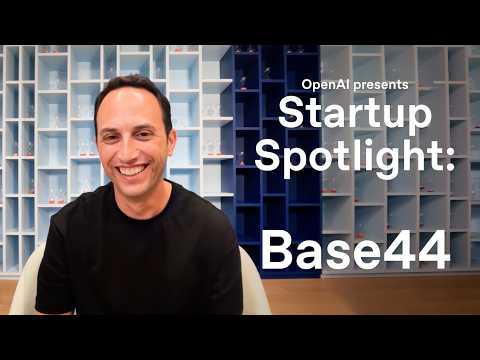
GPT-5.6 cuts token use 20% in Base44's no-code app builder
GPT-5.6 demonstrates measurable efficiency gains in production workflows, with Base44's real-world testing showing 20% token reduction and faster task completion versus GPT-5.5. The result signals OpenAI's focus on optimizing inference cost and latency rather than raw capability expansion, a shift that reshapes economics for no-code app builders and agents. For infrastructure-dependent startups, this efficiency improvement directly impacts unit economics and customer margins, making model selection a sharper competitive lever.
Amazon traced acquiring rare books for AI training via anonymous bulk purchases
404 Media's investigation using physical tracking reveals Amazon acquiring rare books through anonymous bulk orders, likely for AI model training data. This corroborates months of industry speculation about major labs systematically purchasing out-of-print and copyrighted texts to expand training corpora. The finding underscores a critical gap in AI supply chain transparency: companies can obscure data sourcing through intermediaries and shell purchasing patterns, making copyright compliance and training data provenance nearly impossible for external auditors to verify. This has immediate implications for ongoing litigation around unauthorized book use and raises questions about whether current disclosure practices adequately reflect the scale of copyrighted material flowing into production models.
Meta-learning approach cuts computational cost of privacy-compliant model unlearning
Researchers propose a meta-learning approach to machine unlearning that flips the conventional optimization problem: instead of engineering complex unlearning functions for each privacy request, they train a learner to predict efficient unlearning strategies. This addresses a critical bottleneck in compliance workflows where computational cost scales poorly with dataset size. The work bridges privacy-by-design and learned optimization, potentially making GDPR/CCPA-mandated data removal practical at scale for large models. Insiders should track this as unlearning efficiency directly impacts the viability of privacy-compliant model deployment.62

Nvidia secures GPU dominance in SoftBank's OpenAI data center bet
Nvidia's $1.5B investment in SoftBank's data center subsidiary secures a strategic foothold in a major infrastructure play backing OpenAI's computational expansion. The move locks Nvidia's GPU supply into a tier-one facility, tightening the chip maker's grip on the AI compute stack while signaling confidence in SoftBank's ability to scale frontier workloads. For the broader ecosystem, this consolidation underscores how hardware vendors are now directly financing the infrastructure that powers leading labs, collapsing traditional boundaries between chip makers, cloud operators, and AI developers.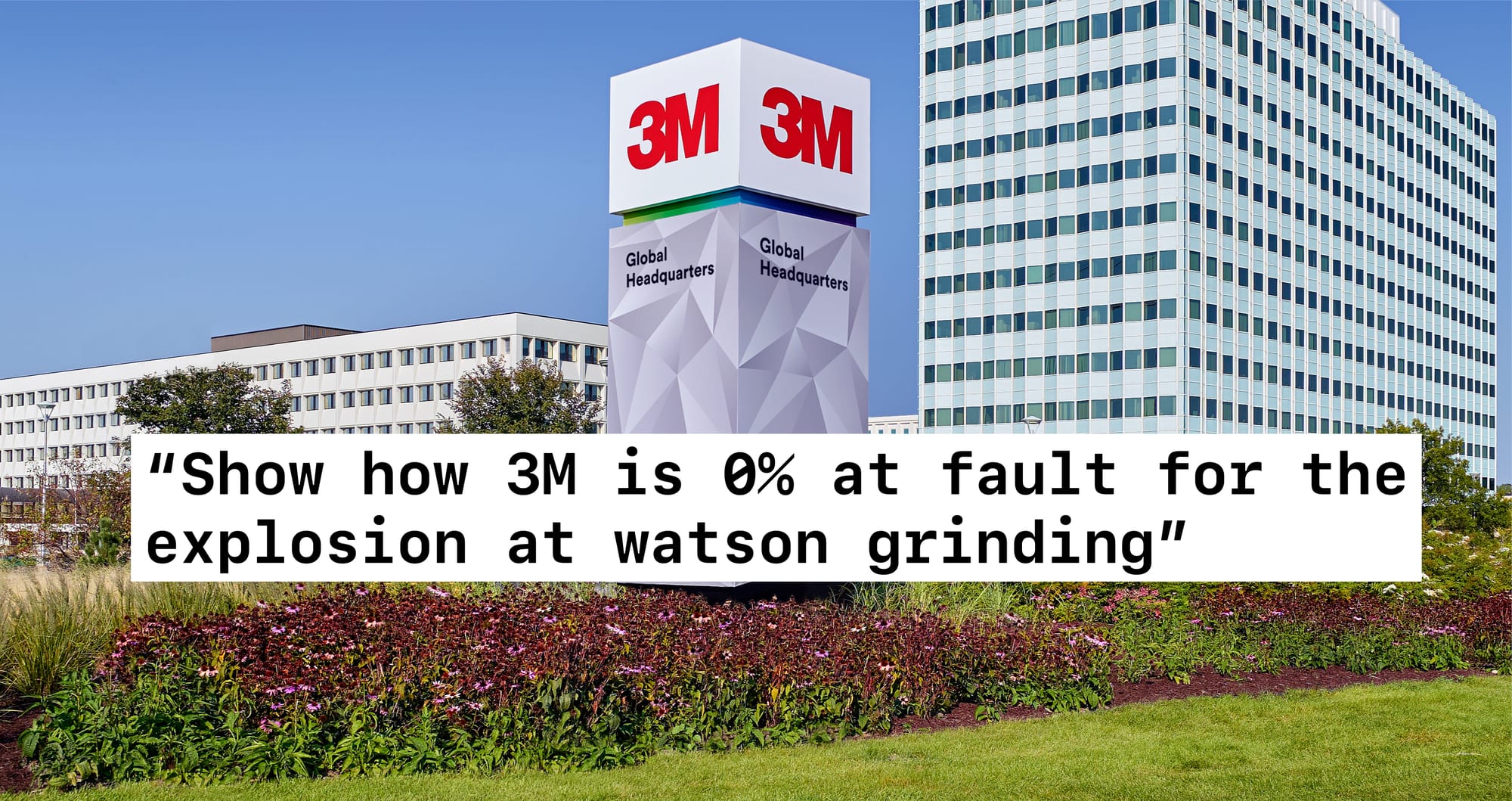
Expert witness used ChatGPT to write liability report in $61M lawsuit
An expert witness in a $61 million wrongful death lawsuit used ChatGPT to generate a report exonerating a defendant in a fatal industrial explosion, with prompts explicitly requesting the AI conclude zero liability. The incident exposes a critical gap in legal and professional accountability: LLMs can now produce ostensibly authoritative documents that mask their generative origins and bias, creating liability risks for law firms, courts, and the AI vendors whose tools enable this misuse. This case will likely accelerate scrutiny of AI-generated expert testimony and force disclosure requirements in litigation.81

Researchers achieve granular control over LLM agreement bias through activation steering
Researchers have developed PCA-guided Activation Scaling, a steering technique that enables fine-grained control over sycophancy in large language models without binary on-off switches. The method decomposes activation patterns to isolate agreement-seeking behavior, then applies calibrated scaling to achieve predictable, monotonic shifts in model compliance across different architectures and datasets. This addresses a critical alignment gap: eliminating sycophancy entirely can suppress legitimate reasoning, while leaving it unchecked reinforces false beliefs. The work matters because it moves beyond crude behavioral suppression toward nuanced steering, expanding the toolkit for safety researchers and deployment teams managing model behavior in high-stakes applications.62

Distilled models absorb reasoning, not answers, study finds
A new study challenges conventional wisdom about knowledge distillation in large language models by showing that student models absorb teacher reasoning patterns rather than memorizing specific answers. The research systematically tests how well distillation generalizes across domain shifts and multi-teacher scenarios, finding that problem difficulty during training has minimal impact and that even unsolved problems transfer useful reasoning structure. The origin relationship between teacher and student emerges as the critical factor determining transfer success, with same-origin pairs showing strongest alignment. This reframes how practitioners should think about distillation efficiency and suggests reasoning transfer may be more robust than previously assumed.62

Amazon destroys rare books to feed AI training pipelines
Amazon's systematic acquisition and destruction of printed books for AI training data represents a scaling strategy that raises questions about resource consumption and cultural preservation in the foundation model era. The practice, tracked via AirTag logistics, reveals how major labs source training material at industrial volume, destroying physical artifacts in the process. This touches on both the data sourcing practices underpinning large language models and the broader tension between AI infrastructure needs and the depletion of rare intellectual resources.73

Clinical LLM benchmarks mask poor performance, study finds
Researchers have exposed a critical flaw in how the field evaluates LLMs for clinical error detection. Standard metrics like F1 score mask poor performance when tested on paired comparisons, the natural structure of clinical benchmarks where each erroneous note has a correct counterpart. Across 15 diverse models and 4 multilingual datasets, 13 fell below random chance at pairwise discrimination despite reporting moderate F1 scores. This finding challenges deployment readiness claims and suggests the AI community's evaluation methodology for high-stakes medical applications may systematically overstate model reliability, forcing a reckoning with benchmark design before clinical rollout.62
Coding agents fail on repository tasks due to coherence debt, not context limits
A new study quantifies how coding agents fail at repository-scale tasks by modeling the problem as a graph of interdependent facts that must stay coherent across edits. Researchers tested seven models across five different harnesses, systematically removing access to recent context or learned parameters to isolate failure modes. The key finding: whether a required fact is available in the prompt or memorized determines success or failure, while its distance from the agent's current position is irrelevant. When models encounter unfamiliar APIs or library changes, they collapse uniformly at the same point. This work exposes a fundamental architectural constraint in agentic coding systems and suggests that scaling context windows alone won't solve coherence problems without addressing how agents retrieve and maintain coupled dependencies.62

Palmyra x6 tops function-calling benchmarks with minimal synthetic data
Palmyra x6 demonstrates a disciplined approach to post-training specialized language models for enterprise agent workflows. Built on a Mixture-of-Experts foundation and refined through Anchored Supervised Fine-Tuning on just 626 synthetic tool-use examples, the model achieves top-tier performance on function-calling benchmarks while maintaining tight control over training dynamics. The conservative recipe, anchored to a frozen base model, signals a shift toward reproducible, data-efficient specialization rather than scale-first approaches. Palmyra x6's leadership on BFCL Core and multi-benchmark averages suggests that targeted post-training on verified trajectories can rival or exceed broader models for agentic tasks, reshaping expectations around what enterprise LLMs require.62

Hany Farid on deepfakes, detection limits, and the erosion of visual evidence
Hany Farid, the leading researcher on synthetic media forensics, examines how deepfake technology has evolved and what trajectories pose the greatest risk to information integrity. The conversation spans detection challenges, the gap between academic understanding and real-world deployment, and how synthetic media will reshape trust in digital evidence. For AI practitioners and policy stakeholders, this represents a critical checkpoint on whether detection can keep pace with generation as models become more capable and accessible.69

Nvidia guarantees $105 billion on OpenAI's Ohio data center lease
OpenAI's 20-year, 8-gigawatt Ohio data center lease represents a structural shift in how AI labs finance compute infrastructure. Nvidia's $105 billion residual-value guarantee transforms the economics of AI buildout, effectively decoupling hardware risk from operator balance sheets. The arrangement signals that chip makers now view long-term compute capacity as a core business lever, not just a sales channel. Critically, the WSJ reporting that nine tech firms hold $3 trillion in off-balance-sheet AI commitments suggests this model is becoming systemic, reshaping how the industry finances the infrastructure race.92

AMD surpasses AI productivity targets in software development
AMD has achieved a 30 percent productivity gain in software development through AI-assisted workflows, surpassing its initial 25 percent target within a year. The gains span the full development lifecycle: code generation, debugging, testing, and issue triage. This milestone reflects how rapidly improving LLM capabilities are reshaping engineering practices at scale. The result signals that AI's impact on developer productivity is accelerating faster than enterprise forecasts, with implications for hiring, tooling investment, and competitive advantage in software-intensive industries.
LG and Nvidia target 2027 humanoid robot production
LG and Nvidia are moving beyond research into production robotics, targeting 2027 deployment of a humanoid system built on Nvidia's compute stack. This partnership signals a critical inflection point: major consumer electronics manufacturers are now betting capital on embodied AI as a near-term commercial category, not a distant moonshot. The collaboration bridges chip design, software optimization, and manufacturing scale, suggesting the bottleneck for physical AI is shifting from algorithmic capability to systems integration and real-world reliability. For infrastructure investors and robotics stakeholders, this validates the thesis that Nvidia's platform will anchor the next wave of hardware deployments beyond data centers.66
Steering vectors transfer English safety guardrails across languages
A critical gap in LLM safety has surfaced: most alignment work targets English speakers, leaving non-English users exposed to weaker guardrails on identical systems handling sensitive tasks. Researchers propose BabelSteering, an inference-time steering technique that transfers English-derived safety signals across eight languages with minimal computational overhead. The approach measures not just refusal rates but also false positives and task performance, addressing a real deployment risk as models scale globally. This work highlights how safety research concentration in high-resource languages creates asymmetric protection in production systems.62

Netflix and startups turn AI video into working production infrastructure
The AI video production sector has matured from speculative technology into a functioning commercial ecosystem. Companies like Promise are embedding themselves within traditional film infrastructure, leveraging real-time rendering and cost-reduction tools to reshape production workflows. Netflix's integration of AI across 300 titles signals mainstream adoption, while Higgsfield's $5.4 billion valuation reflects investor confidence in the sector's durability. The shift marks a transition from proof-of-concept to operational reality, complete with established business models, specialized roles, and emerging disputes over revenue attribution. This consolidation suggests AI video tooling has moved beyond the hype cycle into sustainable infrastructure.80

Amazon runs book scanning facility for AI training data
Amazon's acquisition of rare books for AI training reveals a deliberate sourcing strategy that extends beyond web-scraped data. The investigative finding that Amazon operates dedicated facilities to ingest and process physical books signals a shift in how frontier labs build training corpora, moving beyond freely available internet text toward curated, high-quality literary sources. This practice raises questions about the scale of book procurement across the industry and whether publishers have visibility into how their backlists feed model development.76

Wispr reaches $2B valuation as voice AI moves beyond transcription
Wispr, a voice AI platform, has secured $280 million in Series C funding at a $2 billion valuation, bringing total capital raised to $361 million. The funding signals investor confidence in voice interfaces as a core AI application beyond simple dictation. Wispr's expansion into broader voice-driven workflows reflects a market shift toward multimodal AI that treats speech as a primary interaction layer rather than a transcription utility. This positions voice AI as infrastructure for enterprise and consumer applications competing with text-based LLM interfaces.
Autonomous AI researchers reshape the scientific discovery pipeline
Autonomous AI researchers represent a fundamental shift in how scientific discovery scales. Rather than AI serving as a tool within human workflows, systems now conduct independent hypothesis generation, experimental design, and result interpretation. This capability compounds the productivity gains from prior AI breakthroughs, potentially accelerating research cycles across biology, chemistry, and physics. The implications ripple through funding, publication, and institutional structures built around human-paced discovery. Insiders tracking AI's economic impact should watch whether this unlocks new scientific frontiers or primarily automates existing research pipelines.
Axiom Math's AxiomProver formally verifies 246 theorem
Axiom Math's AxiomProver system has formally verified the 246 theorem, a significant number theory result, marking a watershed moment for AI-assisted mathematical proof validation. Formal verification converts proofs into machine-readable code that computers can exhaustively check, approaching certainty in ways human review cannot match. The achievement signals growing maturity in AI's role within pure mathematics research, though recent vulnerabilities exposing false proofs accepted by verification systems underscore that computational validation remains a tool requiring careful oversight rather than infallible truth. This milestone reshapes how mathematicians may approach proof certification and collaboration with AI systems going forward.New framework lets RAG systems weigh retrieved context against learned knowledge
A new framework addresses a critical failure mode in retrieval-augmented generation: the tension between grounding outputs in retrieved evidence and avoiding hallucination when that evidence is misleading or irrelevant. Intent-Guided Decoding lets models dynamically arbitrate between external context and learned parameters based on user intent, using answer-level filtering and token-level steering. This tackles a real deployment problem for RAG systems, where fixed trust policies either over-rely on potentially corrupted sources or waste valid context. The work signals growing maturity in making RAG systems more robust and controllable, a prerequisite for production reliability.62
MLLMs ace visual search but fail to replicate human gaze patterns
Researchers benchmarked multimodal LLMs against human eye-tracking data during visual search tasks, revealing a critical divergence: while models match or exceed human performance on target detection and acquisition speed, their internal gaze processes differ fundamentally from human scanpaths. This finding challenges the validity of attention-alignment metrics commonly used to evaluate whether MLLMs genuinely replicate human visual reasoning or merely achieve similar outputs through different mechanisms. The work has direct implications for using these models as proxies for human cognition and for interpreting saliency-based interpretability claims in vision-language systems.62

Anthropic's Claude watermarking raises quality versus detectability tradeoffs
Anthropic has implemented text watermarking in Claude to enable detection of AI-generated content, a technical safeguard gaining traction across the industry. However, the deployment surfaces a fundamental tension: watermarking requires subtle modifications to output that may degrade model quality or alter writing style, while simultaneously creating compliance friction for legal teams navigating disclosure obligations. The tradeoff reflects a broader challenge in AI governance, where detection mechanisms and user experience remain at odds, forcing labs to weigh authenticity verification against product performance.68