
Earlier stories
Every published Modelwire story, newest first. The homepage leads with the weekly overview and this week’s hottest; this is the full collection.

Microsoft's new MAI models
Microsoft is fragmenting its model strategy with two specialized releases: MAI-Thinking-1 targets reasoning workloads at 35B parameters for enterprise partners, while MAI-Code-1-Flash (5B) ships directly into GitHub Copilot's IDE integration. This dual-track approach signals Microsoft's pivot away from monolithic foundation models toward task-specific efficiency, mirroring OpenAI's o1/GPT-4o split. The Code variant's immediate rollout to individual developers matters more than the reasoning model's gated access, as it embeds inference cost reduction directly into the most-used AI development surface.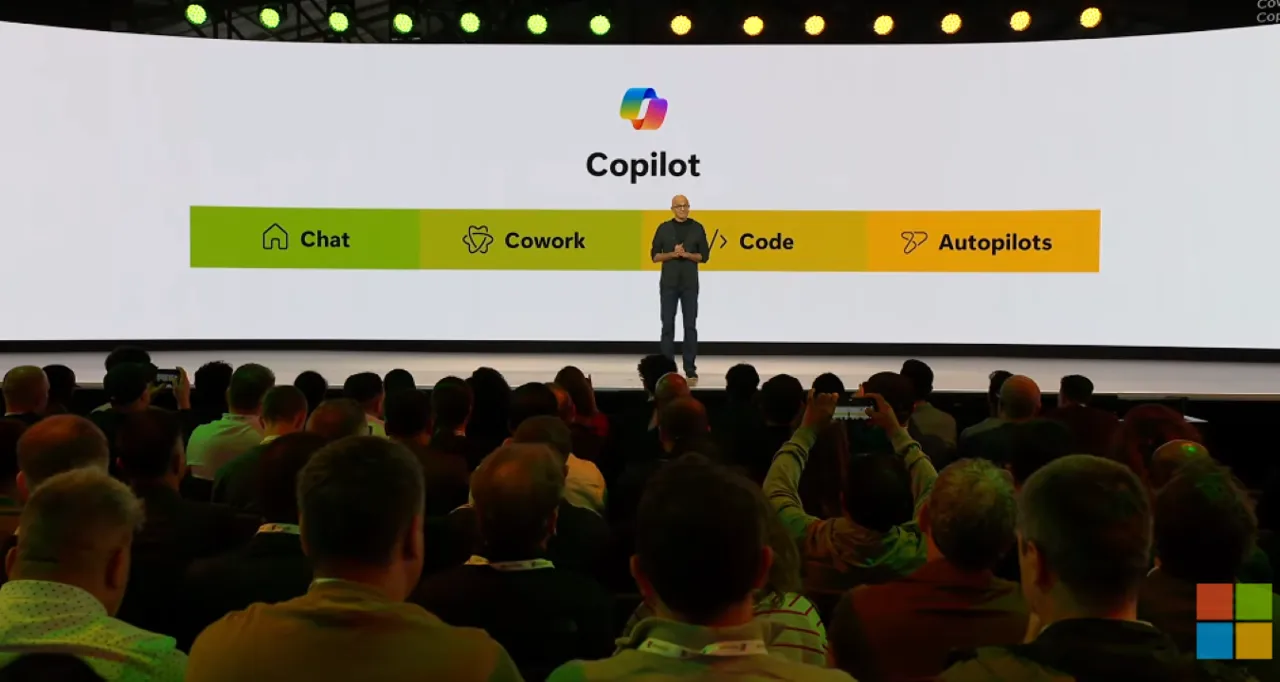
Microsoft Fully Commits to AI Models, Intros Unmetered Intelligence
Microsoft is positioning its cloud platform as a comprehensive AI deployment layer by removing consumption caps on model access and agent-building infrastructure. The move signals a strategic bet that enterprises will consolidate AI workloads within a single vendor ecosystem rather than multi-cloud or open-source alternatives. This directly challenges OpenAI's standalone positioning and forces competitors to clarify their own cloud integration strategies. For practitioners, the shift means pricing models and lock-in dynamics are reshaping how teams evaluate AI infrastructure choices.61

Microsoft's Project Solara is an Android OS designed for agents instead of apps
Microsoft is pivoting its mobile strategy away from traditional app-centric design toward an agent-first operating system with Project Solara. Built on Android, the OS prioritizes autonomous AI agents as first-class citizens rather than user-driven applications, signaling a fundamental shift in how major platforms envision human-computer interaction. This move reflects the industry's broader bet that agentic AI will displace conventional app paradigms, positioning Microsoft to compete in a post-app mobile landscape dominated by autonomous task execution rather than manual user workflows.
datasette-agent-micropython 0.1a0
Datasette Agent now has a sandboxed Python execution layer built on MicroPython, allowing LLMs to generate and run code without escape risk. Simon Willison reports GPT-5.5 has failed to break the sandbox in early testing, addressing a critical blocker for agentic systems that need safe code generation. This matters because code execution is essential for data querying and automation workflows, but remains a major security surface; a working sandbox unlocks broader deployment of agent-driven data tools without requiring human review of every generated script.
Microsoft Build 2026: the 7 biggest announcements
Microsoft's Build 2026 keynote signaled a strategic pivot toward embedding AI deeper into its consumer and enterprise stack. Beyond hardware refreshes, the company unveiled an always-on personal assistant and refreshed its in-house model lineup, positioning itself to compete directly with OpenAI and Google in the race to make AI ambient and indispensable. The moves suggest Microsoft is betting that integration across Surface, Windows, and cloud services will matter more than raw model capability in the next phase of AI adoption.
Uber caps employee AI spending after blowing through budget in four months
Uber's decision to impose spending caps on employee AI tool usage signals a broader reckoning within enterprise over generative AI's true operational cost. The company had actively encouraged staff adoption, only to discover that unconstrained access to commercial AI services burned through budgets in under half a year. This pattern reflects a critical gap between AI enthusiasm and financial discipline in large organizations, forcing teams to choose between capability and cost control. The move underscores that enterprise AI ROI remains unproven at scale, and that early adopters now face hard choices about which use cases justify ongoing spend.
New Microsoft tool lets devs spin up AI behavior tests using text descriptions
Microsoft released Adaptive Spec-driven Scoring for Evaluation and Regression Testing, an open-source framework that lets developers define AI evaluation criteria through natural language rather than hand-coded test suites. The move addresses a critical bottleneck in AI development: systematic, reproducible testing at scale. By lowering the barrier to rigorous evaluation, Microsoft is pushing the industry toward more standardized assessment practices, which matters for both safety validation and production reliability as models move into enterprise workflows.
OpenAI vs. Anthropic vs. Google: But the Model Isn't the Point
The competitive framing of AI labs obscures what enterprise buyers actually prioritize: solving business problems cost-effectively. As OpenAI, Anthropic, and Google jostle for mindshare, procurement decisions increasingly hinge on integration ease, total cost of ownership, and task-specific performance rather than brand loyalty or model pedigree. This shift signals maturation in the AI market, where differentiation moves upstream to applications and workflows, not foundation models alone. For enterprises, the implication is clear: vendor lock-in weakens as model commoditization accelerates, forcing labs to compete on reliability, support, and ecosystem depth.61

Microsoft Wants to 'Make People Addicted' to its New AI Assistant, Internal Documents Reveal
Microsoft's internal strategy for Scout, a new AI assistant, prioritizes user habit formation before feature expansion, according to leaked planning documents. The approach signals a shift in how major AI vendors are thinking about adoption curves: establishing behavioral lock-in as a prerequisite to capability rollout, rather than competing primarily on raw performance. This reflects broader industry tension between engagement metrics and responsible AI deployment, and raises questions about how addiction mechanics are being engineered into enterprise and consumer AI tools at scale.69

OpenAI expands Codex with role-specific plugins to build a general-purpose app for non-developers
OpenAI is repositioning Codex as enterprise infrastructure rather than a developer tool by shipping role-specific plugins for finance, sales, and analytics workflows. The shift reflects a strategic pivot: non-developers now represent 20% of Codex's five-million-person weekly base and are growing three times faster than the developer cohort. This signals OpenAI's bet that LLM-powered productivity tools will succeed by meeting domain experts where they work, not by asking them to learn to code. The move mirrors broader industry consolidation around vertical AI applications and raises questions about whether horizontal coding assistants remain a defensible category.73

Trump signs executive order to review AI models before they’re released
The Trump administration has introduced a voluntary pre-release review framework requiring AI companies to submit frontier models to federal scrutiny before deployment, framed around infrastructure security and innovation protection. This marks a significant shift in US AI governance toward proactive model vetting rather than post-hoc oversight, directly affecting how leading labs structure release timelines and compliance workflows. The voluntary framing suggests industry negotiation rather than mandate, but establishes precedent for government access to unreleased weights and capabilities data, reshaping the competitive and regulatory landscape for model developers.
Mathematicians warn of AI threats to profession as industry encroaches
The International Mathematical Union has formally cautioned against technology industry encroachment into academic mathematics, signaling institutional pushback against AI firms recruiting talent and shaping research agendas. This reflects a broader tension between commercial AI development and foundational science: as LLM capabilities increasingly depend on mathematical breakthroughs, industry's ability to redirect top-tier researchers toward applied problems threatens the autonomy of pure mathematics. The endorsement carries weight because it represents coordinated concern from the global mathematics establishment, not isolated grumbling, and hints at potential friction over intellectual property, publication norms, and the pace of knowledge transfer from academia to industry.
Martin Scorsese becomes the latest , and most unlikely , Hollywood voice for AI
Martin Scorsese's adoption of AI for storyboarding signals a watershed moment in creative-industry acceptance of generative tools. Rather than resistance from legacy filmmakers, the narrative has shifted to pragmatic integration within established workflows. This validates AI's role in pre-production infrastructure and suggests that high-profile creative endorsement, even when narrowly scoped, carries outsized weight in normalizing AI across sectors traditionally skeptical of automation. The story matters less for what Scorsese is doing than for what his participation signals about the erosion of cultural gatekeeping around AI tooling.
Microsoft’s first advanced reasoning AI is here
Microsoft is accelerating its shift toward independent model development with MAI-Thinking-1, a flagship reasoning model unveiled at Build 2026. This marks a strategic pivot away from OpenAI dependency following a renegotiated partnership that reduces exclusivity ties. The move signals Microsoft's intent to compete directly in frontier model capability while maintaining optionality in its AI stack. For enterprise customers and investors, this reshuffles the competitive landscape: Microsoft now controls both infrastructure (Azure) and proprietary models, reducing reliance on external labs and potentially reshaping cloud AI economics.
Microsoft launches Scout, an OpenClaw-inspired personal assistant
Microsoft is embedding OpenClaw-derived capabilities into Scout, a fresh AI assistant designed to deepen integration across Microsoft 365. The move signals a strategic pivot toward modular, composable AI agents within enterprise productivity suites rather than standalone chatbots. For enterprise buyers, this means AI reasoning and task automation become native to workflows; for the broader market, it underscores how major platforms are moving beyond chat interfaces to embed agentic behavior into existing software stacks. The OpenClaw lineage suggests Microsoft is betting on flexible, tool-calling architectures as the foundation for next-generation workplace AI.
Android phones will soon be able to detect spoofed calls and impersonation scams
Google's Android feature drop introduces machine learning-powered call authentication to detect spoofed numbers and impersonation attempts at the OS level. This represents a shift toward embedding fraud detection directly into mobile infrastructure rather than relying on carrier or app-layer solutions. The move signals growing pressure on device makers to deploy ML defensively against social engineering, positioning on-device inference as a baseline security expectation. For the broader ecosystem, it underscores how consumer-grade AI is becoming invisible plumbing: users benefit from model inference without awareness, while competitors face pressure to match parity.
Google rolls out fake call detection to protect against AI deepfake impersonation scams
Google's deployment of synthetic voice detection marks a defensive shift in the AI safety landscape as deepfake audio becomes a credible fraud vector. The feature targets a specific vulnerability: as caller-ID spoofing commoditizes, threat actors are layering generative voice synthesis to impersonate authority figures and extract sensitive information or funds. This rollout signals that major platforms now treat voice synthesis as a first-order security problem rather than a research curiosity, forcing infrastructure providers to embed detection into the call stack itself. The move reflects a broader pattern where consumer-grade AI capabilities outpace defensive tooling, pushing detection onto carriers and device makers.
Google’s Phone app will tell you if a scammer is impersonating one of your contacts
Google is deploying AI-powered caller verification in its Phone app to detect spoofed numbers impersonating known contacts, a direct response to the rising threat of synthetic voice and identity-cloning scams. This represents a shift in how major platforms are operationalizing AI for defensive security rather than feature expansion. The capability signals that contact-graph analysis and anomaly detection are becoming table-stakes for telecom infrastructure, while raising questions about false-positive rates and whether similar protections will reach non-Google ecosystems.
Microsoft offers devs a better way to control AI agent behavior
Microsoft has introduced a specification enabling developers, compliance officers, and security teams to codify behavioral guardrails for AI agents through portable policy files. This addresses a critical gap in agent governance: as autonomous systems proliferate across enterprise workflows, the ability to enforce consistent, auditable constraints across deployment contexts becomes essential infrastructure. The move signals that agent control is shifting from monolithic model-level safeguards to modular, organizational policy layers, a pattern that will likely reshape how teams balance capability with compliance.
Meet Microsoft Scout, Your AI Coworker That Never Logs Off
Microsoft is embedding an autonomous agent directly into Teams that handles routine workplace tasks without human intervention, signaling a shift toward always-on AI coworkers integrated into existing collaboration infrastructure. This represents a strategic escalation beyond chatbot interfaces: rather than users initiating queries, the agent proactively manages scheduling, data retrieval, and administrative work within the native workplace environment. The move reflects competitive pressure to embed AI deeper into enterprise workflows and suggests Microsoft sees persistent, contextual agents as the next battleground after conversational interfaces. Success here could reshape how knowledge workers allocate attention and validate the economic case for agent-based automation in office settings.76

Neuron Populations Exhibit Divergent Selectivity with Scale
Researchers have discovered that neurons exhibiting consistent activation patterns across independently trained models (Rosetta Neurons) follow predictable scaling laws, but with a counterintuitive twist: while their absolute count grows, they shrink as a fraction of total neurons. More significantly, these neurons become increasingly specialized and monosemantic at scale, suggesting that model scaling drives functional consolidation rather than uniform expansion. This finding extends mechanistic interpretability beyond loss curves into neuron-level behavior, offering practitioners a new lens for understanding how model internals reorganize during training and potentially informing architecture design decisions.62

Language Models Need Sleep: Learning to Self-Modify and Consolidate Memories
Researchers propose a biologically-inspired training paradigm that enables language models to consolidate in-context learning into persistent parameters through staged memory replay and recursive self-improvement cycles. The approach addresses a fundamental limitation in current LLMs: their inability to convert ephemeral contextual knowledge into durable long-term capabilities. This work signals growing interest in training methodologies that decouple inference-time adaptation from parameter updates, potentially reshaping how practitioners think about continual learning and model evolution beyond static post-training phases.62

Quantifying Faithful Confidence Expression in Large Reasoning Models
A new study exposes a critical gap in how large reasoning models communicate uncertainty. While users often interpret lengthy chain-of-thought outputs as signals of model competence and deliberation, the research reveals that these models frequently express confidence levels misaligned with their actual accuracy. The work challenges existing calibration measurement methods, which fail to account for the structural complexity of extended reasoning traces. This matters because deployment of reasoning models in high-stakes domains depends on users correctly interpreting when the system is reliable versus speculating, making faithful confidence expression a foundational trust problem the field has largely overlooked.62

QUBRIC: Co-Designing Queries and Rubrics for RL Beyond Verifiable Rewards
QUBRIC addresses a fundamental constraint in rubric-based reinforcement learning: query structure directly limits rubric quality, creating a catch-22 where overly open prompts yield unusable evaluation criteria while over-constrained queries introduce unverifiable references that collapse the reward signal. The framework co-optimizes query design and rubric generation by anchoring both to teacher-derived key points, then filters for learnability, enabling RL systems to learn from domains where ground truth verification remains intractable. This matters because it expands the frontier of trainable tasks beyond those with crisp, externally verifiable outcomes, a bottleneck for scaling alignment and reasoning in frontier models.62

Agentic Chain-of-Thought Steering for Efficient and Controllable LLM Reasoning
Researchers propose Agentic Chain-of-Thought Steering, a method that treats LLM reasoning as a controllable process where a separate agent dynamically guides inference strategy and token allocation. Rather than passively shortening or compressing reasoning traces, ACTS lets operators steer how models think in real time, balancing accuracy against compute budget. This addresses a core tension in scaling reasoning: extended chain-of-thought improves answers but wastes tokens on redundant steps. The approach opens a new lever for inference optimization and could reshape how practitioners deploy reasoning-heavy models under latency or cost constraints.62

Using Reward Uncertainty to Induce Diverse Behaviour in Reinforcement Learning
Researchers propose a fundamental shift in reinforcement learning that treats diversity not as a trade-off but as a rational response to reward uncertainty. Rather than forcing stochasticity through entropy penalties or heuristic bonuses, the work reframes RL objectives to handle ambiguous or imperfect reward signals, directly addressing a critical bottleneck in language model alignment and scientific discovery tasks. This tackles a core tension in modern AI: how to extract useful behavior from systems trained on proxy rewards that may not capture true human intent.62

Amazon faces class action lawsuit over Ring facial recognition feature
Amazon's Ring division faces a class action lawsuit challenging the legal and ethical foundations of its Familiar Faces feature, which uses facial recognition to identify repeat visitors and package thieves. The case, filed by a Seattle resident, alleges the system captures and stores biometric data from passersby without explicit consent, raising questions about whether computer vision systems deployed at scale require affirmative opt-in rather than passive notice. This litigation could reshape how consumer AI companies handle facial recognition training data and establish precedent for consent requirements in ambient surveillance contexts.
Microsoft’s Project Solara is an OS for AI agent gadgets
Microsoft is positioning itself in the emerging agent-OS market with Project Solara, a purpose-built operating system for AI-powered edge devices rather than traditional computing. Built on Android rather than Windows, the platform signals a strategic pivot toward autonomous agent deployment on specialized hardware, with concept devices including desk units and wearable badges. This move reflects the industry's shift from cloud-centric AI toward distributed, always-on agent systems, directly competing with similar initiatives from other major platforms seeking to own the agent-device layer.
q0: Primitives for Hyper-Epoch Pretraining
As data scarcity forces repeated training passes over finite corpora, a new pretraining paradigm shifts focus from optimizing a single model toward cultivating diverse ensembles. The q0 framework leverages cyclic learning rate scheduling and chain distillation to generate populations of decorrelated models whose aggregated predictions outperform traditional single-model refinement within the same compute budget. This addresses a fundamental constraint reshaping foundation model development: when additional text becomes the bottleneck, architectural and training-regime innovation becomes the lever for continued scaling.62