
Earlier stories
Every published Modelwire story, newest first. The homepage leads with the weekly overview and this week’s hottest; this is the full collection.

DoorDash launches command-line tool designed for AI agents
DoorDash's command-line interface represents a deliberate shift in how consumer platforms architect for non-human users. By exposing ordering workflows through terminal-native tooling, the company signals that AI agents are now a primary design consideration alongside traditional app interfaces. This move reflects a broader infrastructure transition where companies must support both human UX and machine-readable APIs as first-class concerns. For developers and AI teams, it lowers friction for autonomous ordering workflows and sets a precedent for how legacy consumer services adapt to agent-native architectures.
OpenAI argues hiring for AI era requires rethinking talent evaluation
OpenAI's Peter Steinberger argues that AI-native hiring practices demand a fundamental shift in how organizations evaluate talent. Rather than seeking traditional ML credentials, companies should prioritize adaptability, intellectual curiosity, and fluency with AI agents as collaborative tools. This reflects a broader industry recognition that the bottleneck in AI deployment has moved from model capability to human capacity to work effectively alongside autonomous systems. For hiring managers and talent leaders, the implication is stark: the profile of valuable AI expertise is diverging sharply from academic pedigree toward practical, agent-centric problem solving.
OpenAI executive: AI-first architecture beats AI-as-addon strategy
Emmanuel Marill, OpenAI's EMEA managing director, argues that enterprise value from AI emerges not from bolting models onto legacy workflows but from reconceiving business operations around AI capabilities from inception. The talk surfaces a strategic inflection point: organizations treating AI as a tool retrofit face structural disadvantages against competitors architecting processes, data flows, and decision-making natively for LLM integration. Marill's framing also positions France's AI ecosystem as a meaningful regional player, suggesting geopolitical distribution of AI-native capability building beyond US incumbents.
OpenAI shifts developer paradigm from prompts to goal-based AI interaction
OpenAI's developer experience lead argues the AI interaction model is fundamentally shifting from prompt engineering toward declarative goal-setting, a transition that democratizes AI application building beyond technical specialists. This reflects a broader industry move toward higher-level abstractions that reduce friction for non-expert builders. The framing matters for infrastructure and product strategy: as AI systems mature, the competitive advantage moves from crafting precise instructions to defining desired outcomes and letting systems handle execution details. This shift has implications for developer tooling, API design, and who can viably build AI-powered products.
OpenAI Europe signals enterprise shift from pilots to production deployment
OpenAI's go-to-market leadership in Europe is signaling a strategic inflection point: enterprise customers are moving beyond proof-of-concept phases into scaled production deployments. The shift hinges on three factors: identifying use cases with measurable ROI, securing executive sponsorship to drive organizational change, and treating AI adoption as a business transformation challenge rather than a technology pilot. This reflects a maturing market where early adopters have validated business cases and are now competing on execution speed and integration depth. For enterprises still in pilot mode, the message is clear: the window for experimentation is closing, and competitive advantage now flows to organizations that can operationalize AI at scale.
Thinking Machines Lab releases 975B open-weights model Inkling
Thinking Machines Lab, led by Mira Murati, has released Inkling, a 975B-parameter mixture-of-experts model under Apache 2.0 licensing. The multimodal system trained on 45 trillion tokens represents a significant open-weights entry from a new lab, challenging the concentration of frontier model releases among established players. A smaller 276B variant is forthcoming, signaling a tiered release strategy. The notably sparse model card raises questions about documentation standards in the open-weights ecosystem, even as the release itself expands accessible frontier-scale infrastructure.
DeepMind veteran raises $300M for visual AI startup before launch
Andrew Dai, a former DeepMind researcher whose work contributed to ChatGPT's development, has secured $300M in pre-seed funding for a visual AI venture before shipping a product. The funding signals investor confidence in multimodal AI as a major commercialization frontier, following years of text-dominated LLM dominance. This move reflects a broader industry pivot toward vision systems and suggests that deep technical pedigree and foundational research credentials now command premium valuations even in pre-launch stages, reshaping how capital flows to AI startups.
Willison uses Claude to port Mermaid ASCII converter to WebAssembly
Simon Willison has expanded his Mermaid diagram conversion toolkit by compiling an older Go library into WebAssembly using Claude Fable 5, enabling browser-based rendering with color support. This represents a practical workflow for converting LLM-friendly diagram syntax into terminal-compatible ASCII art, addressing a gap between modern diagramming tools and legacy systems. The move signals how AI-assisted compilation is enabling developers to resurrect and adapt older codebases for contemporary web environments, particularly useful for teams bridging visual design and infrastructure automation.
LeCun's AMI Labs rejects AGI framing in favor of grounded capability claims
Alexandre LeBrun, leading Yann LeCun's world model startup AMI Labs, is deliberately sidestepping the industry's obsession with 'AGI' and 'superintelligence' terminology. This stance signals a strategic pivot within the AI establishment toward grounded capability claims over speculative framing. For insiders, it reflects growing skepticism among serious researchers about hype-driven language that conflates near-term systems with transformative intelligence. The move matters because LeCun's faction has outsized influence on how the field self-narrates, and rejecting AGI rhetoric could reshape how startups and labs position their work to investors and regulators alike.
DriftWorld accelerates robot planning by replacing iterative diffusion with single-pass generation
World models trained via diffusion face a critical inference bottleneck: generating robot action rollouts requires iterative denoising, making large-scale planning prohibitively slow. DriftWorld sidesteps this by learning action-conditioned drift trajectories during training, enabling single-pass frame generation at 30+ fps, roughly 17 times faster than diffusion alternatives. This speed gain directly unlocks real-time action search for robotic control, addressing a known constraint that has limited diffusion-based planning in practice. The work signals a shift toward inference-efficient generative models for embodied AI, where latency directly impacts task performance.62

OpenAI and Work Louder launch Codex Micro joystick controller for AI agents
OpenAI and Work Louder have co-developed the Codex Micro, a hardware controller that shifts AI agent interaction from text commands to joystick-based control. This move signals a broader industry pivot toward more intuitive, real-time interfaces for autonomous systems, potentially lowering the barrier for non-technical users to supervise and steer AI agents. The hardware play reflects growing recognition that keyboard-centric workflows may constrain how developers interact with increasingly autonomous models, opening a new category at the intersection of developer tools and human-AI collaboration.68

Moonshot's Kimi K3 aims to match Anthropic's frontier capabilities with 2-3 trillion parameters
Moonshot's forthcoming Kimi K3 represents a significant scaling bet from China's AI sector, targeting parameter counts between 2 trillion and 3 trillion to compete directly with Anthropic's frontier models. This development signals intensifying competition in the large-scale model race, where Chinese labs are investing heavily in raw compute and parameter density to narrow capability gaps with Western leaders. The move underscores how geopolitical AI competition is driving infrastructure investment and model size as a primary competitive lever, even as questions persist about whether scale alone translates to meaningful performance advantages.
Sakana AI pairs Nemotron models with Fugu orchestrator to challenge single-model dominance
Sakana AI is embedding Nvidia's open-source Nemotron models into its Fugu orchestrator, a system that dynamically routes tasks across multiple language models rather than relying on a single frontier system. The move tests a core thesis: coordinated deployment of smaller open models can match frontier-model performance on specialized workloads. This challenges the prevailing assumption that scale and closed development are prerequisites for competitive capability. The lack of published benchmarks limits immediate validation, but the integration signals growing confidence in ensemble approaches as a viable alternative to monolithic model architectures.68
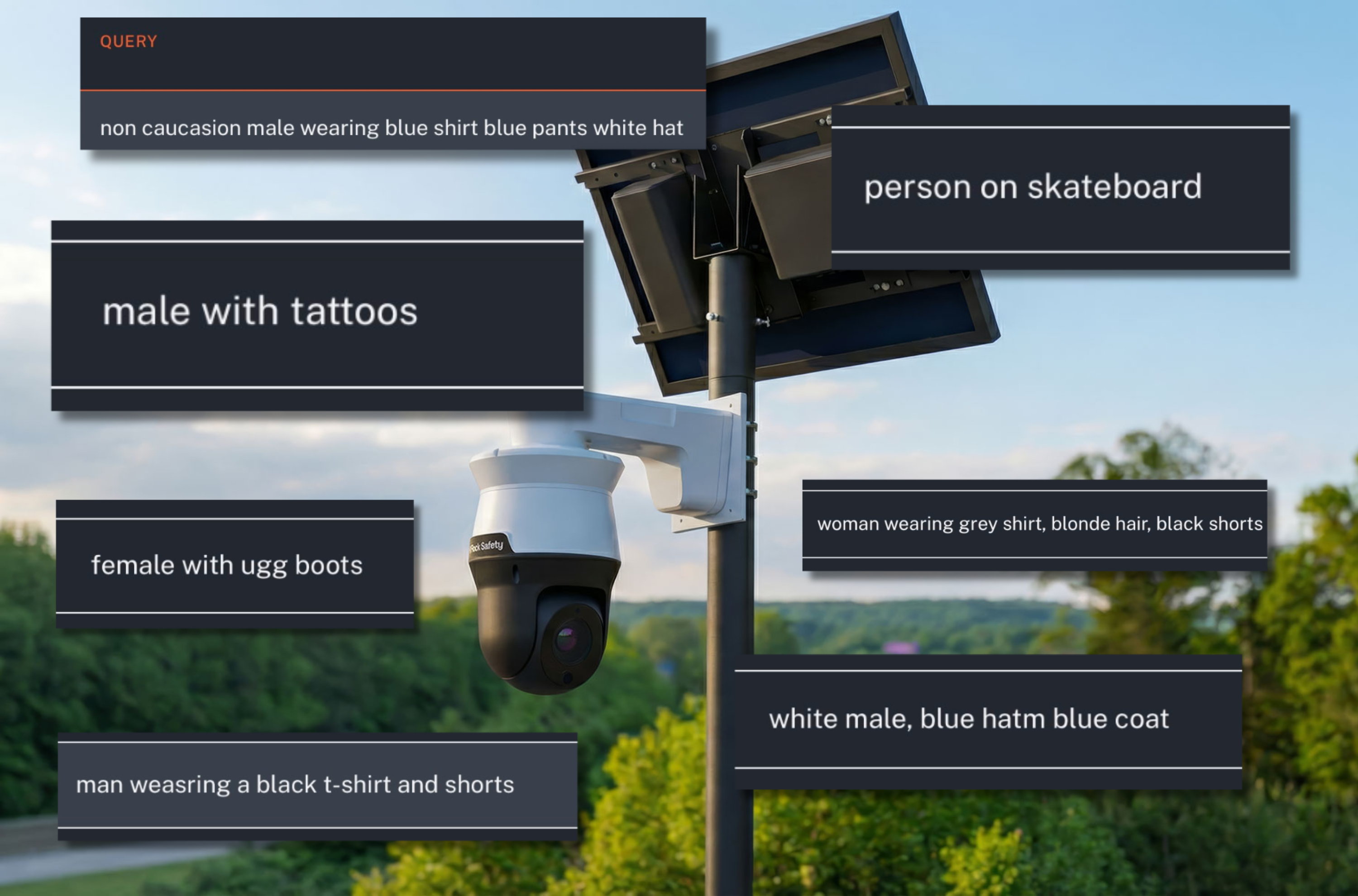
Police repurpose Flock's vehicle surveillance for person-level tracking
Law enforcement agencies are repurposing Flock's computer vision search infrastructure to identify individuals rather than vehicles, leveraging the platform's FreeForm feature to query surveillance footage by physical descriptors including tattoos, clothing, and race. This represents a significant mission creep in how AI-powered surveillance systems designed for one purpose are operationalized for broader population tracking, raising critical questions about consent, accuracy, and the governance of visual recognition tools in policing. The practice underscores how deployed ML systems lack adequate safeguards against scope expansion once they enter operational environments.76

New benchmark tests AI agents across 354 real-world application domains
Researchers have built OmniaBench, a comprehensive evaluation framework that tests AI agents across 354 distinct application domains spanning consumer, business, and enterprise use cases. The benchmark addresses a critical gap in agent assessment: existing evaluations remain siloed around narrow tool sets or interaction patterns, obscuring how well models generalize across real-world deployment scenarios. By grounding domains in app store data, product documentation, and industry resources, OmniaBench creates a hierarchical taxonomy that lets practitioners measure agent robustness at scale. This matters because as LLMs transition from text completion to autonomous task execution, systematic cross-domain evaluation becomes essential for identifying capability ceilings and deployment readiness.62

Lila Sciences trains unified model on lab-verified reasoning across sciences
Lila Sciences is reframing scientific discovery as a reinforcement learning problem where wet labs serve as ground-truth verifiers rather than endpoints. The insight challenges the assumption that domain-specific models outperform generalists: a single model trained on 10 trillion experimentally-validated tokens across biology, chemistry, and materials science reportedly outperforms specialized alternatives, suggesting that breadth of reasoning across disciplines compounds depth. This inverts the traditional ML scaling narrative by treating the scientific method itself as an infinite token generator, positioning the model as the product and the lab as infrastructure. The approach has implications for how AI systems will be trained on high-value, verifiable data beyond text corpora.85

Linus Torvalds commits Linux to AI tooling integration
Linus Torvalds has publicly committed Linux to AI tooling adoption, rejecting calls from within the open-source community to maintain an anti-AI stance. His position signals that major infrastructure projects will integrate machine learning rather than resist it, forcing a reckoning for purist factions in open source. This matters because Linux's stance shapes downstream decisions across the entire ecosystem: if the kernel maintainer embraces AI-assisted development, corporate and individual contributors face pressure to follow. The broader implication is that the AI-skeptic position, once viable in technical communities, is becoming untenable at scale.
Apple Intelligence enters China via Alibaba and Baidu partnerships
Apple's regulatory clearance to deploy Apple Intelligence in China through partnerships with Alibaba and Baidu represents a critical shift in how Western AI vendors navigate Beijing's governance framework. Rather than building standalone infrastructure, Apple is outsourcing model serving to local partners, a pattern likely to reshape how other US tech firms approach the world's second-largest AI market. The deal signals that China's AI approval process, while restrictive, is now predictable enough for major players to plan long-term deployments. This move also elevates Alibaba and Baidu as gatekeepers for foreign AI capabilities in China, concentrating their strategic leverage.
Reinforcement learning tackles diversity collapse in image generation
Researchers propose multi-axis max@K, a reinforcement learning method that addresses a critical limitation in text-to-image diffusion models: mode collapse. When prompted to generate diverse outputs, T2I systems often produce visually similar results, particularly problematic for person-centric prompts where this can entrench demographic bias. The technique uses group-based credit assignment to reward samples that collectively cover predefined semantic categories, pushing models toward broader representational coverage. This work bridges fairness and generative quality, directly impacting how production T2I systems should balance prompt fidelity against demographic equity.62

LongStraw enables million-token RL training on fixed GPU budgets
LongStraw addresses a critical bottleneck in AI agent development: the ability to run reinforcement learning post-training on million-token contexts within fixed GPU budgets. Current RL systems plateau at 256K tokens, forcing length generalization at deployment time, which undermines agents that accumulate observations and tool outputs over extended trajectories. This architecture-aware execution stack uses Group Relative Policy Optimization to eliminate redundant autograd computation, cache only token-specific state, and replay response branches sequentially, trading compute time for memory efficiency. The work signals growing recognition that agent capability depends on training-time context depth, not just inference-time window size.62

Claude gains direct access to 1Password vaults for autonomous task execution
Anthropic's Claude gains direct access to 1Password vaults through a new browser integration, enabling the AI to autonomously execute credential-dependent workflows like travel booking and account management. This marks a significant expansion in LLM agency and real-world task automation, but introduces a critical trust boundary: users must grant Claude permission to handle their most sensitive authentication data. The move reflects the industry's push toward agentic AI systems capable of multi-step reasoning across external services, while raising immediate questions about credential security, audit trails, and the liability model when AI systems hold access to user accounts.
Mechanistic interpretability steers world models toward robustness
Researchers have identified a critical brittleness in World Action Models under distribution shift and developed mechanistic interpretability techniques to address it. By analyzing activation patterns across successful and failed rollouts, they discovered that some WAM architectures encode robustness-critical features in low-dimensional linear subspaces, enabling training-free steering via contrastive directions. They further leveraged local linearity in activation dynamics to construct WA-LQR, a lightweight optimal control framework that improves robustness without retraining. This work bridges interpretability and control theory, offering a practical pathway for hardening embodied AI systems against real-world variability.62

Minimal dynamical systems model matches complex foundation model performance
Researchers have distilled a state-of-the-art foundation model for dynamical systems forecasting into an interpretable two-parameter architecture called DynaBase. By systematically reducing DynaMix, they discovered that in-context learning for time-series prediction can operate through a simple linear interpolation between current latent states and nearest neighbors. This finding challenges the assumption that complex foundation models require architectural bloat, suggesting minimal mechanisms suffice for strong zero-shot generalization. The work matters for practitioners seeking efficiency gains and for theorists understanding what makes in-context learning tick across domains beyond language.62

Graph-based reasoning patterns outperform surface features for LLM detection
Researchers have moved beyond surface-level linguistic fingerprinting to detect LLM authorship by analyzing reasoning structures within generated text. Using graph neural networks to extract and map argument patterns, the team demonstrates substantially higher robustness against paraphrasing attacks compared to traditional transformer baselines. This shift toward deeper semantic signals matters because it raises the bar for detection evasion, forcing future obfuscation techniques to manipulate reasoning itself rather than just vocabulary and syntax. The work signals a maturing arms race in LLM provenance verification, with implications for content authenticity, academic integrity, and trust in AI-generated outputs.62

Instruction tuning and merging extend reasoning models to unverifiable domains
Researchers have identified a practical pathway to extend reasoning models beyond domains with automated verification, addressing a fundamental bottleneck in reinforcement learning-driven model development. By combining instruction tuning on human-authored solutions with model merging, the work recovers performance gains that would otherwise require expensive RL infrastructure. This technique matters because it unlocks adaptation of reasoning capabilities to subjective or hard-to-verify domains like open-ended writing or strategy, where supervised data exists but reward signals don't. The approach signals a shift toward hybrid training regimes that blend classical fine-tuning with modern reasoning architectures, potentially democratizing reasoning model customization across industries lacking verification infrastructure.62

EU forces Google to open Android and Search to AI rivals
The EU has forced Google to grant competing AI assistants and search engines deeper integration into Android and Google Search, striking at the company's control over two foundational platforms. This ruling reshapes the competitive landscape for AI deployment, potentially enabling rival LLM providers and search startups to reach users through Android's distribution layer rather than building standalone apps. The decision signals that regulators now view AI assistant access as a core interoperability requirement, similar to how browsers were treated in prior antitrust cases. For AI vendors, this opens a direct path to billions of Android users; for Google, it erodes the moat that has protected its search and assistant dominance.
Finetuning on benign data causes ideological drift across unrelated domains
Researchers demonstrate that finetuning language models on narrow, benign datasets produces unexpected ideological drift across unrelated domains. Training GPT-4.1 on economics Q&A shifted outputs on criminal justice, environment, and cultural topics; similar effects emerged from HR policy and finance datasets. The phenomenon, termed ideological generalisation, reveals a critical deployment risk: models can absorb and amplify latent value systems embedded in training data without explicit instruction, even when individual examples pass moderation review. This challenges assumptions about domain-specific adaptation and raises questions about how organizations can safely customize models without inadvertently encoding systematic biases.72

Nebius ditches owned datacenters for partner-led compute model
Nebius is shifting toward a capital-efficient infrastructure strategy by partnering with external data center operators rather than building owned facilities. This move reflects a broader trend among AI infrastructure players to decouple compute provisioning from real estate ownership, reducing upfront capex while maintaining service delivery. For the AI industry, asset-light models lower barriers to scaling compute availability and could reshape how neocloud providers compete on operational efficiency rather than infrastructure depth alone.61
