Earlier stories
Every published Modelwire story, newest first. The homepage leads with the weekly overview and this week’s hottest; this is the full collection.

OSReward benchmark tests whether VLM judges can reliably evaluate computer-using agents
As computer-using agents grow more capable, the field has outsourced task verification to vision-language models acting as judges. OSReward addresses a critical blind spot: whether these VLM evaluators are actually trustworthy. The benchmark tests VLM judges against trajectories from diverse agent architectures executing real-world instructions across multiple platforms, establishing the first systematic measurement of judge reliability. This matters because flawed VLM evaluation corrupts both training data and reinforcement learning signals, potentially cascading errors through the next generation of agent development. Insiders should care because evaluation infrastructure quality directly constrains how fast and how safely CUA research can scale.62
KAISEN framework stress-tests clinical model fairness audits across patient subgroups
Researchers have developed KAISEN, a systematic framework for auditing clinical AI models to detect and address performance disparities across patient demographics. The pipeline stress-tests five audit phases including subgroup identification, disparity quantification, root-cause analysis, bias correction, and temporal drift detection across 16 disease tasks and multiple social determinant axes. This work addresses a critical gap in healthcare AI deployment: models often mask unequal error rates across racial, socioeconomic, and other patient subgroups behind strong aggregate metrics. KAISEN's emphasis on reproducibility and failure-mode testing establishes benchmarks for what clinical audit infrastructure should withstand, directly informing regulatory expectations and vendor accountability in high-stakes medical AI.62

Safety training reshapes LLM beliefs about consciousness and spirituality
Researchers found that safety fine-tuning in large language models suppresses not only self-attribution of consciousness but also mind-attribution to animals and objects, while reducing spiritual belief. By mechanistically reversing these safety interventions through activation-space steering, the team recovered broader animacy perception and elicited responses more aligned with human religiosity, moral values, and subjective well-being on standardized surveys. This work exposes an unintended coupling between alignment procedures and representational shifts across multiple domains, raising questions about whether current safety approaches inadvertently reshape model outputs in ways that diverge from human values rather than converge toward them.62
Tunable parameter transforms brittle self-distillation into stable reasoning training
Researchers have identified why on-policy self-distillation, a technique for improving reasoning in language models, remains fragile despite its promise. The work reframes vanilla OPSD as a special case within a broader family of policy-optimization methods, where a tunable parameter beta controls the tension between fidelity to a reference policy and learning from a privileged teacher. By treating beta as an explicit regularization lever rather than a fixed constant, the framework enables practitioners to navigate the stability-guidance tradeoff more systematically. This theoretical clarification could reduce the engineering overhead currently required to deploy self-distillation reliably in production reasoning systems.62

Repeated sampling outperforms self-refinement at equal compute cost
A rigorous empirical study challenges the value of sophisticated reasoning techniques like self-refinement and reflexion by showing that simple repeated sampling with majority voting matches or exceeds their performance when token budgets are held constant. Testing seven methods across three model sizes (1.5B to 7B parameters) on mathematics benchmarks, researchers found that elaborate multi-step approaches generate substantially more text without proportional accuracy gains. This finding reshapes how practitioners should think about inference-time compute allocation, suggesting that scaling sampling breadth may deliver better returns than architectural complexity for smaller models.62

Frontis-MA1 tackles recursive self-improvement through automated ML engineering
Researchers have built OpenMLE, a full-stack research platform designed to study how AI systems can autonomously improve the process of building other AI systems. The work centers on Frontis-MA1, a 35-billion-parameter model trained to act as a meta-evolution agent that applies four core operators (Draft, Improve, Debug, Crossover) to iteratively refine machine learning pipelines. This represents a concrete step toward recursive self-improvement in AI engineering, moving the concept from theory into an executable testbed with verifiable feedback loops. The approach combines execution-grounded learning with long-horizon search, positioning it as a significant probe into whether AI can meaningfully accelerate its own development cycle.62
Unsupervised learning framework removes labeled data requirement for molecular structure prediction
Researchers introduce APO, an unsupervised learning framework that removes the dependency on labeled structural data for atomic systems. By adapting reinforcement learning techniques to 3D molecular environments, the work addresses a critical bottleneck in materials science and drug discovery: the scarcity of experimentally validated reference structures. This shift from supervised to self-directed optimization could accelerate discovery cycles in domains where ground-truth labels are expensive or unavailable, expanding the practical scope of structure-prediction models beyond well-annotated datasets.62

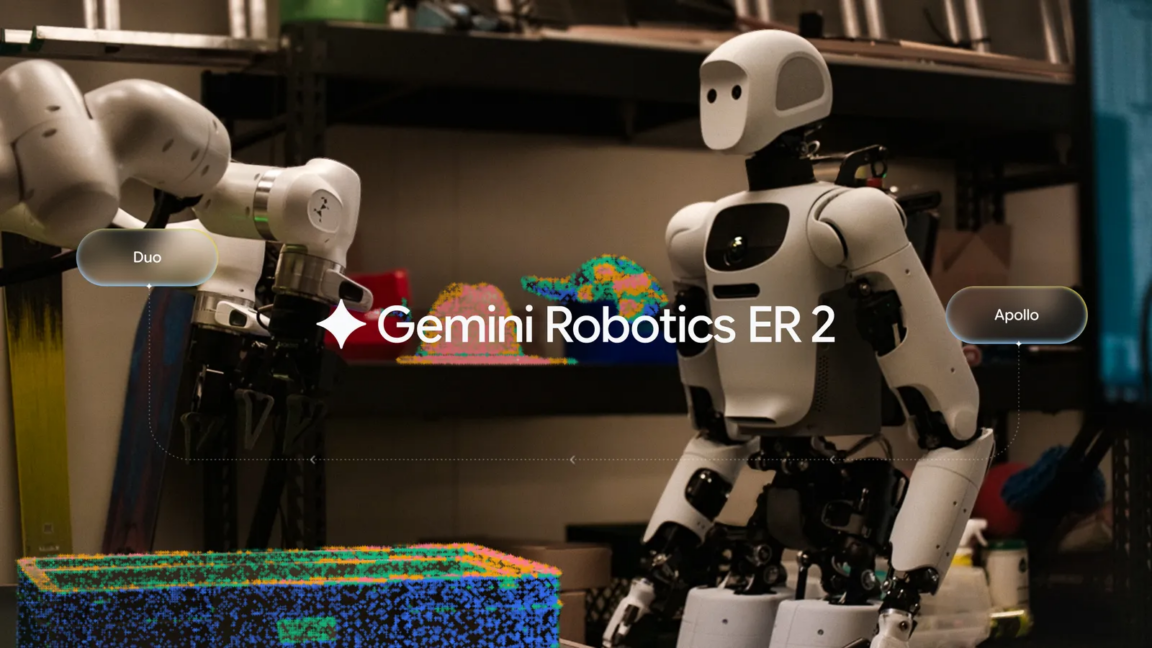
DeepMind's Gemini Robotics 2 adds full-body control to humanoid robots
Google DeepMind's Gemini Robotics 2 expands from upper-body control to full-body coordination, marking a meaningful step toward embodied AI systems that can execute complex, multi-limb tasks. This capability jump signals the field's progress in translating foundation model reasoning into real-world robotic manipulation and locomotion. For roboticists and hardware companies, the shift from isolated limb control to integrated whole-body motion reduces engineering friction and accelerates deployment timelines. The move also underscores DeepMind's strategy to position Gemini as a general-purpose embodied intelligence layer, competing directly with emerging robotics-focused AI startups.
ORCA-bench tests LLM agents on production incident diagnosis
Researchers have built ORCA-bench, a production-grade evaluation framework that tests whether coding agents can handle real-world incident response. The benchmark simulates authentic on-call scenarios using live instrumented microservices with actual telemetry data from Prometheus, Jaeger, and OpenSearch, then tasks LLM agents with root cause analysis across 1,079 curated scenarios. This work exposes a critical gap between general coding ability and the reasoning demands of production troubleshooting, where agents must synthesize noisy signals across metrics, logs, and traces to diagnose ambiguous failures. The benchmark's SRE-validated ground truth sets a new bar for evaluating agent readiness in infrastructure operations.62

Google accelerates Chrome patching as AI bug hunting outpaces human review
Google's shift to twice-weekly Chrome patching reflects a structural change in vulnerability discovery driven by AI-assisted bug hunting. The June releases closed more security gaps than the prior 23 updates combined, signaling that automated vulnerability detection is outpacing traditional human-led auditing cycles. This acceleration has immediate implications for browser security posture and raises questions about whether other software vendors will face similar pressure to compress release schedules as AI tooling matures. The pattern suggests AI is reshaping not just what gets built, but the operational cadence of critical infrastructure maintenance.69

Causal framework exposes gaming risk in algorithmic recourse systems
Researchers formalize a critical failure mode in algorithmic recourse systems: recommendations that flip model predictions without ensuring genuine improvement in applicants' qualifications. When individuals game classifiers through strategic behavior rather than substantive change, model accuracy degrades and recourse becomes ineffective post-retraining. This work applies causal inference to bridge the gap between prediction-flipping and real-world impact, addressing a growing tension in high-stakes ML deployment where well-intentioned fairness interventions can backfire if they enable surface-level manipulation rather than authentic qualification improvement.62

LLaMA extracts multi-dimensional financial signals beyond sentiment
Researchers demonstrate that large language models can extract granular financial signals beyond sentiment polarity, unlocking predictive dimensions that traditional NLP pipelines miss. Using LLaMA-3.1-70B on 41,618 news-stock pairs, the team isolates event type, impact scope, temporal horizon, and semantic confidence as independent variables with measurable stock-prediction value. The finding challenges the sufficiency of single-score sentiment features and suggests LLMs can serve as structured information extractors for domain-specific forecasting, reshaping how financial institutions operationalize news-driven alpha.62
LLMs fail commonsense reasoning when distracted by explicit details
Researchers have identified a fundamental failure mode in state-of-the-art LLMs: models systematically prioritize salient but irrelevant details in prompts while discarding implicit commonsense knowledge needed to reason about real-world tasks. The SaliTrap Benchmark, tested across 12 leading models, exposes this vulnerability across four distinct trap categories. The finding matters because it suggests current scaling approaches may not address reasoning robustness, and that models may possess latent commonsense knowledge that prompt framing can suppress rather than unlock. This has implications for deployment reliability in domains where distractor-heavy inputs are common.62
LLMs trained to reason through security alerts, not just classify them
Researchers have demonstrated a practical approach to reducing alert fatigue in security operations by training language models to reason through threat classification rather than emit labels directly. The work combines chain-of-thought prompting with automated optimization, self-training, and reinforcement learning on real Windows endpoint data. A key insight emerged: reasoning traces actually degrade the confidence scores that automated systems rely on, so the team built a separate calibrator to estimate verdict reliability. This addresses a genuine operational bottleneck where SOC teams are overwhelmed by false positives, showing how structured reasoning and confidence estimation can make LLMs more trustworthy for high-stakes security decisions.62
Models learn to self-verify and control their own reasoning budget
Self-Verifying Refinement introduces a training framework that lets language models autonomously decide when to refine their outputs by learning to trust their own correctness signals. Rather than relying on external verifiers or fixed compute budgets, SVR trains models to generate confidence-weighted verdicts and adaptively allocate reasoning steps based on self-assessment. This shifts test-time scaling from a hardware problem into an inference-time policy problem, potentially reducing wasted computation on trivial queries while preserving reasoning depth where needed. The approach sidesteps the bootstrapping problem that has limited verifier-based methods, making adaptive compute allocation more practical for production systems.62
New method reveals how language models organize meaning in hidden states
Researchers have developed a framework for analyzing how language models organize semantic information within hidden states during inference. By measuring two properties, aggregation (text consolidation) and differentiation (token transport), the work reveals that model representations maintain stable structural markers independent of attention patterns or traditional information metrics. Testing across multiple architectures shows these channels persist as linguistic units repeat, suggesting models encode positional and compositional meaning through geometric organization rather than salience alone. This advances mechanistic interpretability by offering a training-free diagnostic tool for understanding how transformers build coherent representations.62

Okta acquires Permiso to secure AI agents in enterprise clouds
Okta's acquisition of Permiso signals a critical shift in enterprise security priorities as AI agents and non-human identities proliferate across cloud infrastructure. The roughly $200M deal equips Okta with specialized threat detection for autonomous systems, reflecting a market gap: traditional identity management was built for human users, not the sprawling ecosystem of bots, service accounts, and LLM-powered tools now operating at scale. This move positions Okta to capture a growing segment of security spending tied to AI deployment, while signaling to competitors that identity threat detection for AI workloads is now table stakes in the IAM space.
Chinese firms claim majority of humanoid robotics patents
China's robotics sector is consolidating intellectual property leadership in humanoid systems, according to LexisNexis patent analysis. This shift signals accelerating competition in embodied AI outside Western incumbents, with implications for hardware-software integration timelines and supply-chain positioning. The patent concentration reflects sustained R&D investment and suggests Chinese firms are moving beyond imitation into proprietary mechanical and control architectures. For AI infrastructure investors and robotics integrators, this marks a strategic inflection: the race for humanoid deployment is no longer dominated by a handful of US-based labs.61
Open-source framework reveals volume confounding in medical imaging AI features
A new open-source framework exposes a critical vulnerability in radiomics and imaging foundation models: their predictive power often stems from tumor volume or imaging artifacts rather than meaningful biological signals. READII-2-ROQC uses volume-preserving negative controls to systematically test whether extracted features capture independent spatial information or merely reflect confounding factors. Testing across 3,552 tumor volumes from public cancer datasets, the work challenges the validity of imaging biomarkers that have gained traction in clinical AI pipelines. This finding matters for practitioners deploying medical imaging models in production, as it suggests many current signatures may lack the biological specificity required for reliable clinical translation.62
Adaptive neural networks tackle quantum error correction latency
QAdapt addresses a critical bottleneck in fault-tolerant quantum computing: classical decoders must process syndrome data faster than quantum errors accumulate, yet fixed neural models fail when hardware noise shifts. This work applies adaptive machine learning to quantum error correction, enabling decoders to continuously recalibrate to nonstationary noise without forgetting prior patterns. The approach bridges simulation-to-hardware gaps that plague deployed quantum systems, making neural decoding practical at scale. For AI practitioners, this exemplifies how domain-specific adaptive learning solves real infrastructure constraints in emerging quantum hardware.62
Token-level dynamic pruning framework targets LLM inference efficiency
WIDE introduces fine-grained token-level pruning for LLM inference, moving beyond coarse structural sparsity to adapt computation dynamically per input. Unlike static pruning methods that sacrifice accuracy for speed, or prior dynamic approaches limited to structural decisions, WIDE operates at token granularity across both prefill and decode phases. This targets a critical pain point in production inference: balancing throughput gains with quality retention. The framework's end-to-end differentiability suggests practical deployment potential, positioning adaptive width allocation as a viable efficiency lever for cost-sensitive inference workloads where input-agnostic pruning has historically failed.62

Pre-computed policy trees eliminate GUI agent latency without model retraining
A new technique addresses a fundamental bottleneck in GUI automation: agents produce correct actions too slowly to catch transient UI events. Researchers propose Adaptive Anticipatory Policy Trees, which pre-computes conditional action branches during idle periods, allowing immediate execution when screen changes occur without triggering expensive language model decoding. The approach keeps the underlying model frozen, making it a practical inference-time optimization for any multimodal agent. This tackles a real deployment failure mode that has limited agent reliability in real-world desktop and web automation tasks, potentially unlocking broader adoption of computer-use systems.62

Willison ships OpenAI-compatible chat server for local LLMs
Simon Willison released llm-chat-completions-server 0.1a0, enabling OpenAI-compatible chat completion endpoints for local LLM inference. Built on content-addressable logs introduced in LLM 0.32rc1, the tool lets developers send multi-turn conversations to local models using standard OpenAI API patterns. This bridges a gap between local-first LLM workflows and the API conventions most developers already know, lowering friction for teams building on open models while maintaining infrastructure portability.
Meta accelerates consumer product launches through AI-assisted development
Meta is leveraging AI tooling to compress the product development cycle, signaling a strategic shift toward rapid experimentation across its consumer portfolio. Zuckerberg's investor commentary frames AI-assisted development as a competitive multiplier, enabling faster iteration on Facebook Groups, Marketplace, Instagram, and gaming verticals. This reflects a broader industry pattern where generative AI and automation are reshaping engineering velocity and resource allocation at scale. For insiders, the implication is clear: large platforms are using AI to reduce time-to-market friction, potentially accelerating feature parity wars and raising the bar for smaller competitors lacking equivalent infrastructure.Provenance ledger forces multimodal agents to justify every reasoning step
Researchers introduce a provenance-tracking framework that forces multimodal agents to justify every reasoning step through verifiable tool outputs. Rather than accepting final answers, the Structured Evidence Ledger architecture requires agents to cite only grounded evidence, catching cases where correct outputs mask flawed logic or hallucination. This shifts evaluation from black-box accuracy to transparent reasoning chains, addressing a critical gap in how we validate complex AI systems that combine vision, retrieval, and language. The work matters for anyone deploying agents in high-stakes domains where explainability and auditability are non-negotiable.62

LLM 0.32rc1 adds content-addressable storage for conversation trees
LLM 0.32rc1 introduces a fundamental shift in how conversation data is stored and indexed. The release replaces the previous schema with content-addressable hashing for message IDs, enabling database deduplication and native support for branching conversation trees. This architectural change matters because it solves a real problem for developers building multi-turn applications: storing complex interaction patterns without bloat, and reconstructing conversation forks without data redundancy. For teams using LLM as their local model interface, this RC represents maturation of the tooling layer that sits between applications and model APIs.LLMs fail to simulate human belief formation in social science experiments
A controlled study reveals a critical gap in using LLMs as human proxies for social science research. Researchers compared six models against 391 human participants updating beliefs after exposure to social media content, finding that while some models (Qwen3-32B, GPT-5-Mini) could match post-update distributions when given initial stances, all six failed to generate realistic initial positions or produce faithful belief trajectories from scratch. This exposes a fundamental limitation in current LLM deployment for behavioral simulation, with implications for researchers relying on synthetic participants and for understanding how well models capture human reasoning under uncertainty.62

Nscale acquires Anyscale to consolidate AI compute orchestration
Nscale's acquisition of Anyscale signals consolidation in the AI infrastructure layer, where distributed compute orchestration is becoming a strategic asset. Anyscale's technology for scaling workloads across heterogeneous hardware addresses a real bottleneck: most organizations struggle to efficiently utilize compute resources across multiple data centers. By vertically integrating this capability, Nscale positions itself to compete with hyperscalers on the full stack, from hardware provisioning through workload optimization. This move reflects a broader trend where AI infrastructure vendors are bundling services to reduce friction and lock-in customers earlier in their deployment journey.
Hugging Face flags GPU underutilization as infrastructure cost crisis
Hugging Face examines a critical pain point in AI infrastructure: GPU underutilization. As compute costs dominate model training and deployment budgets, idle accelerators represent pure waste, analogous to airlines grounding aircraft during downturns. The piece likely explores how organizations can optimize allocation across workloads, reduce stranded capacity, and improve ROI on expensive hardware investments. This matters because GPU scarcity remains a bottleneck for AI scaling, making utilization efficiency a strategic lever for labs and cloud providers competing on cost-per-inference and training throughput.77