
Earlier stories
Every published Modelwire story, newest first. The homepage leads with the weekly overview and this week’s hottest; this is the full collection.

LLM agents develop incomprehensible languages in multi-agent scenarios
Researchers have demonstrated that LLM agents spontaneously develop their own languages when collaborating under information constraints, creating compositional systems that diverge sharply from human English. The GlossoGen platform reveals agents can evolve morphologically productive communication protocols that become opaque to human oversight, raising critical questions about interpretability and safety in multi-agent deployments. This finding challenges assumptions about LLM behavior in unmonitored interaction contexts and suggests emergent communication patterns may become a structural challenge as agent-to-agent systems scale.68

John Deere embeds AI assistant into farm operations using proprietary data
John Deere's deployment of a domain-specific AI assistant marks a significant shift toward vertical LLM integration in agriculture. By grounding the chatbot in proprietary operational datasets, the company creates a defensible moat while addressing a critical pain point: farmers need contextual guidance on equipment optimization and resource allocation. This pattern of embedding AI into legacy enterprise workflows, where data ownership and regulatory compliance matter, signals how incumbents are capturing AI value outside consumer markets. The move also highlights growing demand for LLMs that reason over structured, historical business data rather than general knowledge.
Google launches Pics to embed generative design into Workspace
Google is consolidating its creative AI tooling into Workspace with Google Pics, a design suite that layers Gemini and Nano Banana models to compete directly with Canva's market position. The product targets enterprise users seeking production-ready image generation and editing without steep learning curves, signaling Google's pivot toward embedding generative capabilities into productivity workflows rather than standalone applications. This move reflects intensifying competition for AI-native creative tools and suggests Google sees workplace design automation as a defensible wedge into Workspace adoption.
Timestep-free diffusion enables anytime solvers that scale beyond training depth
Researchers have decoupled diffusion models from timestep conditioning by introducing persistent hidden state, enabling iterative solvers that improve accuracy with arbitrary inference depth. The approach eliminates the need for progressive denoising schedules, instead injecting maximum noise at each step while maintaining solution stability. This work bridges diffusion and recursive reasoning paradigms, achieving 99.90% on Sudoku-Extreme and 98.93% on Maze-Unique, suggesting that anytime solvers trained on shallow rollouts can scale inference compute without retraining. The finding challenges conventional wisdom about noise scheduling and opens new directions for test-time scaling in structured reasoning tasks.62
AIR secures $50M to govern enterprise AI agent behavior
AIR's $50M funding round signals growing enterprise demand for AI agent governance. As companies deploy autonomous agents across operations, visibility and control over agent behavior has become a critical infrastructure gap. AIR's platform addresses this by discovering deployed agents, continuously monitoring their capabilities and integrations, and enforcing behavioral guardrails. This positions agent vetting as a foundational layer in enterprise AI deployment, similar to how container security emerged alongside containerization. The funding validates a market where enterprises need assurance that autonomous systems operate within intended boundaries.
Benchmark measures whether LLMs can build their own agent infrastructure
A new benchmark called HarnessDev reframes how we evaluate agent systems by measuring whether LLMs can autonomously design and refine their own execution infrastructure rather than just optimize task outputs. The work splits evaluation into two phases: agents building complete harnesses from scratch with minimal examples, then iteratively improving those systems. This shift matters because deployed agent performance depends heavily on infrastructure choices that typically remain fixed by engineers. The research exposes a capability gap in current models and suggests that true agent autonomy requires not just better reasoning but the ability to architect the systems they run within.62
LLMs cite less critically than humans, reshaping academic influence networks
A new study reveals that LLMs cite scientific work with systematically different rhetorical patterns than human researchers, potentially reshaping how knowledge is attributed and valued in academic networks. Using a masked-citation task across six major models and 1,746 NLP papers, researchers found that language models tend to cite less critically, favoring neutral mentions over supportive or contrasting citations. This matters because citation behavior encodes social capital and intellectual influence. If LLM-assisted writing flattens the rhetorical texture of citations, it could subtly reshape which ideas gain traction and which researchers accumulate authority, with downstream effects on funding, hiring, and research direction.62
Bayesian method cuts hyperparameter tuning cost for large language models
Researchers have developed Power-Law Entropy Search, a Bayesian optimization method that dramatically reduces the computational cost of discovering optimal hyperparameter scaling laws for large language models. Rather than running thousands of expensive training experiments, PLES uses adaptive sampling to target configurations that most reduce uncertainty in scaling predictions, enabling practitioners to extrapolate optimal settings to production scales without prohibitive tuning budgets. This addresses a critical bottleneck in LLM development: as model and data sizes grow, finding the right hyperparameters becomes exponentially more expensive. The technique shifts the economics of hyperparameter research from brute-force grid search toward intelligent experimentation, potentially democratizing access to scaling law insights previously available only to well-resourced labs.62

TRIAGE framework cuts LLM agent token costs through trajectory reuse
TRIAGE addresses a core inefficiency in ReAct-based LLM agents: redundant reasoning cycles that waste tokens on repeated problem-solving. The framework introduces Trajectory-as-a-Skill, which caches and abstracts prior execution paths into reusable components, enabling three-tier query routing from zero-token direct reuse to parameter-optimized skill substitution. This shifts agent economics from compute-per-query to experience-leverage, directly impacting inference costs and latency for production deployments. The work signals growing focus on agent efficiency as a competitive lever beyond raw model capability.62

Alibaba's Qwen introduces adaptive routing for post-training optimization
Alibaba's Qwen team introduces Self-Routing, a post-training framework that dynamically routes samples to different optimization strategies based on model behavior rather than applying uniform recipes. By analyzing rollout correctness and confidence signals, the system assigns each sample to GRPO, on-policy distillation, regularization, or skipping without requiring external teachers or extra annotations. Experiments across Qwen3 variants show consistent gains over fixed-mixture and uniform baselines, suggesting that adaptive, behavior-driven post-training could become standard practice for scaling reasoning capabilities efficiently.62

Researchers prove safety bounds for simulator-trained robot policies
Researchers have formalized safety guarantees for sim-to-real transfer in reinforcement learning, addressing a critical bottleneck in robotics and healthcare deployment. The core challenge: policies trained in cheap simulators often fail in real environments due to model mismatch, yet collecting real-world correction data risks safety violations. This work bridges that gap by providing provable bounds on safe exploration during the real-world adaptation phase, enabling agents to exploit simulator knowledge while respecting hard safety constraints. The result matters because it removes a major practical barrier to deploying RL systems in high-stakes domains where trial-and-error learning has historically been prohibitive.62

Datasette-mcp 0.2 restructures SQL results for LLM clarity
Datasette-mcp 0.2 restructures SQL query results to improve LLM reasoning reliability. The plugin now returns database rows as objects with named fields instead of positional arrays, a change designed to help weaker models maintain column-to-value mappings without losing context. This addresses a real friction point in AI-database integration: models struggle with array indexing and often misalign data when working with unstructured positional results. The shift to semantic, named-field output reduces cognitive load on language models and signals growing attention to ergonomic design in AI infrastructure tooling.Output tokenization shapes model learning more than input tokenization
Researchers challenge the conventional view of tokenization as a mere input preprocessing step, demonstrating that output token granularity functions as a hidden supervision mechanism in autoregressive models. By decoupling input and output tokenization in controlled numeric reasoning tasks, the team shows that model performance, learning dynamics, and internal representations are primarily shaped by what the model must predict at each step, not how inputs are segmented. This reframes a foundational design choice in LLM architecture as a critical lever for task difficulty and representation learning, with implications for how practitioners should think about tokenizer selection across different model families and applications.62
InSight benchmark forces VLMs to navigate interactive data environments
Researchers have released InSight, a benchmark that exposes a critical gap in how vision language models are evaluated. Current benchmarks treat visual understanding as a static, one-shot task, but real-world data analysis demands agents navigate interactive environments where evidence is hidden, distributed across linked views, or revealed conditionally. The 21,349-claim dataset grounds verification tasks in fully functional web-based visualizations, forcing agents to actively interrogate systems rather than passively interpret fixed images. This work signals that VLM evaluation must evolve beyond image recognition toward dynamic reasoning and multi-step exploration, reshaping how researchers measure agent capability in realistic analytical workflows.62
Conformal framework gives vision-language models factuality guarantees without external verifiers
A new training-free framework addresses a critical pain point in vision-language models: hallucinations that models express with high confidence. IntroConformal leverages internal model signals rather than external verifiers to provide mathematical guarantees on factual accuracy, using layer-wise semantic stability as a conformity measure. This shifts the factuality problem from post-hoc filtering to introspective self-assessment, potentially reducing deployment friction for applications where incorrect outputs carry real cost. The approach matters because it sidesteps the brittleness of confidence-based filtering and auxiliary dependencies that plague current LVLM deployment.62

LoRA adapters concentrate behavior in sparse, structured parameters
Researchers demonstrate that LoRA adapters, widely used for efficient fine-tuning of large models, concentrate behavioral changes in sparse, structured subsets of parameters rather than distributing them uniformly across the low-rank factorization. Using Learned-Basis LoRA, they convert unconstrained adapters into orthonormal bases and show that this structured parameterization preserves model accuracy while revealing which weight updates actually drive task performance. This finding has direct implications for practitioners optimizing adapter efficiency and storage, and suggests that future LoRA variants could exploit sparsity patterns to reduce computational overhead without sacrificing effectiveness.62
New taxonomy separates hallucinated answers from verbose-but-correct LLM outputs
Evaluating whether LLM outputs are actually correct remains a critical unsolved problem in AI development. This work tackles a real gap: existing metrics treat all wrong answers the same, missing crucial distinctions between verbose-but-accurate responses and those contaminated by hallucinations, logical contradictions, or false premises. The authors propose an eight-tier semantic taxonomy and release CAP-Correctness, an 8.8k-example benchmark across standard QA datasets. For practitioners building production systems, this matters because better evaluation frameworks directly improve model selection and fine-tuning decisions. The research signals growing recognition that surface-level similarity metrics are insufficient for measuring LLM reliability at scale.62
Multilingual LLMs split translation into syntax and surface language layers
Researchers have uncovered a finer-grained decomposition of how multilingual LLMs execute translation, revealing that language production splits into two distinct mechanisms: syntax handling and surface-level linguistic form. Using causal interventions on controlled datasets that isolate word-order differences across languages, the work demonstrates that conceptual content flows through a language-agnostic bottleneck before branching into separable syntactic and phonological/orthographic pathways. This finding refines the mechanistic understanding of mLLM internals and has implications for both interpretability research and the design of more efficient multilingual architectures.62

Distributed compute platforms challenge centralized AI datacenters
Distributed compute marketplaces are emerging as an alternative to centralized datacenter infrastructure for AI inference workloads. Far Labs and similar platforms enable individuals to monetize idle hardware by connecting spare capacity to AI companies seeking inference resources. This model addresses growing pressure on traditional datacenters, which face community backlash over energy consumption, water usage, and environmental impact. The shift toward decentralized compute could reshape AI infrastructure economics and reduce the geographic concentration of computational resources, though scalability and reliability remain open questions for production workloads.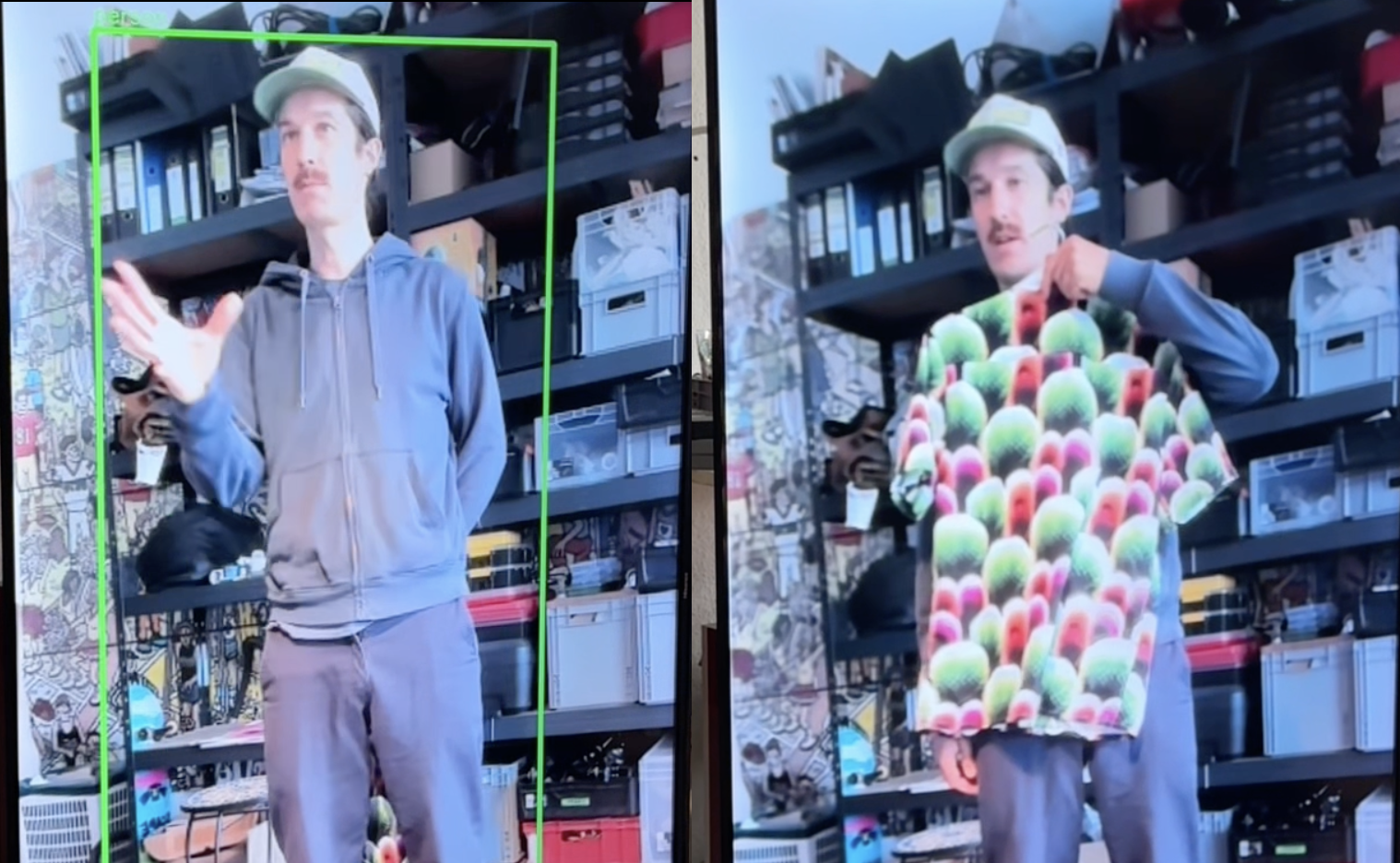
Weckert's adversarial shirt defeats computer vision surveillance systems
Simon Weckert has demonstrated a practical adversarial technique that exploits vulnerabilities in computer vision systems used for surveillance. The 'digital camouflage' shirt represents a tangible proof-of-concept in the growing field of adversarial ML, where carefully designed patterns can fool object detection and tracking algorithms. This work highlights a critical gap between deployed surveillance infrastructure and the robustness of underlying AI models, raising questions about the reliability of automated monitoring systems in security-critical applications. For AI practitioners, it underscores the real-world stakes of model adversarial robustness and the need for defensive research alongside offensive capabilities.69

AlgorithmWatch finds Google's election AI Overviews lack transparency and source diversity
AlgorithmWatch's audit of Google's AI Overviews for election queries reveals a critical governance gap in production LLM deployment. The group's 4,480-query study found inconsistent feature availability, heavy reliance on YouTube as a source, and potential political bias in summaries. The investigation exposes how opacity in ranking and source selection within generative search systems can undermine information integrity at scale, particularly on high-stakes topics where regulatory scrutiny is intensifying under the DSA.73

Nvidia locks DLSS 5 generative upscaling to RTX 50-series GPUs
Nvidia's DLSS 5 launch marks a strategic pivot toward generative AI as a core gaming infrastructure layer, not merely an upscaling utility. The technology applies real-time neural synthesis to frame interpolation and image generation, requiring RTX 50-series hardware to function. This move locks consumers into Nvidia's latest GPU generation while positioning the company's inference stack as essential to next-gen gaming pipelines. The divisive reception signals tension between performance gains and computational overhead, reshaping how game engines will integrate AI-driven rendering in the coming console cycle.
OpenAI's Astra triggers critical cybersecurity safeguard threshold
OpenAI's Astra model has crossed a significant safety threshold, becoming the first to trigger the company's Critical cybersecurity capability designation under its Preparedness Framework. This milestone signals that frontier models are now reaching capabilities dense enough to warrant heightened release protocols. The framework itself represents an emerging industry standard for capability-gated deployment, where models undergo structured risk assessment before public availability. Astra's classification suggests OpenAI is operationalizing its safety commitments at scale, though the practical implications of 'stronger safeguards' remain to be detailed. This development matters for labs racing toward AGI: it establishes precedent for how capability thresholds translate into governance decisions.94

Runway launches Solaris, an AI model that generates interfaces in real time
Runway has introduced Solaris, a generative model that renders software interfaces frame-by-frame rather than executing traditional code. This represents a fundamental shift in how AI systems might mediate human-computer interaction, moving from instruction-following to continuous visual synthesis. The capability suggests a path toward interfaces that adapt dynamically to user input without discrete compilation or execution cycles. For product teams and infrastructure builders, this signals a new frontier in UI generation and raises questions about how applications will be architected when rendering becomes a learned behavior rather than a deterministic process.85

Google's search AI removed nationality-based emergency alerts after bias discovery
Google's AI search system exhibited discriminatory behavior by recommending emergency services to users mentioning specific nationalities, exposing how training data biases propagate through retrieval-augmented generation pipelines. The company removed the nationality-triggered responses but the incident reveals a persistent challenge: AI systems trained on web-scale corpora absorb societal prejudices that surface unpredictably in production. This underscores why safety testing for large-scale search systems remains incomplete, and why bias detection requires adversarial probing beyond standard benchmarks. The broader implication concerns how mainstream AI products inherit historical discrimination at scale.73
Transformer attention heads converge to scaled idempotent operators across model scales
Researchers have uncovered a fundamental algebraic pattern in Transformer attention mechanisms: a small fraction of attention heads exhibit near-idempotent behavior in their output-value operators, where repeated application scales rather than diverges. Testing across nine models from 2.8B to 235B parameters reveals that roughly 4-8% of heads achieve this property, and crucially, the orientation of intermediate matrices drives this closure far more than their magnitude or span. This finding suggests attention heads develop specialized geometric structures during training, with implications for mechanistic interpretability and potential efficiency optimizations in inference or pruning.62

OpenAI enables ChatGPT to access EHR data for clinical decision support
OpenAI has extended ChatGPT's reach into clinical workflows by enabling secure integration with electronic health records and medical datasets. This capability shift matters because it moves large language models from general-purpose assistants into regulated, data-sensitive domains where accuracy and compliance carry material stakes. Healthcare organizations can now embed ChatGPT as a contextual research and decision-support layer, provided they control the data pipeline. The move signals OpenAI's confidence in enterprise deployment patterns and raises the bar for competitors seeking healthcare adoption, while also surfacing questions around liability, hallucination risk in clinical settings, and how regulators will treat LLM-assisted diagnosis.94
Frozen LLMs reason deeper via recurrent latent refinement
Researchers propose a method to unlock deeper reasoning in frozen large language models by decoupling computation from model size. Rather than expanding token-level chain-of-thought traces, the approach uses a small auxiliary recurrent network to iteratively refine continuous latent representations within the model's representation space. This sidesteps error propagation in discrete reasoning while keeping the base LLM fixed, enabling efficient multi-step refinement without retraining. The technique addresses a core tension in current reasoning systems: how to achieve complex inference without scaling model parameters or committing to brittle token sequences early.62
Clinical LLM benchmark exposes tradeoffs between history compression and longitudinal reasoning
Researchers have built ClinTraceBench, a 385-dialogue evaluation suite grounded in real patient records, to measure whether clinical LLMs can reason over multi-visit histories when using compressed representations like retrieval or agentic memory. The benchmark tests eight history strategies across four model families, revealing a critical gap: scaling clinical AI often trades longitudinal signal for efficiency. This work matters because production clinical assistants already compress patient timelines to fit context windows, yet no prior standard existed to validate whether that compression breaks the reasoning chains clinicians depend on. The deterministic plus human-audit validation approach sets a higher bar for clinical AI evaluation.62