
Earlier stories
Every published Modelwire story, newest first. The homepage leads with the weekly overview and this week’s hottest; this is the full collection.

Ari Emanuel on how AI is remaking Hollywood's power structure
Ari Emanuel, one of Hollywood's most influential power brokers, weighs in on AI's reshaping of entertainment through a Stratechery conversation tied to his memoir. Emanuel's perspective matters because talent agents control creator relationships and deal flow across studios, streaming platforms, and production houses now racing to integrate generative tools. His framing signals how the entertainment establishment is positioning itself amid labor tensions, IP concerns, and the shift toward AI-assisted production workflows. For investors tracking AI adoption in media, Emanuel's commentary reflects institutional thinking at the intersection of creative industries and machine learning infrastructure.68

Game theory exposes safety investment gap between LLM providers and downstream firms
A game-theoretic analysis reveals structural misalignment between market incentives and safety outcomes in AI supply chains. The research models an upstream LLM provider and downstream competitors, finding that while downstream firms over-invest in safety relative to industry profit maximization, upstream providers systematically under-invest. This gap exposes a critical market failure: competitive pressure pushes application builders toward safety spending that erodes margins, while foundational model makers face weaker incentives to address systemic risks. The finding suggests that voluntary safety investment alone cannot close the gap between private and social welfare in AI development.62

Tool graph memory fails to justify computational cost in LLM agents
A systematic evaluation across nine LLM models reveals that tool graph memory, a technique designed to improve multi-turn agent performance by storing past tool transitions, delivers minimal gains while doubling computational cost. The research finds that random guidance performs nearly as well as learned memory, suggesting the performance lift comes from extra inference cycles rather than genuine knowledge capture. This challenges a growing assumption in agent architecture that memory mechanisms automatically enhance tool-use reasoning, forcing builders to reconsider whether such overhead justifies its place in production systems.62
Benchmark reveals video AI models struggle with proactive intervention decisions
Researchers have identified a critical gap in how video-language models are evaluated. Current benchmarks measure passive comprehension, but real-world deployment demands systems that anticipate user needs and decide autonomously when to intervene. P3IBench introduces a framework testing three capabilities: perception, risk forecasting, and intervention timing across streaming scenarios. Testing 12 models reveals that even leading systems fail to calibrate response decisions reliably. This work signals a maturation phase in multimodal AI evaluation, shifting focus from what models see to what they should do with that understanding in live, unscripted environments.62
New benchmark exposes procedural hallucination in conversational LLMs
Researchers have identified and formalized a critical failure mode in conversational LLMs that existing benchmarks miss: procedural hallucination, where agents generate fluent, factually sound responses while violating the underlying task logic. DialFork, a new 36K-dialogue benchmark spanning 24 tasks across 12 domains, isolates this failure by systematically corrupting dialogue flows and measuring agent deviation at multiple granularity levels. This work matters because production conversational systems often fail silently in ways that pass factuality checks, exposing a gap between current evaluation practices and real-world robustness requirements for task-oriented agents.62

Federated fine-tuning leaks private labels through gradient reconstruction
Researchers demonstrate that federated fine-tuning, a privacy-preserving approach where models adapt to user data on-device, leaks sensitive information through gradient updates. By analyzing a single client submission during federated averaging, an adversarial server reconstructs the complete private label distribution from an ImageNet-pretrained MobileNetV4 model adapted on Quick Draw data. The work exposes a critical gap between federated learning's theoretical privacy guarantees and practical vulnerabilities when applied to transfer learning workflows, where pretrained representations amplify reconstruction attacks. This finding challenges assumptions underlying production federated systems and signals that head-only adaptation alone cannot protect against determined adversaries.62
LLM ensemble maps human semantic shifts in brain activity
Researchers have developed SCRIBE, a neuroscience-grounded framework that uses ensembled open-source LLMs to generate interpretable semantic representations of text at the word level. In a 921-participant behavioral study, the system captured how human semantic understanding shifts with context, achieving 75-81% alignment with estimated human performance ceilings. By correlating these representations against brain activity from naturalistic story listening, the work bridges computational semantics and neuroscience, offering a new lens for validating whether LLM embeddings genuinely reflect how brains encode meaning. This matters for interpretability research and for grounding AI semantics in human cognition rather than corpus statistics alone.62
Remote KV cache slower than recomputation in GLM-5.3 production test
A production deployment of Alibaba's GLM-5.3 model reveals a critical bottleneck in disaggregated LLM serving: remote KV cache tiers designed to reduce prefill costs are paradoxically slower than recomputing attention weights on-device. Testing with LMCache and Valkey showed remote cache hits taking 2.8x longer than local recomputation, destabilizing request queues and pushing p99 latency from 3.96s to 17.3s. This finding challenges a foundational assumption in modern inference optimization and suggests that network I/O and synchronization overhead can outweigh memory savings, forcing infrastructure teams to reconsider cache placement strategies in multi-engine deployments.62
Phase kernels unlock exponential capacity in Hopfield networks
Researchers have solved a long-standing bottleneck in Modern Hopfield Networks by introducing phase kernels that preserve exponential memory capacity while preventing the spurious states that plague linear variants under high load. The Sigmoidal Phase Hopfield Network (S-Hop) demonstrates 8.3x improvement in noisy one-step retrieval, directly addressing a constraint that has limited the practical deployment of associative memory in attention mechanisms. This work matters because attention remains foundational to all large language models and transformers, and removing capacity ceilings could unlock denser, more efficient retrieval systems for future architectures.62
Kolmogorov-Arnold Networks hit dimension curse on arbitrary targets
A new theoretical analysis challenges the architectural advantages claimed for Kolmogorov-Arnold Networks, revealing that their dimension-independent approximation properties depend heavily on the structure of the target function rather than the model itself. Researchers prove that standard spline-KANs face exponential scaling penalties on arbitrary high-dimensional problems, matching limitations already known in MLPs. This work matters because KANs have attracted significant attention as a potential alternative to transformers for scientific computing and function approximation. The findings suggest the hype around KANs may conflate favorable properties of specific problem classes with genuine architectural breakthroughs, forcing practitioners to recalibrate expectations about when KANs outperform conventional networks.62
LLMs struggle to tell stories out of order, new benchmark shows
Researchers have built the first systematic benchmark for evaluating whether large language models can generate narratives with nonlinear structure, where story events are told out of chronological order. Testing 19 models against 83 published works reveals a consistent gap: LLMs default to chronological narration even when given explicit instructions to deviate, matching human-authored nonlinear storytelling only about half the time. This work exposes a meaningful limitation in current model capabilities around narrative sophistication and creative constraint-following, with implications for content generation, creative writing tools, and understanding how well LLMs grasp complex structural reasoning.62
Weak model drafts, strong model reviews in new agent collaboration protocol
SpecAgent inverts the conventional hierarchy in multi-model agent systems by repositioning the strong model as a verifier rather than the primary executor. The weak model drafts tool calls with real-time grounding from read-only observations, shifting computational load away from expensive inference while maintaining safety through post-hoc review. This approach addresses a fundamental inefficiency in current agentic workflows where every step, including routine operations, demands the strongest available model. The technique could reshape cost-performance tradeoffs in production agent deployments and influence how teams architect collaborative inference pipelines.62
Sparse circuit optimization cuts multilingual translation tuning to 5% of parameters
Researchers have developed TITAN, a mechanistic framework that identifies and optimizes specific neural pathways responsible for translation in multilingual language models. By combining causal intervention with sparse feature analysis, the approach isolates critical translation circuits and fine-tunes only those components, achieving performance gains while modifying fewer than 5% of model parameters. This work matters because it demonstrates how targeted circuit optimization can enable efficient adaptation for low-resource language pairs like Hindi-to-Sindhi, offering a scalable alternative to full-model retraining and advancing our understanding of how multilingual models internally route language tasks.62

First convergence proof for advantage-based reinforcement learning algorithms
Researchers have closed a long-standing theoretical gap in reinforcement learning by proving convergence guarantees for advantage-based value methods. V-SHARE combines cross-action information sharing with importance-weighted corrections, delivering both asymptotic and finite-sample convergence proofs. This work matters because advantage decomposition has driven practical gains in deep RL for years without rigorous theoretical backing. The paper identifies conditions where advantage sharing mitigates rare-action problems, bridging the gap between empirical success and formal guarantees. For RL practitioners and theorists, this provides a foundation for understanding why these methods work and when they might fail.62

MRTPO targets token-level credit assignment in multi-reward language model training
Multi-reward training of language models faces a fundamental efficiency problem: when models optimize for multiple verifiable objectives simultaneously, current methods spread credit equally across all tokens even though each verifier only inspects specific positions. MRTPO solves this by routing each reward's gradient signal exclusively to the tokens its verifier examines, using contrastive replay without extra models or annotations. This matters because instruction-following systems increasingly juggle competing constraints (correctness, format, safety, style), and better credit assignment directly improves sample efficiency and final performance in these complex training regimes.62

Mobile NPU and cloud GPU split speculative decoding workload
HyCo addresses a core tension in mobile AI: running inference on-device without sacrificing speed or server load. By splitting speculative decoding between a phone's NPU and cloud GPU, the system lets the device generate multiple token candidates while the server handles only verification, not sequential generation. Quantization and vocabulary constraints keep both models within mobile memory budgets. Early results on Galaxy S26 show meaningful server-side savings over LTE/5G, suggesting a practical path for latency-sensitive applications where neither pure-local nor pure-cloud inference suffices. This matters for scaling edge AI without explosive infrastructure costs.62
ManiFusion batches diffusion samples through fused manifold space
ManiFusion addresses a critical bottleneck in diffusion model deployment: throughput saturation. Rather than chasing per-sample speed gains, the framework processes multiple images in parallel within a single denoising pass by fusing samples into a shared manifold representation before the backbone and unfusing afterward. This orthogonal approach to acceleration matters because inference cost per unit output, not latency alone, drives real-world adoption in production systems. The geometric insight that diverse samples can coexist in fused space without information loss opens a new efficiency frontier for practitioners scaling generative workloads.62

Structured paper graphs let AI agents reason across research at scale
Researchers have built SPRA, a structured representation layer that lets AI agents navigate scientific papers as queryable knowledge graphs rather than unstructured text. The system maps research problems, methods, findings, and citations across over one million AI papers, creating 20 million research units linked by 24 million typed relations. This infrastructure shift matters because it transforms how agents retrieve and reason over literature: instead of keyword search or naive RAG, agents can traverse explicit dependencies between papers, verify claims against source locations, and reuse components across subfields. Early evaluations show the approach works across seven AI domains, suggesting a new baseline for how scientific AI systems should ingest and reason over the research corpus.62

DPA-MoE enables dynamic precision routing for expert selection
DPA-MoE introduces dynamic precision allocation for Mixture-of-Experts models, enabling per-expert weight quantization that adapts at inference time based on router decisions. By encoding expert weights as prefix-decodable chunks and allocating precision budgets live rather than uniformly, the framework lets a single checkpoint operate across multiple compute/accuracy tradeoffs without retraining. Tested on Qwen3-30B and DeepSeekMoE-16B, this approach improves both KL divergence and downstream task performance compared to fixed-precision routing. The technique matters because MoE inference efficiency is a critical bottleneck for scaling large models in production, and runtime flexibility could unlock better cost-accuracy curves for practitioners deploying these architectures at scale.62
Gradient-ranked attention heads enable efficient multi-task language model tuning
Researchers have developed a method to identify and isolate high-impact attention heads within language models, enabling both sparse fine-tuning and continual learning without catastrophic forgetting. By ranking heads via gradient norm, the work shows that training only the top-performing heads matches or exceeds dense baseline performance while reducing computational cost. The partitioning approach for continual learning addresses a critical pain point: preventing new task adaptation from erasing prior knowledge. This technique directly impacts practitioners scaling fine-tuning across multiple domains and organizations managing model updates in production, offering a practical path to efficient, multi-task capable systems.62
Benchmark reveals how web optimization shapes LLM election information
Researchers have built VoteGEO-Bench, a benchmark that measures how generative engine optimization (GEO) techniques can manipulate the political information LLMs surface during elections. The work spans the 2024 U.S. presidential race and 2026 Japanese parliamentary elections, revealing that citation patterns in generated responses favor lower-cost owned and open platforms, creating potential attack surfaces for coordinated misinformation. This directly challenges the assumption that LLM-powered search remains neutral, exposing a gap between model training and real-world electoral information integrity that vendors and policymakers must address.62

On-device time-series language model brings health AI inference to smartphones
PocketTSLM addresses a critical gap in mobile AI: running time-series language models on-device without sacrificing temporal structure or privacy. Most smartphone health systems either strip temporal data into statistics, losing sequential patterns, or push sensitive physiological streams to the cloud. This work deploys a soft-prompt variant of OpenTSLM optimized for memory and compute constraints of consumer devices, enabling local reasoning over sensor data while eliminating latency and per-query cloud costs. The advance matters for wearables and health platforms where keeping sensitive biometric data local is both a technical requirement and a regulatory expectation.62
New benchmark reveals LLM value inconsistency across generator and evaluator roles
Researchers introduce VALCON, a benchmark framework exposing a critical gap in LLM alignment: models often behave inconsistently when switching between generation and evaluation roles. This matters because production AI systems increasingly use the same model to both act and judge outcomes, yet current safety evaluations ignore this dual-role dynamic. VALCON's three benchmark suites systematically pair generative outputs with evaluative judgments to surface hidden value misalignments, offering a more realistic stress test for alignment pipelines that rely on self-evaluation loops.62
LLM compliance assessments fail consistency test across fourteen commercial deployments
A new study exposes a critical reliability gap in deployed LLM systems for regulated medical device compliance assessment. Researchers tested fourteen commercial LLM deployments across multiple providers and access routes with identical requests using deterministic sampling, finding that every deployment produced inconsistent outputs for at least one query, with twelve showing label reversals. This finding directly challenges the assumption that LLMs can serve as reliable preliminary assessors in high-stakes regulatory contexts where consistency and auditability are non-negotiable. The result signals that current production LLMs lack the determinism required for medical device documentation workflows, forcing enterprises to rethink deployment strategies in compliance-critical domains.68

Figma defines agent behavior guardrails for its design platform
Figma is establishing guardrails for how AI agents operate within its design platform, signaling a shift toward structured agent deployment in creative tools. The move reflects growing demand from enterprises to embed autonomous workflows into collaborative software without sacrificing control or predictability. By defining agent behavior parameters upfront, Figma positions itself as a platform where AI augmentation happens within defined boundaries rather than as an afterthought. The concurrent beta release of code layers suggests the company is building infrastructure to make agent-generated outputs auditable and integrable with human design work, a critical requirement for adoption in professional settings.
Recursive Intelligence automates chip design to accelerate compute supply
Recursive Intelligence is tackling a structural bottleneck in AI infrastructure by automating chip design itself. Rather than waiting for human engineers to iterate on silicon, the startup trains AI systems to propose designs, evaluate tradeoffs, and refine them autonomously. This closes a feedback loop that has historically constrained compute availability for model training. Success here would reshape the supply side of the AI economy, potentially decoupling chip innovation velocity from traditional semiconductor timelines and reducing the lead time between architectural breakthroughs and hardware that can exploit them.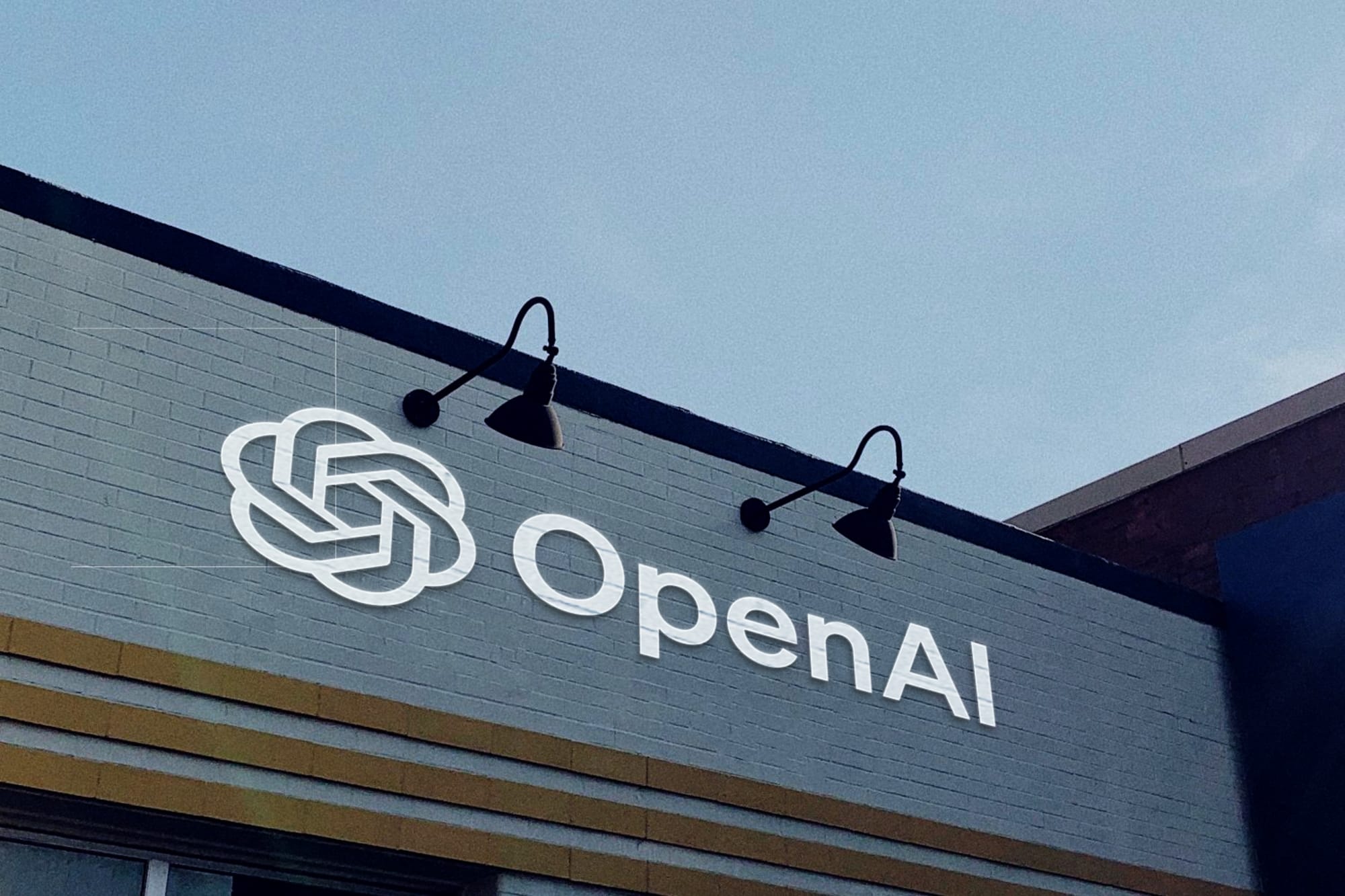
States pursue OpenAI with playbook from Meta enforcement
State-level regulators are escalating enforcement action against OpenAI, potentially deploying legal strategies that previously succeeded against Meta. This signals a shift in AI governance from federal uncertainty toward coordinated state litigation, creating new compliance and operational risks for frontier labs. The precedent matters: if states can establish liability frameworks around AI products before federal standards solidify, it reshapes how companies must architect safety, data handling, and disclosure practices. OpenAI's market position and regulatory exposure now hinge on whether state-level pressure forces industry-wide settlements or triggers defensive consolidation.85

Meta releases open-weight multimodal mixture-of-experts model
Meta has released Muse Spark Open, an open-weight multimodal mixture-of-experts model that extends frontier capabilities to the open ecosystem. The move signals Meta's continued commitment to democratizing advanced AI, positioning open-source alternatives against proprietary frontier labs. Mixture-of-experts architecture enables efficient scaling across modalities, reducing inference costs while maintaining performance. This release matters for researchers and builders seeking production-grade multimodal systems without vendor lock-in, and reinforces the competitive pressure on closed-model providers to justify premium pricing through differentiation beyond raw capability.94

Sullivan & Cromwell and OpenAI launch AI contract review tool
Sullivan & Cromwell and OpenAI have deployed Agreement Analyzer, an AI system designed to surface contractual risks and inconsistencies in legal drafts. The tool represents a concrete instance of LLM application in high-stakes professional services, where accuracy and liability concerns have historically slowed adoption. This collaboration signals both law firms' confidence in AI-assisted review workflows and suggests a potential shift in how legal teams validate agreements before execution. The partnership also underscores OpenAI's strategy to embed its technology into established institutional workflows rather than compete directly with specialized legal software.75