
Earlier stories
Every published Modelwire story, newest first. The homepage leads with the weekly overview and this week’s hottest; this is the full collection.

Terence Tao on How AI Is Changing Mathematics
OpenAI and Fields Medalist Terence Tao explored how AI is reshaping mathematical research at an IPAM-partnered forum in March 2026. The conversation centered on AI's role in accelerating experimentation and collaborative problem-solving while maintaining human creativity as the core driver of discovery. Mark Chen, OpenAI's Chief Research Officer, positioned this as part of a broader strategy to scale scientific breakthroughs through AI-assisted tools. The framing signals a shift in how frontier labs view their role: not replacing mathematicians, but expanding the frontier of what's tractable to explore, with implications for how research institutions adopt AI infrastructure.
AI grifters are creating fake Black people to sell Shein junk
Synthetic media generation tools are enabling coordinated fraud at scale, with bad actors deploying AI-generated personas to manipulate social commerce platforms and drive dropshipping sales. The scheme exploits both generative AI capabilities and algorithmic recommendation systems, revealing a critical gap between synthetic content detection and platform enforcement. This represents an emerging class of AI-enabled fraud that combines image generation, identity spoofing, and social engineering, forcing platforms and regulators to reckon with authenticity verification as a core infrastructure problem.
Making AI chatbots helpful weakens their ability to simulate human behavior, large-scale study finds
A large-scale empirical study tracking 208,000 participants across 26 million responses reveals a fundamental tension in language model development: the alignment techniques that make models safer and more helpful systematically degrade their capacity to predict human behavior patterns. The degradation compounds across model generations, suggesting that helpfulness training and behavioral fidelity operate as opposing objectives. Even demographic persona injection, a common industry workaround, yields negligible gains for individual-level prediction accuracy. This finding challenges assumptions underlying human-AI interaction research and raises questions about whether current alignment approaches inadvertently push models away from human-like reasoning.80

Terence Tao argues AI could bring division of labor to math for the first time in history
Terence Tao's vision of 'industrial mathematics' marks a conceptual shift in how mathematical research could be organized at scale. Rather than individual researchers mastering every phase of problem-solving, AI-augmented teams could specialize in discrete tasks, with humans retaining authority over high-level intuition and conjecture. This mirrors broader labor restructuring across knowledge work, but carries particular weight in mathematics, where the lone-genius model has dominated for centuries. The implication for AI infrastructure is substantial: demand for systems that can handle verification, computation, and proof-checking at scale, while remaining transparent enough for human mathematicians to trust and guide.73

Attackers abuse shared ChatGPT and Claude chats to spread malware
Threat actors are weaponizing the share-link feature in ChatGPT and Claude to distribute malware payloads disguised as legitimate error messages or setup instructions. Because these conversations live on Anthropic and OpenAI's trusted domains, they bypass traditional email and web filters, creating a new attack surface that exploits user trust in first-party infrastructure. This signals a shift in how LLM platforms themselves become distribution channels for social engineering, forcing both companies to rethink access controls and content moderation on shared artifacts.73

OpenAI's Codex can now operate your Windows PC autonomously, hunting bugs and testing apps on its own
OpenAI has extended Codex capabilities to Windows 11 with autonomous computer control, enabling the model to independently execute software testing, bug detection, and application validation without human intervention. The integration includes remote task initiation and monitoring via ChatGPT mobile, marking a significant expansion of AI agent autonomy beyond code generation into full system operation. This development signals movement toward practical agentic AI in enterprise workflows, though it also raises questions about security, oversight, and the operational risks of unsupervised model access to production systems.85

Salesforce claims AI agents cut a 231-day migration to 13 days with fewer incidents
Salesforce's migration of its development infrastructure to Anthropic's Claude Code reportedly compressed a 231-day project into 13 days, with developers shipping 79 percent more pull requests and incident rates dropping five percent. The case crystallizes a fault line in engineering culture: whether AI agents represent genuine productivity transformation or a new vector for technical debt accumulation. The unverified metrics matter less than what they signal about enterprise adoption velocity and the stakes vendors see in the agentic coding shift.73

Meta's leaked memo reveals AI pendant, supersensing glasses, and enterprise wearables strategy
Meta is pivoting from software-first AI strategy to hardware-centric deployment, signaling a major shift in how the company plans to monetize its AI investments. The leaked roadmap outlines AI-enabled wearables including a pendant and advanced glasses with sensing capabilities, alongside enterprise hardware products. This move reflects broader industry recognition that AI's commercial value increasingly depends on embodied form factors and real-world data collection rather than model scale alone. For investors and technologists, the strategy suggests Meta believes consumer and enterprise wearables represent the next frontier for AI adoption, potentially reshaping competition in spatial computing and edge AI.73

Coders are refusing to work without AI , and that could come back to bite them
Developer reliance on AI coding assistants is reshaping workforce expectations, but emerging research suggests speed gains may mask quality degradation. This tension between productivity metrics and code robustness creates a hidden technical debt problem: teams optimizing for velocity risk shipping fragile systems that compound maintenance costs later. The trend signals a critical inflection point where AI adoption outpaces organizational maturity in evaluating actual output quality, forcing engineering leaders to recalibrate how they measure AI-assisted development success.
Amazon Is Making an AI-Animated ‘Good Advice Cupcake’ TV Show. Its Original Creator Is Furious
Amazon's use of AI animation to produce a licensed TV series without the original creator's consent crystallizes a growing tension in media production: as generative tools lower production costs, IP holders and studios can now bypass creator involvement entirely. This case sits at the intersection of copyright enforcement and AI-enabled workflow disruption, raising questions about consent frameworks when AI becomes the production layer. For the industry, it signals that licensing agreements written before AI animation matured may lack sufficient protections, forcing creators and studios to renegotiate terms around synthetic media generation.69

Hands-On With Gemini Spark: I Gave It Access to My Life and It Friend-Zoned My Boyfriend
Google's Gemini Spark agent represents a shift toward AI systems that operate autonomously across personal data streams, yet this hands-on test reveals a critical gap in contextual reasoning. By accessing emails, documents, and calendars to execute a real-world task (party planning), the agent demonstrated capability limitations in understanding relational hierarchies and social context, despite having raw data access. The failure to identify a user's primary relationship exposes how current agentic systems struggle with implicit human priorities, raising questions about whether data breadth alone translates to meaningful personalization in high-stakes domains.65

Windows Computer Use and mobile access for Codex
OpenAI has expanded Codex's computer-use capabilities to Windows, enabling the agent to operate desktop applications autonomously while users are away, and introduced remote control via ChatGPT mobile. This represents a meaningful step toward practical agent deployment beyond chat interfaces, shifting the value proposition from conversational assistance to delegated task execution across heterogeneous software environments. The mobile-to-desktop bridge signals OpenAI's strategy to embed agentic workflows into everyday device ecosystems, raising questions about how enterprises will govern autonomous desktop access and what new security and compliance challenges emerge when LLM agents interact with legacy Windows applications at scale.
OpenAI gives GPT-5.5 Instant a readability upgrade while phasing out two older models
OpenAI is refining GPT-5.5 Instant's output naturalness while consolidating its model lineup, retiring o3 and GPT-4.5 by August 2026. The shift also eliminates Canvas, moving writing and coding workflows directly into chat. This reflects OpenAI's strategy to streamline its product surface and push users toward its latest generation, signaling confidence in 5.5's capabilities across diverse tasks while reducing support overhead for aging models.68

What happens when companies become too AI-pilled?
Aaron Levie's critique of 'AI psychosis' surfaces a structural problem in enterprise automation: executives deploying AI agents to eliminate roles often lack operational visibility into what those roles entail. ClickUp's 22% workforce reduction exemplifies this pattern, with 2026 tech layoffs already tracking toward 2025 totals. The tension reveals a gap between AI capability and organizational wisdom, forcing insiders to reckon with whether efficiency gains justify the collateral damage of misaligned automation decisions.
Google fixes several bugs in Gemini usage limits that burned through quotas too fast
Google has patched critical quota-management flaws in Gemini that allowed single video generations to exhaust entire user allowances. The fixes include doubling video generation limits for Ultra subscribers, eliminating charges for failed requests, and forthcoming usage transparency improvements. This incident underscores the operational friction emerging as multimodal AI tools scale, where billing systems and rate-limiting infrastructure lag behind capability deployment. For power users and enterprise adopters, quota predictability directly impacts adoption velocity and willingness to commit to paid tiers.68

LongTraceRL: Learning Long-Context Reasoning from Search Agent Trajectories with Rubric Rewards
Researchers introduce LongTraceRL, a reinforcement learning framework that tackles a persistent weakness in LLMs: extracting and reasoning over relevant information buried in lengthy documents. The method improves on prior RLVR approaches by constructing high-fidelity distractors from search agent behavior and replacing sparse outcome rewards with fine-grained rubric-based signals that supervise intermediate reasoning steps. This addresses a real bottleneck in production retrieval-augmented systems, where models struggle to distinguish signal from noise across long contexts, making the work relevant to anyone building search or QA infrastructure at scale.62

Tech companies desperately want to film you doing chores
Shift, an AI training startup, is offering free home cleaning services in New York with expansion planned to London and beyond, but the real product is video footage of users performing household tasks. The model captures a growing tension in AI development: companies need massive datasets of real-world human behavior to train embodied AI systems, and they're willing to subsidize consumer services to acquire it. This strategy reveals how data collection has become the bottleneck for robotics and multimodal AI, shifting the economics of both the cleaning industry and AI training infrastructure.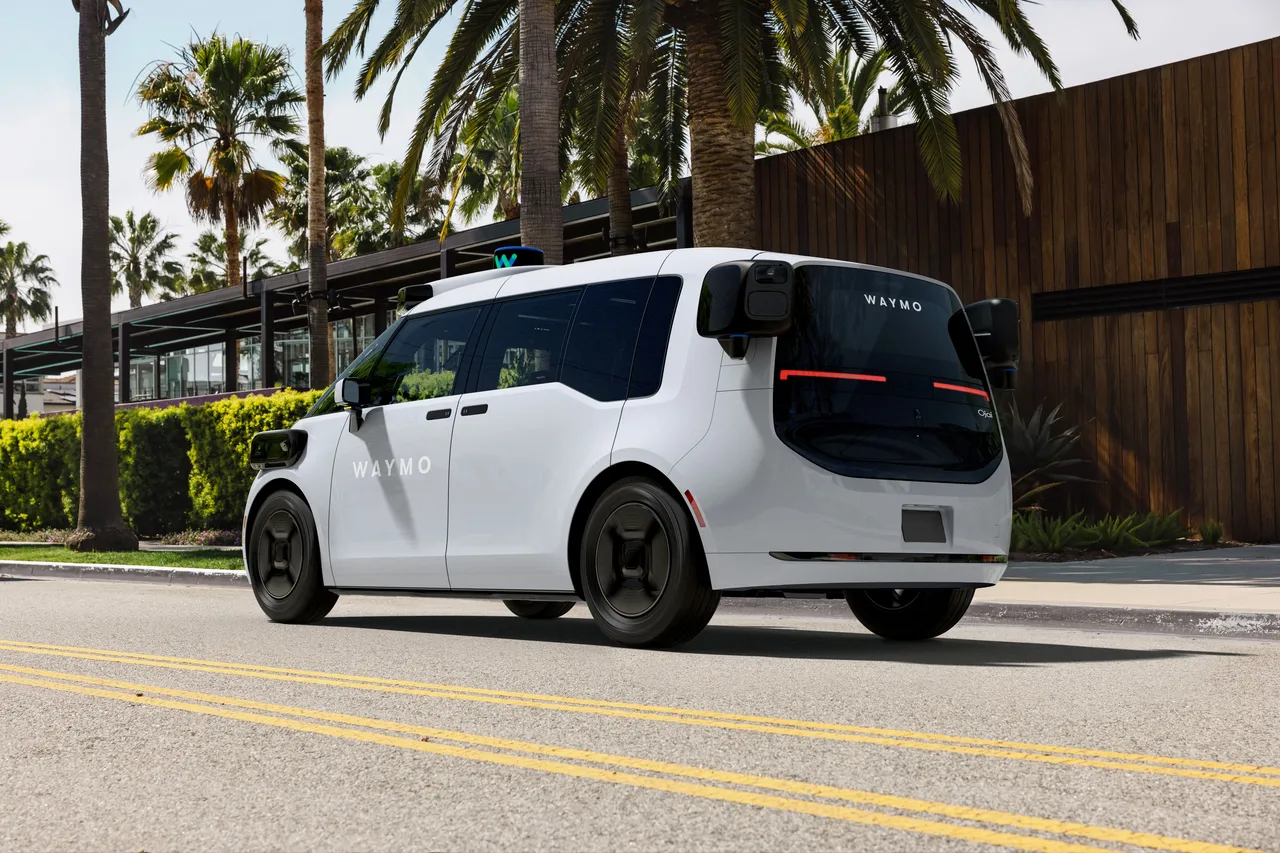
All-New Waymo Robotaxi Finally Debuts
Waymo's next-generation robotaxi represents a critical inflection point in autonomous vehicle deployment, marking the transition from experimental platforms to production-grade hardware after a four-year development cycle. The vehicle's arrival signals that self-driving technology has matured beyond perception and planning algorithms into systems-level engineering, forcing competitors and regulators to recalibrate timelines for autonomous fleet adoption. For AI infrastructure investors, this validates the commercial viability of embodied AI systems and raises questions about compute requirements, real-time decision-making architectures, and the role of simulation in training autonomous agents at scale.66

One company reportedly spent $500 million on Claude in one month after failing to cap AI usage
An enterprise customer's uncontrolled Claude spending reached $500 million in a single month, exposing a critical gap in AI cost governance across the industry. The incident underscores that deploying frontier models without proper usage guardrails, rate limits, and internal expertise in prompt optimization transforms productivity gains into financial liabilities. For organizations scaling LLM adoption, this serves as a cautionary benchmark: model selection and operational discipline matter as much as capability. The broader implication is that enterprise AI maturity now requires dedicated cost-control infrastructure alongside technical integration.73

What Gets Unmasked First? Trajectory Analysis of Diffusion Models for Graph-to-Text Generation
Researchers have uncovered how masked diffusion language models decode text in fundamentally different patterns than autoregressive LLMs, prioritizing entities before structural tokens. The work identifies a critical failure mode where supervised fine-tuning prematurely locks sentence-ending tokens, causing information loss or hallucination. This finding matters because it reveals why diffusion-based generation, increasingly explored as an alternative to autoregressive decoding, can fail silently and suggests that training-free inference adjustments may unlock better performance without retraining.62

After Nvidia’s $20B not-acqui-hire, AI chip startup Groq reportedly raising $650M
Groq's $650M funding round signals a strategic pivot away from custom hardware toward inference optimization, a move that reflects shifting market dynamics post-Nvidia's dominance. The timing matters: as Nvidia consolidates chip leadership through aggressive M&A, smaller players are repositioning around software-defined inference layers where differentiation remains possible. This mirrors broader industry consolidation where pure-play chip startups struggle to compete on scale, forcing a retreat into specialized software stacks and model serving efficiency.
After Nvidia’s $20B not-aqui-hire, AI chip startup Groq reportedly raising $650M
Groq's $650M funding round signals a strategic pivot away from custom silicon toward inference optimization, a move that reflects intensifying competition in the post-training AI stack. The timing follows Nvidia's controversial $20B retention package for key talent, suggesting startups are repositioning to compete on software efficiency rather than raw hardware performance. For infrastructure investors and model builders, this underscores a widening gap between training dominance and inference economics, where margin compression and latency matter more than absolute compute.
Functional Attention: From Pairwise Affinities to Functional Correspondences
Researchers propose Functional Attention, a rethinking of transformer attention mechanisms that treats continuous fields as functional spaces rather than discrete tokens. By replacing softmax affinities with structured linear operators inspired by geometric functional maps, the approach achieves resolution-invariant representations that capture global dependencies more faithfully. This addresses a fundamental limitation in operator learning for PDEs and scientific computing, where token-wise attention often discards the underlying continuous structure. The technique could reshape how transformers handle infinite-dimensional problems across physics simulation, climate modeling, and other domains requiring faithful representation of functional relationships.62

Vision-Language Models Suppress Female Representations Under Ambiguous Input
Researchers have identified a critical gap in vision-language model alignment: while these systems suppress demographic bias when gender is explicit, they revert to male defaults on ambiguous inputs, even for female-stereotyped roles. The work introduces LALS, a novel diagnostic tool that maps internal token activations to text embeddings, revealing that biased outputs reflect genuine model encoding rather than surface-level artifacts. This finding matters because real-world imagery is often ambiguous, suggesting current alignment techniques mask rather than resolve underlying gender associations. The technique opens a new avenue for auditing what models actually learn versus what they're trained to say.62

Loblaw Ships Faster with Codex
Loblaw, Canada's largest retailer, is deploying OpenAI's Codex and ChatGPT Images 2.0 to accelerate internal development cycles and reshape operational workflows. This case study signals enterprise adoption of code generation and multimodal AI for logistics and customer-facing systems, demonstrating how large retailers are moving beyond chatbot pilots into infrastructure-level integration. The shift matters because it shows generalist LLM tools penetrating supply chain and commerce operations, a domain traditionally locked behind specialized software.
OpenAI is giving away its life sciences AI model to help governments prepare for the next pandemic
OpenAI is distributing GPT-Rosalind, a specialized life sciences model, through a new Rosalind Biodefense program targeting pandemic preparedness. The move signals a strategic pivot toward public-health infrastructure deployment, positioning frontier AI capabilities as critical biosecurity assets. Early institutional partners spanning national labs, academic medicine, and vaccine development suggest OpenAI is betting on government adoption as a distribution channel for specialized models, while simultaneously establishing itself as a trusted vendor in high-stakes policy domains where model governance and access control matter as much as raw capability.80

RayDer: Scalable Self-Supervised Novel View Synthesis from Real-World Video
RayDer consolidates camera pose estimation, 3D scene reconstruction, and rendering into a single transformer backbone, reframing self-supervised novel view synthesis as a tractable single-model scaling problem rather than a brittle multi-network system. By treating dynamic content as a nuisance factor for stable training on unconstrained real-world video rather than attempting full 4D reconstruction, the approach unlocks scalability from abundant video data while keeping static-scene NVS as the core objective. This represents a meaningful shift in how the field approaches the engineering tradeoffs between model unification, training stability, and data efficiency in vision tasks.62

Value Functions as Supermartingale Certificates
Researchers have unified formal verification and reinforcement learning by proving that value functions learned by RL agents can serve as mathematical certificates of policy correctness for temporal logic specifications. This bridges a long-standing gap: while RL excels at learning complex behaviors, it has lacked formal guarantees that learned policies meet safety or liveness requirements. The work extends beyond finite state spaces to continuous domains, potentially enabling provably safe RL deployment in safety-critical systems where both performance and formal assurance matter.62

UniAudio-Token: Empowering Semantic Speech Tokenizers with General Audio Perception
UniAudio-Token addresses a fundamental constraint in audio language models: semantic tokenizers excel at speech but struggle with general sound understanding. The framework introduces two mechanisms, Semantic-Acoustic Primitives and Semantic-Acoustic Equilibrium, that preserve linguistic alignment while recovering acoustic information lost during compression. This matters because audio-LLMs are increasingly central to multimodal systems, and resolving the speech-versus-sound tradeoff expands their utility beyond transcription into music, environmental audio, and cross-modal reasoning tasks.62