
Earlier stories
Every published Modelwire story, newest first. The homepage leads with the weekly overview and this week’s hottest; this is the full collection.

OpenAI Confidentially Files for IPO on the Heels of SpaceX and Anthropic
OpenAI's confidential IPO filing marks a watershed moment for AI commercialization, following Anthropic's public market entry by one week. The move signals that frontier AI labs are transitioning from venture-backed startups to publicly traded entities, reshaping how capital flows to AI infrastructure and research. This clustering of IPO filings within days suggests investor appetite for AI governance and scale has reached institutional thresholds, while raising questions about how public markets will price long-term R&D spending and existential risk mitigation in companies with uncertain profitability timelines.87

Following Anthropic, OpenAI files confidentially for IPO
OpenAI's confidential IPO filing marks a pivotal moment in AI commercialization, following Anthropic's move by just over a week. The filing signals that frontier labs are transitioning from private venture funding to public markets, reshaping how AI infrastructure and capability development will be financed at scale. At an $852 billion valuation, OpenAI's public debut would establish a new baseline for AI company worth and likely trigger broader investor reassessment of the sector's maturity and profitability expectations. This dual race to IPO between the two largest LLM makers underscores intensifying competition for capital and legitimacy as both firms scale toward trillion-parameter models and enterprise deployment.
Uber and Wayve to Launch London’s First AI Robotaxis
Uber and Wayve's London deployment marks a critical inflection point for autonomous vehicle commercialization in a major Western city. The partnership combines Wayve's end-to-end deep learning stack with Uber's ride-hailing infrastructure, creating a real-world testbed for AI-driven mobility at scale. Expansion into Tokyo signals confidence in the technology's cross-geography robustness and suggests the autonomous taxi market is transitioning from pilot phase to operational rollout. This move pressures legacy automakers and competing AV platforms to accelerate deployment timelines.76

Apple plays catch-up at WWDC
Apple's WWDC positioning reveals a deliberate strategy to embed AI as infrastructure rather than spectacle. By leading with OS refinements and relegating Siri's AI upgrade to a supporting role, Apple signals confidence that generative capabilities matter only when integrated seamlessly into existing workflows. This contrasts sharply with competitors racing to showcase standalone AI features, suggesting the market may be entering a maturation phase where differentiation shifts from raw model capability to user experience and privacy-preserving on-device deployment.
Apple bets cheaper AI will woo small developers
Apple is lowering barriers to AI experimentation by subsidizing cloud API costs for indie developers below a 2 million download threshold. The move signals recognition that infrastructure expenses have become a bottleneck for small-team AI adoption, even as the broader ecosystem pushes toward commoditized inference. This positions Apple's developer ecosystem as a cost-competitive alternative to hyperscaler platforms, potentially reshaping where early-stage AI apps get built and tested.
Nvidia Forges South Korea Tech Deals in AI Push
Nvidia is deepening its footprint in South Korea across robotics, chip design, and AI infrastructure through a series of strategic partnerships. This expansion reflects the intensifying competition for regional AI dominance and signals Nvidia's commitment to securing supply-chain resilience and local engineering talent in a key semiconductor hub. For infrastructure investors and chip-sector watchers, the move underscores how AI hardware leadership now depends on geographic diversification beyond Taiwan and the US, particularly as geopolitical tensions reshape supply networks.61
This Company Will Add Phone, AirPod, and Smartwatch Trackers to License Plate Readers
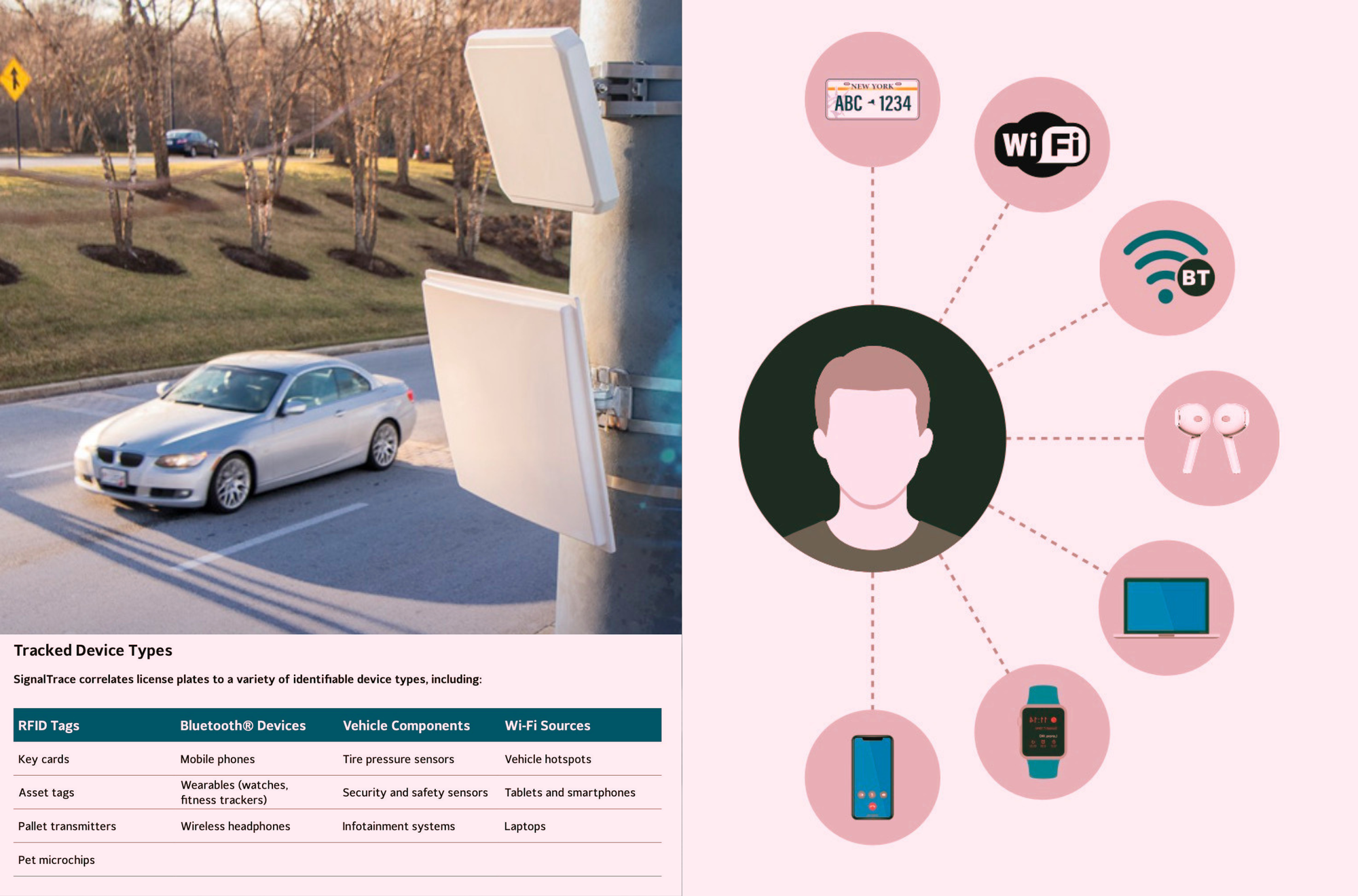
SignalTrace represents a convergence of surveillance infrastructure and data fusion that extends beyond traditional computer vision. The system correlates Bluetooth signals from consumer devices (phones, wearables, earbuds) with license plate reader networks, creating persistent identity linkage across physical movement. This reflects a broader shift in how AI-powered surveillance systems aggregate heterogeneous data streams to build behavioral profiles. The strategic implication cuts across policy, infrastructure, and AI ethics: machine learning models trained on fused device and vehicle data enable population-scale tracking without explicit consent, raising questions about how AI systems are deployed in law enforcement and commercial surveillance contexts.69

Apple just taught your iPhone to finish your sentences, your photos, and your workflows
Apple is embedding generative AI capabilities across core iOS applications, moving beyond consumer novelty into productivity infrastructure. The rollout targets Safari, Shortcuts, and Password management, suggesting a strategy to integrate language models into everyday workflows rather than isolating them in dedicated apps. This reflects the broader industry pivot toward ambient AI that augments existing tools. For insiders, the move signals Apple's commitment to on-device or tightly controlled inference, positioning it against cloud-dependent competitors while testing user appetite for AI-assisted text completion and automation at scale.
Apple will let you build workflows using AI in its new Shortcuts app
Apple is embedding generative AI into Shortcuts, allowing users to compose automation workflows through natural language prompts rather than manual configuration. This represents a significant shift in how consumer-facing automation tools integrate LLMs, lowering the barrier to workflow creation for non-technical users. The move signals Apple's strategy to embed AI capabilities across its OS ecosystem while competing with other platforms offering AI-assisted productivity features. For the broader landscape, this demonstrates how major platforms are moving beyond chatbot interfaces toward AI-augmented task automation, potentially reshaping user expectations around what 'AI-native' productivity means.
Apple’s Image Playground doesn’t suck anymore
Apple's Image Playground refresh signals the company's commitment to competing in generative AI despite earlier lukewarm reception. The upgrade matters because Apple controls distribution to 2+ billion devices and has positioned on-device AI as a privacy differentiator. Improved image generation quality could accelerate adoption of Apple Intelligence features and reshape how consumers perceive the company's AI capabilities relative to rivals like Google and OpenAI. This is less about technical breakthrough and more about Apple's ability to move the needle on user-facing AI products that drive ecosystem stickiness.
Apple’s Photos app is getting new AI editing features
Apple is embedding generative AI directly into its Photos application through a spatial 'Reframe' tool that algorithmically adjusts image composition and perspective. This move signals Apple's broader strategy to distribute AI capabilities across consumer hardware without relying on cloud processing or third-party APIs. For the AI landscape, it represents a shift toward on-device inference as a competitive moat, positioning Apple alongside Google and Microsoft in embedding foundation models into everyday productivity tools rather than reserving them for specialized applications.
Apple gives Siri its own dedicated app
Apple is decoupling Siri into a standalone application, signaling a strategic pivot toward modular AI assistants rather than OS-integrated voice agents. This move reflects industry-wide pressure to make conversational AI more discoverable and competitive as a discrete product, particularly as rivals like OpenAI and Google embed their own assistants more prominently. The shift suggests Apple recognizes that Siri's integration disadvantage has become a liability, and standalone deployment may unlock faster iteration cycles and clearer user engagement metrics. For the broader market, this normalizes the app-store distribution model for AI assistants, potentially fragmenting the assistant landscape further.
Apple’s New Siri AI Is Ready to Get Personal
Apple is fundamentally restructuring Siri's architecture at WWDC 2026, moving from a standalone voice assistant to a hybrid model that integrates Google's Gemini LLM. This partnership signals a strategic pivot in how major tech platforms are outsourcing core AI reasoning to specialized frontier labs rather than building proprietary alternatives. The shift affects the competitive dynamics of on-device AI, cloud integration patterns, and raises questions about whether consumer AI assistants will converge on shared underlying models despite different interfaces.76

Palo Alto Networks Moves Faster with GPT-5.5
Palo Alto Networks is leveraging GPT-5.5 to accelerate security workflows, with two concrete wins: vulnerability reporting now produces coherent first-pass analysis, and parallel tool use dramatically improves token efficiency. The shift signals how frontier models are moving beyond chat into domain-specific automation, where enterprise security teams can offload reasoning-heavy tasks. This matters because it demonstrates LLMs crossing a threshold from experimental to operationally embedded in high-stakes infrastructure work.
Rethinking the Divergence Regularization in LLM RL
A new paper challenges how modern LLM reinforcement learning handles distributional shift during policy optimization. Current methods like PPO and GRPO use ratio-clipping to enforce trust regions, but this approach falters on long-tailed vocabularies where importance ratios poorly reflect actual policy divergence. The work critiques DPPO's divergence-based masking as overly rigid, discarding gradients once tokens breach boundaries. This matters because RL stability directly impacts post-training quality and inference reliability. Fixing trust-region mechanics could unlock more efficient, robust alignment techniques across production LLM systems.62

Microsoft Research's Lens proves detailed captions matter more than raw scale for training efficient image generators
Microsoft Research's Lens challenges the scaling hypothesis by achieving competitive performance with just 3.8 billion parameters, a fraction of industry-standard model sizes. The breakthrough hinges on training data quality rather than quantity: 800 million meticulously detailed captions from GPT-4.1 outperform billions of sparse web alt-text. Open-source release of code and weights signals a shift in how the field measures efficiency, forcing practitioners to reconsider the cost-benefit calculus of parameter bloat versus curated training corpora. This reframes the data-versus-scale debate for downstream builders.85

Apple’s long-awaited AI Siri overhaul is finally here
Apple is reshaping Siri from a voice-command interface into a conversational AI companion with expanded capabilities, signaling the company's pivot toward on-device and cloud-integrated AI agents. This move positions Apple to compete directly with OpenAI's ChatGPT, Google Assistant, and Amazon Alexa in the emerging AI companion market, where natural language understanding and task automation are becoming table stakes. The overhaul reflects broader industry pressure to move beyond narrow task execution toward general-purpose reasoning, forcing incumbents in consumer AI to adopt LLM-backed architectures or risk obsolescence.
Topological Neural Operators
Topological Neural Operators extend operator learning into higher-dimensional geometric domains by coupling learned transformations with fixed topological structure. Rather than treating data as isolated points, TNOs embed features across cells of varying dimension and enforce interactions through Discrete Exterior Calculus, making gradient, curl, and divergence operations explicit. This framework surfaces conservation laws and geometric constraints that physical systems obey, addressing a structural gap in how neural operators handle multidimensional phenomena. For practitioners building surrogate models in physics simulation and scientific computing, TNOs offer a principled path to architectures that respect domain geometry without sacrificing learnability.62

Amazon is launching AI-generated custom merch
Amazon is integrating generative image capabilities into its print-on-demand infrastructure, allowing shoppers to create custom merchandise via text prompts through Alexa for Shopping. This move signals how major e-commerce platforms are embedding foundation models into transactional workflows to lower friction for content creation and product customization. The play matters because it demonstrates a shift from AI as a standalone tool to AI as infrastructure within existing retail ecosystems, potentially reshaping how consumer goods are designed and distributed at scale.
The UK Is Betting on a Billion-Dollar AI Supercomputer to Kick Its Addiction to US Tech
Britain is mobilizing state capital to build a domestic AI supercomputer cluster, signaling a strategic pivot away from dependence on US-controlled infrastructure and cloud providers. The initiative targets homegrown chip startups and aims to create sovereign compute capacity for training and inference workloads. This reflects a broader geopolitical realignment in AI infrastructure, where nations are treating compute access as critical infrastructure rather than a commodity market. Success here could reshape how European and allied nations approach AI sovereignty, though execution risk remains high given the capital intensity and technical complexity of competing with established US players.76

WWDC 2026: Everything announced on Siri AI, iOS 27, Apple Intelligence and more
Apple's WWDC 2026 keynote signals a strategic pivot toward on-device and cloud-integrated AI capabilities, with Siri receiving substantial language model upgrades and iOS 27 embedding Apple Intelligence across the OS. The event marks a critical inflection point for how consumer-grade AI infrastructure gets distributed: rather than relying on third-party LLM providers, Apple is consolidating generative AI into its own silicon and software stack. This move reshapes the competitive landscape for AI assistants and raises questions about how device makers will differentiate through proprietary models versus commodity LLM access. Tim Cook's final WWDC adds symbolic weight to the announcement, suggesting board-level commitment to this direction.
Apple announces Siri AI and its next generation of Apple Intelligence
Apple's rollout of a redesigned Siri marks a significant competitive repositioning in the consumer AI assistant space after two years of delayed execution. The new system emphasizes conversational depth and personalization, suggesting Apple is moving beyond command-response interfaces toward contextual reasoning. This matters because Apple controls one of the world's largest installed bases of devices, and a materially smarter assistant could reshape how hundreds of millions of users interact with AI daily. The timing also signals Apple's commitment to keeping on-device and hybrid inference competitive against cloud-native alternatives from OpenAI and Google.
Discovering Functionally Selective Brain Regions with a Deep Topographic Multimodal Model
Researchers have developed Topo-Omni, a multimodal foundation model that unifies visual, auditory, and language processing within a single topographic coordinate space, mirroring the brain's functional organization. By applying spatial smoothness constraints during fine-tuning, the architecture spontaneously clusters related cognitive functions across modalities in ways that align with human neuroimaging data. This work bridges neuroscience and deep learning by demonstrating that foundation models can be shaped to respect biological principles of cortical organization, potentially improving interpretability and cross-modal reasoning in AI systems.62

Intel gets a second life as Google and Nvidia explore it as a TSMC backup for AI chips
Intel's foundry division is emerging as a credible alternative to TSMC for cutting-edge AI chip production, with Google committing to over three million units for 2028 and Nvidia validating Intel's process technology for its next-generation Feynman architecture. The shift reflects mounting supply constraints in the AI infrastructure layer, where TSMC's capacity ceiling is forcing hyperscalers to diversify their manufacturing footprint. For the industry, this signals a structural shift toward geographic and vendor redundancy in semiconductor supply chains, reducing single-point-of-failure risk while giving Intel a rare path to relevance in the high-margin foundry market.85

Meta Deletes Face-Recognition System From Its Smart Glasses App After WIRED Report
Meta has quietly removed facial recognition code from its smart glasses companion app following WIRED's investigation, signaling renewed caution around on-device computer vision in consumer hardware. The deletion raises questions about whether the feature was shelved permanently or merely deprioritized amid regulatory scrutiny. This move reflects the broader tension between AI capability deployment and public acceptance, particularly as wearable devices become ubiquitous sensors. For the industry, it underscores how investigative pressure can force rapid feature rollbacks even from well-resourced players, reshaping product roadmaps in real time.69

iOSWorld: A Benchmark for Personally Intelligent Phone Agents
Researchers have released iOSWorld, a benchmark that fundamentally reframes how mobile AI agents should be evaluated. Unlike sandbox environments that test isolated task completion, iOSWorld embeds agents in a persistent iOS ecosystem with 26 interconnected apps containing realistic user data spanning finances, messaging, travel, and social graphs. The 133-task suite escalates from single-app operations to multi-app workflows and inference challenges that demand agents reason about user patterns and preferences. This shift matters because it exposes a critical gap in current agent evaluation: production systems must navigate messy, personalized digital lives, not sterile instruction sets. For teams building autonomous mobile assistants, iOSWorld establishes a new baseline for what "intelligent" actually means.68

WWDC 2026: Everything announced on Siri, iOS 27, Apple Intelligence and more
Apple's WWDC 2026 keynote signals a strategic pivot in how the company integrates generative AI into its core OS and voice assistant infrastructure. The event centers on Siri's evolution and Apple Intelligence, suggesting Apple is doubling down on on-device and hybrid AI models to differentiate from competitors while maintaining privacy positioning. The timing coincides with Tim Cook's final WWDC as CEO, marking a potential inflection point in Apple's AI roadmap and developer ecosystem expectations around iOS 27 capabilities.
Collaborative Human-Agent Protocol (CHAP)
As foundation models graduate from text generation to operational decision-making in production systems, the technical protocols governing human-agent collaboration remain ad-hoc and fragmented. This arXiv paper addresses a critical infrastructure gap: when humans supervise, edit, and validate agent outputs across distributed teams and trust boundaries, those correction signals vanish into application logs and chat threads rather than feeding back into the system. CHAP proposes a standardized protocol to capture and formalize these human judgement moments, treating them as the highest-value training and accountability signal in multi-agent workflows. The work reflects a maturing recognition that production AI is no longer single-model supervision but rather cross-functional, asynchronous collaboration where signal loss directly undermines both safety and learning.62

Your Model Already Knows: Attention-Guided Safety Filter for Vision-Language-Action Models
Researchers have identified a practical safety mechanism already embedded within Vision-Language-Action robotic models, sidestepping the latency problem that plagues existing safeguards. By leveraging attention heads that naturally track task-relevant objects, this training-free approach enables real-time collision avoidance without external VLM queries, addressing a critical gap in deployed robot control systems where dynamic obstacle tracking matters. The finding suggests safety properties may be learnable byproducts of end-to-end policy training rather than requiring bolted-on verification layers.62