
Earlier stories
The full Modelwire feed, ordered by publish time.

LLMs reshape chip design automation from task-specific aids to autonomous agents
Chip design faces mounting complexity and speed-to-market pressure, creating an opening for LLM-driven automation across the full front-end workflow. This paper maps how language models can move beyond isolated tasks like HDL generation or testbench creation toward unified agentic systems that orchestrate design space exploration end-to-end. The shift from localized AI assistance to autonomous agent-based EDA represents a structural change in how semiconductor teams will operate, with implications for tool vendors, design teams, and the competitive dynamics of chip development timelines.58

Sign language translation reaches real-time deployment on edge hardware
Researchers have moved sign language translation from isolated signs to real-time sentence-level deployment, addressing a critical accessibility gap. Using parameter-efficient fine-tuning on a curated subset of How2Sign data, the team built a hardware-aware streaming pipeline that runs perception and translation on remote compute while a Raspberry Pi 4B client handles camera input and speech output. The work prioritizes practical deployment constraints over architectural novelty, achieving BLEU 15.9 and demonstrating how edge-cloud splits can make multimodal translation accessible in resource-limited settings. This signals growing attention to accessibility as a concrete AI systems problem, not just a research benchmark.58

AR glasses need cloud processing or bulk batteries, Patel argues
Nilay Patel articulates a hard constraint on near-term AR glasses design: real-time visual processing at the edge remains computationally infeasible within power budgets. Current architectures force a choice between cloud offloading (with latency and privacy tradeoffs) or bulky local compute (Vision Pro model). This framing matters because it exposes why consumer AR remains stuck despite years of hype, and signals that breakthroughs in on-device inference efficiency or neural compression are prerequisites, not nice-to-haves, for the category to scale.
Agora uses auction mechanics to route LLM agent tasks to best solvers
Agora introduces a market-based mechanism for routing LLM agent tasks to specialized models and tools, replacing naive API matching with auction-driven allocation. The framework treats reasoning steps as competitive bids, allowing expert solvers to signal genuine capability rather than overconfidence. This addresses a real pain point in multi-agent orchestration: existing systems waste compute by routing work to functionally similar but performance-mismatched alternatives. For teams building complex reasoning pipelines, the approach offers a principled way to optimize both accuracy and cost across heterogeneous tool ecosystems.58

Bengali ASR models fail due to English tokenizer design, transplantation fixes collapse
Lightweight speech recognition models optimized for edge deployment systematically fail on morphologically complex languages like Bengali due to English-centric tokenization schemes. Researchers identified that byte-level vocabularies fragment non-Latin scripts into excessive token chains, destabilizing autoregressive decoding. A vocabulary transplantation approach swaps the decoder's token space for a native-script WordPiece vocabulary, reducing token fertility by 86% and stabilizing inference. This work exposes a critical blind spot in model optimization: efficiency gains on Latin-script benchmarks often come at the cost of catastrophic failure on underrepresented languages, and suggests that tokenizer design must precede architecture optimization for truly multilingual edge deployment.58

Beijing blocks Meta, clears Tencent to acquire Manus at $2 billion
China's regulatory intervention in AI M&A is reshaping the competitive landscape. After Beijing blocked Meta's $2 billion acquisition of Manus, a startup building AI agents, Tencent has stepped in to acquire a majority stake at the same valuation. The move signals Beijing's preference for domestic control over frontier AI infrastructure and reflects Tencent's strategic pivot toward agent-based systems, particularly for WeChat integration. This pattern of state-directed consolidation in China contrasts sharply with U.S. dealmaking and underscores how geopolitical fragmentation is now a primary driver of AI startup outcomes and valuations.85

Physics constraints embedded in neural surrogates for combustion simulation
Physics-informed machine learning is maturing beyond toy problems into high-stakes simulation domains. This work embeds thermodynamic constraints directly into neural network training for turbulent combustion modeling, forcing learned surrogates to respect the second law of entropy. The payoff: replacing expensive chemical kinetics calculations with learned approximations that remain stable during long time integrations. This pattern of baking domain laws into loss functions rather than hoping networks learn them incidentally signals a shift in how ML practitioners approach scientific computing, particularly where numerical stability and physical validity are non-negotiable.58

Graph-based idiom networks outperform embeddings across eight languages
Researchers developed a graph-based framework that maps idiomatic expressions across eight languages using cognitive-linguistic features rather than statistical embeddings. The approach reveals that idioms organize by conceptual schema independent of language family, validating theoretical predictions from cognitive linguistics. Critically, the method scales via LLM-driven automatic annotation and demonstrably outperforms distributional embeddings on downstream idiom detection tasks. This work bridges symbolic knowledge representation with neural methods, offering a template for encoding linguistic structure that LLMs alone cannot capture, with implications for multilingual NLP robustness and interpretability.58

Paper identifies representational limits blocking AI open-ended reasoning
A new arXiv paper identifies a fundamental constraint in current AI systems: they operate within fixed representational frames, searching solution spaces rather than expanding them. The work argues that genuine open-ended innovation requires AI to dynamically create and stabilize new conceptual primitives, fundamentally altering the problem space itself. This distinction matters for researchers building systems capable of long-horizon reasoning, theorem proving, and autonomous research tasks. The paper frames a gap between current capability and what's needed for systems that can transcend their initial design constraints, positioning representational flexibility as a key frontier for next-generation AI architectures.62

RingCentral scales customer programs 13x using ChatGPT Work
RingCentral's deployment of ChatGPT Work demonstrates enterprise adoption of LLM-powered knowledge consolidation at scale. The platform enabled a single R&D team to expand customer program tracking from 6 to 80 accounts by unifying fragmented information across organizational silos and accelerating decision cycles. This signals growing traction for AI-native operating systems that treat scattered institutional knowledge as a structured, queryable asset. The 13x scaling metric reflects a broader shift where enterprises view LLMs not as chatbots but as infrastructure for cross-functional coordination and operational velocity.
Graph regularization improves low-rank matrix completion on correlated data
Researchers have extended the Riemannian Trust-Region Matrix Completion framework with graph regularization to better handle structured data in matrix recovery tasks. The new Graph-Regularized RTRMC method leverages correlations between matrix rows and columns, improving completion accuracy when data exhibits inherent relationships. This advancement matters for recommendation systems, collaborative filtering, and other ML pipelines that rely on incomplete data recovery, particularly in domains where feature dependencies are strong and exploitable.42

DeepMind explores neural network interpretability as safety prerequisite
DeepMind's latest interpretability work, featuring researcher Neel Nanda, tackles a foundational challenge in AI safety: reverse-engineering neural network decision-making before systems reach AGI scale. The episode surfaces concrete discoveries like sparse autoencoders that reveal elegant internal structures within black-box models, while acknowledging hard limits to what introspection can reveal. For builders and safety teams, this frames interpretability not as academic curiosity but as a prerequisite for trustworthy deployment. As model capabilities accelerate, the gap between what we build and what we understand widens, making this research critical infrastructure for the alignment roadmap.
VLMs encode correct counts but fail to output them
Vision-language models consistently fail at object counting despite encoding the correct information internally, according to new mechanistic analysis. Researchers used activation probes and causal steering to show that VLMs possess accurate count representations but output wrong answers due to misaligned readout directions between ground-truth and predicted activations. This finding reframes a core VLM weakness as a decoding problem rather than a knowledge gap, opening pathways for targeted interventions that could improve reliability on basic visual reasoning tasks without full retraining.62

Contrastive learning outperforms masking for EEG foundation models
Researchers have developed CoCoT, a contrastive-pretrained transformer architecture designed specifically for EEG signal decoding that outperforms masked-reconstruction baselines on benchmark tasks. The work challenges the dominant paradigm of tokenization plus masked pretraining for noisy, low-dimensional biomedical signals, instead using multiscale temporal convolution paired with contrastive learning. This represents a meaningful shift in how foundation models approach non-invasive neural recording, with implications for brain-computer interfaces and clinical neurotechnology applications where electrode variability and noise have historically limited model generalization.58

GatedLinear routes time series through adaptive linear model selection
GatedLinear introduces a routing mechanism that treats time series forecasting as a selection problem across multiple specialized linear models rather than forcing all temporal patterns through a single neural backbone. The approach directly challenges the current deep learning orthodoxy of monolithic architectures with fixed inductive biases, suggesting that heterogeneous forecasting tasks benefit from adaptive model composition. This represents a meaningful shift in how the field thinks about architectural flexibility, with implications for practitioners building production forecasting systems where different data streams exhibit fundamentally incompatible dynamics.58

Invisible backdoors discovered in neural networks, undetectable even with full model access
Researchers have demonstrated a fundamental vulnerability in deep neural networks: adversarial backdoors that remain statistically invisible even under full white-box inspection. The attack exploits a cryptographic asymmetry where model trainers can embed hidden triggers that generate adversarial examples, yet users cannot replicate this capability without the backdoor key, even with complete model access. This finding exposes a structural power imbalance between those who train models and those who deploy them, raising urgent questions about supply-chain integrity and the trustworthiness of third-party model weights in production systems.72

Turkish TTS model ditches tokenizers for direct latent diffusion
FreyaTTS demonstrates a shift toward language-specific, tokenizer-free speech synthesis by combining flow-matching diffusion with frozen audio VAE latents. The 183M-parameter Turkish model eliminates phonemizers and discrete tokenization layers, operating end-to-end from raw character input to high-fidelity 48 kHz output through parallel denoising. This architecture choice reflects broader moves in generative modeling to reduce intermediate representations and compress model capacity onto core mapping tasks, relevant to practitioners optimizing TTS for low-resource languages and edge deployment.52

New benchmark dataset targets fraud detection in virtual economies
Researchers have released TSAI-MetaFraud, a multimodal benchmark dataset designed to advance fraud detection in virtual economies. The dataset combines behavioral signals, transaction records, and graph-structured data to enable reproducible evaluation of machine learning systems tackling metaverse-specific challenges like bot activity and financial crime. This addresses a critical gap in ML evaluation infrastructure, where existing datasets treat fraud signals in isolation rather than as interconnected patterns. The work matters because virtual economies are scaling rapidly, and robust fraud detection methods require realistic, comprehensive training data that reflects the complexity of cross-modal attack patterns.54

Rashomon explanations decouple accuracy from interpretability trade-off
Researchers challenge the foundational assumption that explainability degrades model performance by proposing the Rashomon Explanation paradigm, which generates multiple faithful explanations that guide predictions rather than constrain them. The work reframes XAI as complementary to accuracy rather than adversarial, with theoretical guarantees that explanation fidelity bounds downstream model performance. This shifts the interpretability landscape from a zero-sum trade-off to a coupled optimization problem, potentially unlocking better transparency without sacrificing predictive power across high-stakes domains.62

Forensic authorship verification sidesteps calibration data bottleneck
Forensic authorship verification relies on likelihood ratios to quantify evidentiary strength in legal contexts, but deriving calibrated ratios from score-based methods typically demands expensive case-specific training data. Researchers propose two normalization corrections, Square Root and Hapax variants, that eliminate this calibration bottleneck for the LambdaG authorship method. The advance matters because it reduces friction in deploying NLP-driven forensic tools where data scarcity is endemic, potentially accelerating adoption in law enforcement and legal discovery workflows where computational linguistics now plays an outsized role.52

Terminal embeddings extended to time-series clustering problems
Researchers extend terminal embeddings, a foundational dimension-reduction technique, to time-series clustering problems. Terminal embeddings preserve pairwise distances under controlled distortion and have powered efficient coreset construction for k-means and k-median clustering. This work bridges a gap by adapting the framework to sequential data, unlocking potential efficiency gains for time-series analysis at scale. The advance matters for practitioners building production systems where clustering temporal sequences remains computationally expensive, and for the broader ML infrastructure layer where reducing dimensionality without sacrificing approximation guarantees remains a core challenge.52

Language models allocate representation space by token context, not category structure
Researchers challenge the prevailing interpretation of neural collapse in language models, arguing that within-class variance reflects deliberate information allocation rather than incomplete convergence. Analysis across 14 models reveals a consistent pattern: token-level context dominates representational structure at 79-91%, while category-level information comprises only 4-12%, stable across a 100x parameter range. The work reframes next-token prediction as an imbalanced classification problem where weight decay naturally orders category norms by type frequency rather than occurrence mass. This finding reshapes how practitioners should interpret representation geometry and has implications for model scaling and regularization strategies.62
Biologically-inspired vision transformer gains robustness through selective token processing
Researchers have developed Foveated Dynamic Transformer (FDT), a vision transformer that mimics biological foveation to achieve both computational efficiency and robustness against noise and adversarial attacks without explicit adversarial training. By selectively processing high-priority image regions through fixation and foveation modules, FDT reduces token overhead while gaining emergent resilience properties. This biologically-inspired approach addresses a persistent tension in vision model design: efficiency gains typically come at the cost of robustness. The work signals growing interest in architectural inductive biases drawn from neuroscience as a path to more capable and efficient models, potentially influencing how future vision systems balance speed, accuracy, and adversarial resilience.62

OpenAI's GPT-5.6 signals regulatory influence on model strategy
OpenAI's GPT-5.6 release signals a shift in how U.S. regulatory frameworks now shape frontier model deployment and commercial strategy. The launch of ChatGPT Work underscores OpenAI's pivot toward enterprise infrastructure, positioning the company as a regulated vendor rather than a pure research entity. This reflects broader industry consolidation where government oversight increasingly influences product roadmaps and go-to-market decisions, affecting how labs balance capability advancement with compliance requirements.61

Active learning method improves reliability of universal molecular potentials
Researchers propose Adaptive Multi-Teacher Routing, a method that addresses a critical bottleneck in universal machine learning interatomic potentials: the gap between benchmark performance and real-world reliability. By treating data selection as a calibrated uncertainty problem across multiple pretrained models, ATR reduces dependence on expensive quantum-mechanical calculations while improving generalization to unseen molecular structures. This technique matters for materials discovery and molecular dynamics workflows where current universal potentials fail unpredictably on novel geometries, despite strong average metrics. The approach signals a broader shift toward ensemble-based active learning in scientific ML, where disagreement between teachers becomes a signal for intelligent data acquisition rather than a liability.58

Test-time prompt adaptation hardens vision-language models against adversarial attack
Vision-language models like CLIP show strong zero-shot performance but crumble under adversarial attack. Researchers propose RITA, a test-time adaptation framework that exploits a key structural insight: while adversarial noise corrupts individual samples, the semantic relationships across augmented views remain intact. By shifting from sample-level confidence scoring to distribution-aware prompt adjustment, RITA improves robustness without retraining. This work matters because it exposes a practical gap in how production VLMs handle distribution shift, and offers a lightweight inference-time fix that could harden deployed systems against both adversarial and natural domain drift.58

Prompt format and token budget drive test-time scaling gains in small VLMs
Researchers tested whether test-time scaling, a proven technique for improving reasoning in large language models, works on smaller vision-language models. Using the multilingual EXAMS-V benchmark, they found that success depends less on the inference algorithm itself and more on practical factors like prompt formatting and token budget. A simple answer cue and repair mechanism eliminated most parsing failures, while doubling the per-chain token limit from 1k to 2k tokens recovered 3.7 percentage points of accuracy. The finding suggests that smaller VLMs can benefit from scaling compute at inference time, but only when basic output constraints are properly handled.58
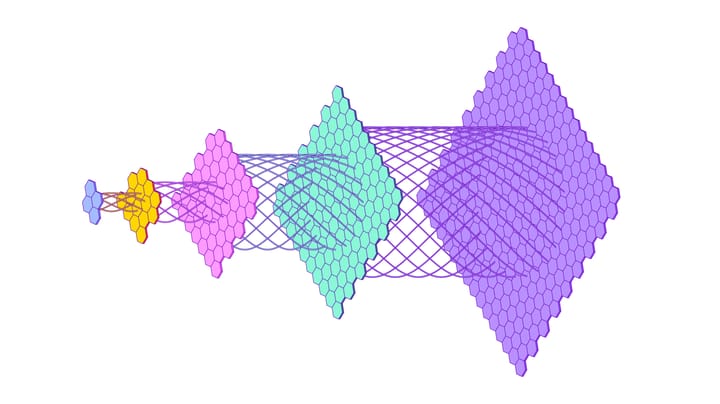
Enterprise AI shifts focus from securing chips to optimizing compute
Enterprise organizations face a critical inflection point: infrastructure scarcity is no longer the bottleneck, but computational efficiency is. After years of competing for GPU allocation and cloud capacity, the industry's constraint has shifted to optimization and utilization strategy. This signals a maturation phase where competitive advantage flows to teams that can extract maximum value per compute dollar, not those with the deepest pockets. The implication reshapes vendor positioning, workload architecture, and hiring priorities across AI operations.61