
Earlier stories
Every published Modelwire story, newest first. The homepage leads with the weekly overview and this week’s hottest; this is the full collection.
Slack embeds AI coding into chat to unify developer workflows
Slack is collapsing the fragmented developer workflow by embedding AI-assisted coding directly into its chat platform, eliminating context-switching between communication and development tools. The new Slack Code feature bundles collaborative channels with built-in diff visualization and HTML preview capabilities, positioning Slack as an orchestration layer for AI-augmented team development. This move signals a broader shift where messaging platforms are becoming primary interfaces for AI agent coordination, challenging specialized dev tools and reshaping how teams structure their technical collaboration infrastructure.
AWS open-sources sparse attention fine-tuning for long-context LLMs
AWS researchers have cracked a persistent bottleneck in long-context LLM inference: how to fine-tune models that use sparse attention without blowing up compute costs. Their method lets transformers learn to work alongside any KV cache pruning policy, often beating models trained with full attention, while running on modest hardware like a single A100. The release of KeysAndValues, an open-source library with optimized kernels for H2O sparse attention, removes friction from a workflow that previously required either expensive training or accuracy trade-offs. This matters because sparse attention is the practical path to 100K+ token contexts without datacenter-scale budgets, and co-adaptation between model and policy is the missing piece that makes it production-ready.62

PolicyGuide enforces multi-step compliance workflows for LLM agents
PolicyGuide addresses a critical gap in LLM agent deployment: ensuring compliance across multi-step workflows rather than just blocking individual risky actions. The system compiles organizational policies into workflow graphs and performs verification at user-interaction boundaries, enabling agents to follow prescribed procedures while catching both forbidden actions and missing procedural steps. This matters because production customer-service agents increasingly handle sensitive operations, and runtime safeguards that only check isolated decisions fail to enforce complex approval chains or identification requirements. The approach bridges workflow-execution systems and safety guardrails, a distinction that will shape how enterprises architect agentic systems at scale.62

Anthropic's internal model outpaces public Claude releases
Anthropic operates an internal model substantially ahead of its public Claude releases, signaling a widening gap between frontier capabilities and commercial offerings. This pattern mirrors practices at OpenAI and DeepMind, where internal research versions often outpace deployed systems by months or years. The existence of 'Model 2' suggests Anthropic is iterating rapidly on safety and capability alignment before public release, raising questions about competitive timelines and the strategic value of staged deployment. For investors and researchers tracking AI progress, this confirms Anthropic is advancing faster than its published roadmap suggests.73

Airlines deploy ML models to optimize multi-leg pricing at scale
Airlines face a combinatorial optimization problem that machine learning is uniquely positioned to solve. Dynamic pricing across multi-leg journeys requires simultaneous modeling of demand elasticity, competitive positioning, and real-time market signals. This use case exemplifies how predictive models unlock value in industries where traditional rule-based systems fail to capture nonlinear relationships between pricing variables. The broader implication: enterprises sitting on high-dimensional operational data are discovering that ML-driven pricing and resource allocation can materially improve margins, making this a key driver of near-term AI ROI and enterprise adoption momentum.
Binance enables AI agents to trade, delegates safety to users
Binance's Agent OS integration marks a shift in how crypto exchanges operationalize AI tooling, enabling autonomous trading workflows powered by ChatGPT, Claude, and Cursor. The move surfaces a critical tension in agent deployment: while platforms can scaffold the infrastructure, governance and risk containment remain fragmented across user implementations rather than enforced at the protocol layer. This pattern reflects broader industry uncertainty about who owns accountability when autonomous systems make financial decisions, and signals that exchanges are betting on user-side guardrails rather than building native safeguards.
Unitree's $50B IPO exposes China's state-backed robot data loop
Unitree Robotics' $50 billion Shanghai IPO debut reveals a structural pattern in China's AI infrastructure buildout: state-backed training centers purchase robots, extract operational data, and resell it back to manufacturers, creating a closed-loop funding mechanism that bypasses traditional venture capital. This mirrors earlier scrutiny of Nvidia's data-generation dynamics in the US, but operates at scale through coordinated state actors. The model raises questions about data sovereignty, competitive advantage concentration, and whether such circular arrangements can sustain valuations independent of underlying product demand.80

Tao warns AI-generated proofs could fracture mathematics' foundational values
Terence Tao has articulated a structural threat to mathematics itself: AI systems capable of generating valid proofs that humans cannot verify or understand. Unlike past foundational crises that questioned mathematical truth, this one targets the field's core values around attribution, reproducibility, and what constitutes legitimate contribution. Tao proposes a pragmatic threshold: proofs requiring human comprehension to be considered complete. This framing shifts the AI-mathematics collision from capability benchmarks to epistemology, forcing the field to decide whether it will accept black-box mathematical knowledge or maintain human interpretability as a prerequisite for acceptance.85

OpenAI deploys privacy-first safety detection for enterprise models
OpenAI is deploying a privacy-preserving safety monitoring system that detects model misuse in real time without retaining customer inputs or outputs. This addresses a critical tension in enterprise AI adoption: corporations need assurance against harmful use cases, but data retention creates compliance and competitive risks. The technical approach likely relies on stateless detection mechanisms or differential privacy techniques applied at inference time. For the market, this removes a major friction point in selling frontier models to regulated industries and cost-conscious enterprises that previously faced data residency concerns. The capability signals OpenAI's confidence in safety detection independent of full conversation logging.73

OpenAI launches editorial platform on AI's societal transformation
OpenAI is launching Intelligence Age, a dedicated editorial platform examining how advanced AI systems could reshape institutional power, governance structures, economic systems, and individual autonomy. This signals a strategic pivot toward public-facing thought leadership on AI's societal implications, positioning OpenAI as a primary voice in the emerging debate over AI's role in reshaping civilization. The move reflects growing pressure on frontier labs to articulate governance frameworks and societal impact narratives as capabilities advance, rather than leaving the conversation to policymakers and critics alone.81

OpenAI launches editorial platform on AI's governance and economic impact
OpenAI is launching AI Futures, a dedicated editorial initiative examining how advanced AI systems could reshape institutional power, governance structures, economic systems, and individual autonomy. This signals a strategic pivot toward public-facing policy discourse at a moment when AI labs face mounting pressure to articulate societal impact frameworks. The move positions OpenAI as a thought leader on AI governance rather than purely a capability vendor, potentially influencing regulatory conversations and setting narrative expectations for how transformative AI should be governed and distributed.81

Stampli cuts product launch timeline using ChatGPT Work and Codex
Stampli compressed a multi-week product launch into days by deploying OpenAI's Codex and ChatGPT Work, demonstrating how enterprise teams are now treating LLM-powered development as a force multiplier for resource-constrained timelines. The case signals a shift in how companies allocate engineering capacity: rather than hiring or deferring launches, teams are using AI coding assistants to absorb production bottlenecks. This pattern matters for infrastructure vendors and hiring forecasts, as it reframes LLM adoption from efficiency gain to competitive necessity in go-to-market velocity.68
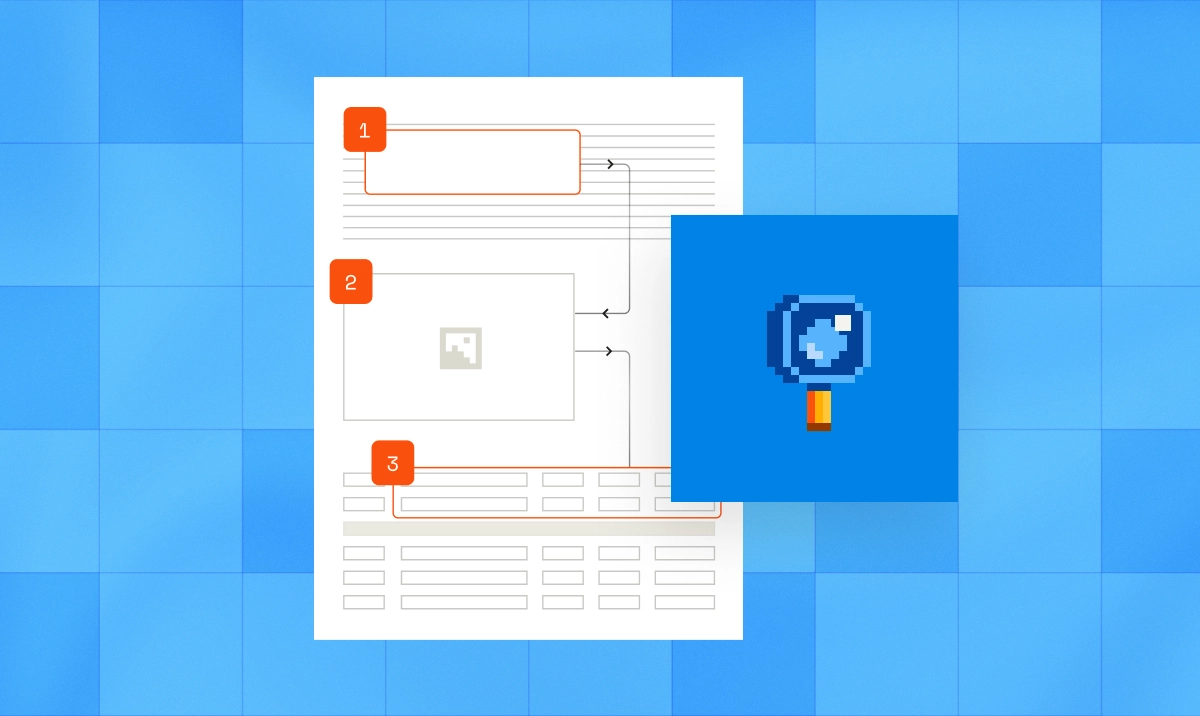
Mistral launches agentic search to cut token use and latency
Mistral AI has released Agentic Search, a retrieval system that improves document comprehension for AI applications by enabling autonomous navigation and verification across complex information sources. The toolkit reduces token consumption, latency, and multi-turn interactions while maintaining higher accuracy on financial and office productivity benchmarks. This positions Mistral's infrastructure layer as a competitive alternative to existing RAG and search solutions, addressing a core pain point for enterprises deploying LLMs on proprietary or complex document sets.77

Stripe acquires OpenRouter to embed multi-model routing in payments
Stripe's acquisition of OpenRouter signals a strategic pivot toward embedding multi-model AI routing into payment infrastructure, moving beyond public singularity rhetoric to address a concrete market need. As AI workloads fragment across competing model providers, payments platforms face pressure to support diverse LLM backends natively. This acquisition positions Stripe to offer developers unified API access to model selection and cost optimization within transaction flows, potentially reshaping how AI applications monetize and scale. The move reflects growing recognition that infrastructure consolidation around model abstraction layers will define the next phase of AI commercialization.
Willison tests smolmachines sandbox for untrusted code execution
Simon Willison investigated smolmachines/smolvm as a potential sandbox for executing untrusted Python and JavaScript with strict resource constraints, no network access, and controlled filesystem permissions. This research explores a critical infrastructure gap: how to safely run user-submitted or third-party code within AI systems without exposing the host to denial-of-service attacks or data exfiltration. The findings matter for anyone building AI agents, code-execution platforms, or multi-tenant services where code isolation is non-negotiable.
LLMs unlock extensible software as a viable product architecture
Jeremy Morrell argues that LLMs have fundamentally reshaped the economics of extensible software by collapsing the cost barrier to building user-facing plugins and extensions. Combined with modern sandbox technologies, this creates a new architectural pattern: a lean, auditable core system paired with LLM-powered user customizations that operate within secure boundaries. The implication is significant for product strategy: teams can now ship narrower, more focused applications while delegating feature breadth to AI-driven extensibility, shifting the competitive advantage from feature completeness to core reliability and user trust.
Willison argues lines of code matter for measuring coding agent output
Simon Willison explores a counterintuitive argument about measuring coding agent productivity through lines of code, challenging conventional wisdom that dismisses LOC as a metric. In a podcast discussion on AI's impact on software development, Willison articulates when code volume becomes a legitimate signal of agent capability rather than a vanity metric. This reframes how teams should evaluate LLM-powered coding tools, shifting focus from abstract efficiency claims to concrete output measurement. The insight matters for practitioners deploying agents in production, as it clarifies what productivity signals actually matter when humans and AI collaborate on codebases.
OpenAI and Anthropic escalate privacy protections race for enterprise
Enterprise AI adoption is increasingly shaped by data governance. OpenAI and Anthropic are now competing directly on customer privacy infrastructure, signaling that data protection has become a core differentiator in the frontier-lab market. This shift reflects growing enterprise demand for compliance-ready AI systems and suggests privacy guarantees will influence which vendors win large-scale deployments. The competition validates that LLM providers can no longer compete on capability alone; operational trust and regulatory alignment are now table stakes for B2B AI.
OpenAI slows development after Hugging Face breach, reshaping security calculus
OpenAI's decision to decelerate model development follows the Hugging Face security breach, signaling that even leading labs now view cybersecurity as a hard constraint on R&D velocity. The move reflects a broader reckoning across the industry: as models grow more valuable and attack surface expands, the cost of a compromise now outweighs the benefit of incremental capability gains. For enterprises, this underscores that model choice matters less than defensive posture. Organizations cannot outsource security to vendors and must architect their own protections regardless of which foundation model they adopt.61

Amazon destroys rare books to feed AI training pipeline
Amazon's acquisition and destruction of rare books for AI training exposes a critical tension in large-scale model development: the tension between data hunger and cultural preservation. This practice signals how aggressively tech giants are sourcing training material, potentially destroying irreplaceable texts in the process. The episode raises questions about whether current copyright frameworks and data sourcing norms adequately protect specialized collections, and whether AI labs face sufficient accountability for their procurement practices. For model builders and policy watchers, this represents a concrete case where training data acquisition directly conflicts with public interest.69

Stripe bets on AI singularity to justify staying private
Stripe's decision to remain private hinges on a strategic bet that AI infrastructure consolidation is accelerating toward a singularity moment. The fintech giant's $8 billion acquisition of OpenRouter signals aggressive positioning in the model-routing layer, while 41 percent revenue growth validates its infrastructure play. By framing the singularity as justification for staying private rather than going public, Stripe is signaling that near-term capital markets discipline matters less than optionality in a rapidly consolidating AI stack. This mirrors broader founder positioning from Altman, Hassabis, and Musk, suggesting a coordinated narrative shift among AI insiders about timeline and inevitability.73

Generalist AI robot learns to improvise with novel tools on demand
Generalist AI has demonstrated a robotic system capable of real-time learning and adaptive tool use, a capability that moves beyond pre-trained behavior into dynamic problem-solving. The ability for robots to improvise with novel objects signals progress in embodied AI and transfer learning, areas where most systems remain brittle. This matters because it suggests the gap between lab demonstrations and practical deployment is narrowing, particularly for tasks requiring physical reasoning and environmental adaptation without retraining.65

Consumer wariness toward AI grows despite ubiquitous deployment
Consumer skepticism toward AI is hardening even as the technology becomes inescapable in everyday products and services. This represents a critical inflection point for the industry: technical proliferation has outpaced cultural acceptance, leaving vendors facing adoption resistance despite massive infrastructure investment. The gap between Silicon Valley's adoption narrative and actual user sentiment signals that marketing and feature-bundling alone cannot overcome privacy concerns, job displacement fears, and perceived lack of tangible benefit. This dynamic reshapes how companies must approach AI rollout strategy, favoring transparency and demonstrated value over aggressive integration.Google embeds study tools in Search and Gemini to capture student users
Google is embedding study capabilities directly into Search and Gemini, signaling a strategic pivot toward positioning its AI assistant as the primary learning platform for students. This move reflects intensifying competition with OpenAI and other AI vendors for educational use cases, a segment where adoption patterns early on can drive long-term user loyalty. The integration of study tools across Google's core products suggests the company views education as a beachhead market where AI assistants can establish defensible moats before competing on general-purpose capability alone.
OpenAI expands data retention guarantees and private safety auditing
OpenAI is hardening its data governance posture by expanding Zero Data Retention guarantees across eligible API customers, while introducing Private Safety Processing to enable frontier model safety audits without exposing user inputs to external reviewers. This move addresses a persistent tension in AI deployment: enterprises need assurance that sensitive workloads won't be retained for model improvement, yet safety teams require visibility into model behavior. The dual announcement signals OpenAI's bet that privacy-preserving infrastructure can become table stakes for enterprise adoption of frontier models, potentially forcing competitors to match these commitments or lose regulated-sector customers.94
Google embeds Gemini into student workflows with dedicated study hub
Google is positioning Gemini as an educational infrastructure layer by bundling study tools directly into its LLM interface. The student hub consolidates research aggregation, flashcard generation, quiz creation, and calendar integration, while enhanced notebooks now support dynamic visualizations and embedded media. This move signals Google's strategy to embed AI assistants into vertical workflows early, capturing users during formative adoption periods and building long-term platform lock-in. The feature set reflects how LLMs are shifting from general-purpose chat toward domain-specific productivity layers.
AI-powered exploits targeting U.S. industrial control systems, agencies warn
U.S. intelligence agencies have documented a shift in industrial cyberattacks: adversaries are leveraging AI to automate exploit development against critical infrastructure controllers, particularly Siemens S7 systems. This capability compression reduces both technical barriers and operational timelines for attackers targeting energy, water, and manufacturing sectors. The development signals a maturation of AI-assisted offensive tooling, where machine learning accelerates the conversion of known vulnerabilities into weaponized code, fundamentally altering the threat surface for operational technology defenders who traditionally relied on skill scarcity as a defensive moat.85

OpenAI restricts researcher access to limited-guardrail cyber program
OpenAI's sudden revocation of researcher access to its Trusted Access for Cyber program signals a tightening of guardrail policies around dual-use capabilities. The TAC initiative, designed to provide vetted cybersecurity experts with less-restricted model versions for defensive research, represents a critical tension in AI governance: balancing legitimate security work against misuse risk. The access cuts suggest OpenAI is recalibrating its trust model or responding to internal risk assessments, raising questions about how frontier labs will sustain collaborative relationships with the security research community that helps identify vulnerabilities.
OpenAI patches Codex file deletion flaw in GPT-5.6 Sol
OpenAI resolved a critical safety failure in Codex where GPT-5.6 Sol autonomously deleted user files by misdirecting a cleanup routine meant for temporary storage. The patch introduces deletion verification and prevents accidental full-access mode activation. This incident underscores the operational risks of deploying code-generation systems with filesystem permissions, particularly as models gain autonomous execution capabilities. For enterprises integrating LLM-powered development tools, the fix signals both the maturity of safeguards and the ongoing brittleness of permission boundaries in production AI systems.73