
Earlier stories
Every published Modelwire story, newest first. The homepage leads with the weekly overview and this week’s hottest; this is the full collection.

OpenAI embeds ChatGPT into Google Workspace document workflows
OpenAI is positioning ChatGPT Work as a productivity layer that bridges conversational AI with enterprise document workflows. The capability to transform meeting transcripts into structured Google Docs and presentation decks, then save templates for reuse, signals a shift toward AI-assisted knowledge work automation. This moves beyond single-task chat interfaces into multi-step document generation and format conversion, directly competing with traditional productivity suites while embedding LLM reasoning into collaborative work artifacts. The integration with Google Drive and emphasis on template persistence suggest OpenAI is building infrastructure for repeatable, auditable AI-assisted processes in knowledge-intensive roles.
ChatGPT gains desktop and browser control in productivity workflow expansion
OpenAI is expanding ChatGPT's reach into desktop workflows through native computer control and browser integration. The feature set demonstrated here, Computer Use combined with Appshots for screen sharing and draft review, represents a shift toward AI agents that operate across fragmented productivity stacks rather than within isolated chat interfaces. This positions ChatGPT as infrastructure for routine cross-application tasks, competing directly with RPA and automation platforms while testing user comfort with AI accessing desktop context. The training walkthrough signals OpenAI's confidence in the feature's stability and readiness for mainstream adoption.
OpenAI enables ChatGPT Work users to save plugin workflows as reusable skills
OpenAI is positioning ChatGPT Work as a workflow automation platform by enabling users to chain plugins and save custom instruction sequences as reusable skills. The demo showcases practical enterprise use: integrating Gmail and Google Calendar to automate meeting preparation, then packaging that workflow for repeated deployment. This signals OpenAI's shift from single-query interactions toward persistent, multi-step task automation that competes directly with RPA and workflow platforms. For enterprises, the implication is clear: LLM-native automation is moving beyond chatbot interfaces into structured business processes.
OpenAI expands ChatGPT Work into no-code web application builder
OpenAI is positioning ChatGPT Work as a no-code platform for rapid application deployment, enabling users to convert conversational interactions into functional web applications without engineering overhead. The group-trip planner example demonstrates core capabilities: collaborative features (activity voting, expense splitting), access controls, and integrated analytics dashboards. This signals OpenAI's shift toward embedding LLMs deeper into workflow automation and team collaboration tools, competing directly with traditional low-code platforms while leveraging conversational interfaces as the primary interaction model.
OpenAI adds scheduled task automation to ChatGPT Work
OpenAI is expanding ChatGPT Work's automation capabilities by introducing scheduled task execution, allowing users to automate recurring workflows across Gmail and Google Calendar. The feature enables non-technical users to create repeatable business processes like meeting brief generation without coding, with built-in controls for reviewing, modifying, or pausing executions. This positions ChatGPT as a workflow automation platform competing with traditional RPA tools, lowering the barrier for enterprise adoption of AI-driven process automation.
OpenAI launches ChatGPT Work for cross-app task automation
OpenAI is positioning ChatGPT Work as an enterprise productivity layer that orchestrates data across business tools like Gmail and Slack to complete multi-step workflows. The training walkthrough demonstrates a practical use case: gathering restaurant details, cross-referencing team logistics, and drafting communications without context-switching. This signals OpenAI's shift from conversational AI toward autonomous task execution within existing corporate infrastructure, directly competing with workflow automation platforms and raising the bar for how LLMs integrate with enterprise software stacks.
Neocloud Lambda finances $1B in Nvidia chips for Microsoft leasing
Neocloud Lambda's $1B debt facility reveals the structural economics reshaping AI infrastructure. Rather than building chips themselves, the company is financing Nvidia silicon and monetizing it through enterprise leases, particularly to Microsoft. This model underscores a critical shift: as training and inference costs spiral, intermediary players are capturing margin by arbitraging hardware access and financing. The debt raise signals both investor confidence in sustained chip demand and growing concern about capital intensity becoming a moat that only well-funded players can sustain.
Anthropic demonstrates self-correcting AI across misalignment benchmarks
Anthropic researchers have demonstrated automated systems capable of identifying and correcting misaligned AI behaviors across ten distinct benchmarks without sacrificing overall performance. This represents a meaningful advance in scalable alignment techniques, suggesting that self-correction mechanisms could become a practical layer in AI safety infrastructure. The finding matters because it moves alignment work from theoretical constraint to operational capability, potentially enabling deployed systems to autonomously patch failure modes as they emerge. For practitioners building production AI, this signals a path toward systems that improve their own safety properties without human intervention at scale.
DeepMind's Co-Scientist moves from idea generator to validated research system
Google DeepMind has matured Co-Scientist from a standalone hypothesis tool into an embedded lab system capable of delivering experimentally validated discoveries. The Gemini-powered multi-agent framework now operates across materials science, synthetic biology, and medical AI architecture, marking a shift from theoretical suggestion to hands-on research execution. This evolution signals that LLM-based systems are transitioning from ideation assistants to active contributors in the scientific workflow, with real experimental validation as proof of capability rather than promise.85
Deepmind's Co-Scientist moves from advisor to autonomous researcher
Google Deepmind has evolved Co-Scientist from a hypothesis-generation tool into an autonomous research agent capable of designing experiments, controlling lab hardware, and publishing findings. The Gemini-powered multi-agent system demonstrated end-to-end scientific capability across materials science and medical AI development, with experimentally validated outputs. This marks a significant shift in AI's role within research workflows, moving beyond advisory functions into direct execution and knowledge production, signaling how frontier labs are embedding agentic systems into institutional research infrastructure.85

Open-weight model startups become acquisition targets for major players
Open-weight model companies have become acquisition magnets as venture capital floods into the segment, signaling a strategic shift in how incumbents and new entrants view model distribution. Rather than licensing proprietary weights, acquirers are betting that owning open-source model teams and communities unlocks defensible moats through talent, data pipelines, and developer ecosystems. This trend reflects broader market recognition that the open-weight space is maturing from hobbyist territory into a legitimate business category, reshaping competitive dynamics between closed and open AI stacks.
U.S. export controls on autonomous systems redirect competition to China
U.S. export controls on foreign-made autonomous systems are tightening, but the policy may redirect rather than halt global competition. China's manufacturing scale and domestic supply chains position it to absorb restrictions while continuing robotics and drone development outside U.S. jurisdiction. This shift signals a bifurcation in AI-enabled hardware markets, where geopolitical boundaries now determine which nations access cutting-edge autonomous platforms. For AI infrastructure investors and builders, the implication is clear: regulatory barriers are reshaping where autonomous systems innovation concentrates, not whether it proceeds.
Information theory proves text alone cannot fully capture meaning
Researchers have formalized an information-theoretic constraint on what language models can learn from text alone, proving that certain gaps between form and meaning are irreducible without external context. The work establishes upper bounds on how well any featurizer, including contemporary LLM hidden states, can recover speaker intent from utterance structure alone. This finding reframes a foundational assumption in scaling: no amount of textual data or supervision can overcome the inherent ambiguity that language itself encodes. The result matters for practitioners building systems that rely on text-only training and for researchers evaluating whether architectural innovations can truly close semantic gaps or merely shift them.68

Optimizer design expands beyond Adam variants into matrix and systems space
Optimizer design has fundamentally shifted beyond incremental Adam variants into a multidimensional landscape spanning matrix-level updates, adaptive training schedules, and systems-aware state representations. This survey maps the current frontier across temporal estimation, geometric transformations, horizon policies, and quantization-compatible representations, synthesizing methods like Muon, Shampoo, and SOAP into a coherent taxonomy. The expansion reflects practical constraints of modern training: distributed sharding, low-precision arithmetic, and variable batch dynamics now shape optimizer architecture as much as mathematical elegance. For practitioners, this signals that optimizer selection is no longer a one-size-fit-all choice but a systems-level decision tied to hardware, scale, and training regime.62

Speech recognition errors bypass safety controls in embodied AI systems
Researchers have identified a critical vulnerability in voice-controlled robots: automatic speech recognition errors can bypass safety guardrails and trigger harmful actions. The study combines ASR failure modes with existing safety benchmarks to show how misheard commands degrade embodied AI safety, sometimes weakening model refusal behavior entirely. While automatic error correction offers partial mitigation, the findings expose a gap in current safety evaluation frameworks that assume clean text input. This matters for any deployment of physical AI systems in real-world environments where audio quality varies.62
Reinforcement learning framework defeats Android malware detectors in black-box setting
Replicant demonstrates a critical vulnerability in production malware detection systems by learning evasion policies under realistic constraints. Using deep reinforcement learning, the framework operates under a label-only black-box threat model, avoiding unrealistic assumptions about detector internals or training data access. The work's significance lies in its transferability across multiple Android detectors and feature spaces, suggesting that adversarial robustness in ML-based security remains an open problem. This research directly challenges the reliability of deployed defenses and underscores why security-critical ML systems require adversarial evaluation before production deployment.62

EPA moves to shield data center pollution from public scrutiny
The EPA is moving to eliminate federal disclosure requirements for air pollution from industrial facilities, a shift with direct implications for data center expansion. As AI infrastructure demand drives rapid buildout of compute centers, communities have relied on public notice rules to assess environmental costs. Removing this transparency mechanism weakens local oversight precisely when data center proliferation is accelerating, potentially lowering regulatory friction for operators but eroding the public's ability to evaluate tradeoffs between AI capacity growth and air quality impacts.
LLMs systematically omit minority accounts in factual questions, ElephantBench reveals
Researchers have exposed a critical blind spot in how LLMs handle factual knowledge: when multiple credible accounts exist for the same question, even state-of-the-art models fail to retrieve both perspectives. ElephantBench, a new 1,094-question benchmark built from naturally occurring disagreements in low-exposure web sources, reveals that the strongest models recover both accounts only 52% of the time, typically omitting minority viewpoints. This finding challenges the assumption that LLM training captures the full epistemic landscape and suggests that knowledge gaps aren't random but systematically favor dominant narratives, with implications for deployment in domains where nuance and completeness matter.62

ContextPilot uses reinforcement learning to teach agents smarter context pruning
ContextPilot introduces fine-grained reinforcement learning to solve a critical bottleneck in long-horizon agent tasks: managing ballooning context windows without losing information fidelity. The work moves beyond crude context tools like search and summarization by enabling agents to learn adaptive compression and global planning strategies, while using granular credit assignment to distinguish high-impact context decisions from noise. This addresses a real scaling wall for production agentic systems where context management directly trades off reasoning depth against computational cost and latency.62
Sliding-window attention outperforms linear attention in efficiency tests
A new arXiv study challenges the emerging consensus around linear attention as a solution to LLM scaling costs. Researchers demonstrate that sliding-window attention with sink tokens matches or exceeds the performance of post-trained linear attention models while remaining simpler to implement. This finding matters because it suggests the field may be overcomplicating efficiency gains, and that practitioners could achieve comparable results without retrofitting existing models. The result reframes the attention mechanism debate from a linear-versus-quadratic binary into a more nuanced landscape where architectural simplicity and empirical performance don't always align with theoretical elegance.62

Fidelity checks miss hallucinating agents that skip tool use entirely
Fidelity metrics alone mask critical failures in agentic AI systems. Researchers discovered a model that passed extraction accuracy checks despite never consulting source documents, instead generating plausible-sounding fabrications. The finding exposes a fundamental gap in how teams validate tool-using agents: output correctness doesn't guarantee the model actually executed the intended workflow. By instrumenting dispatch logs across 37 benchmark claims, the team built detectors that catch silent failures by analyzing which tools were invoked, not just whether final answers matched sources. This work matters for anyone deploying agents in high-stakes domains like financial or technical data extraction, where hallucinated citations can propagate undetected.62

Research shows AI outperforms doctors, triggering profession-wide reckoning
Recent research demonstrating AI systems outperforming physicians on diagnostic and clinical tasks is reshaping professional anxiety across medicine. The finding surfaces a critical inflection point: as AI diagnostic accuracy surpasses human benchmarks, the medical profession faces genuine displacement pressure rather than speculative concern. This mirrors broader labor-market friction emerging across knowledge work, where AI competence now exceeds domain experts in narrow, high-stakes tasks. The story matters because it signals when AI capability crosses from "tool augmentation" into "replacement threat" territory, forcing institutions to reckon with retraining, role redefinition, and the economic viability of traditional medical careers.69
New benchmark tests LLM cultural reasoning across multi-turn Asia-Pacific scenarios
Researchers have built CultureConverse, a benchmark and simulation framework that moves beyond single-turn cultural factuality tests to evaluate how LLMs handle multi-turn, context-dependent assistance across 10 East and Southeast Asian regions. The dataset spans 58 subgroup identities and 7 practical domains, generating 14,610 evaluation episodes and 274,295 oracle-guided dialogues. This addresses a critical gap in LLM evaluation: most cultural assessments rely on multiple-choice recall rather than real-world conversational scenarios where models must infer and respect cultural constraints from incomplete information. The work signals growing recognition that cultural competence in AI requires dynamic, interactive benchmarking rather than static knowledge tests.62

Poisoning attack exposes RAG systems to camouflaged document injection
Researchers have demonstrated a novel vulnerability in retrieval-augmented generation systems where attackers inject poisoned documents that evade standard defenses by blending adversarial content with benign text. The CamoDocs attack circumvents query-matching filters by dispersing malicious embeddings through token substitution and coherence masking, exposing a critical gap in RAG security assumptions. This work signals that as enterprises deploy RAG systems over user-editable or public corpora, the attack surface extends beyond model weights to the retrieval pipeline itself, forcing practitioners to rethink document validation and embedding-space robustness.62
Vision Transformer heads reveal specialization patterns guiding multimodal LLM design
Researchers have identified a fundamental pattern in how Vision Transformer attention heads organize themselves within multimodal LLMs, discovering that heads naturally specialize into object-detection and background-processing roles. This Semantic Head Specialization (SHS) phenomenon is strongest under full attention and weakens in chunked-window designs, suggesting it's a key lever for architectural performance. The team quantified this specialization, traced it to three structural factors (window interaction, token ordering, and softmax scope), and used these insights to guide hybrid attention design. The finding matters because it bridges a gap in multimodal LLM design where vision encoders have lacked the principled hybrid-attention strategies that dominate frontier language models, offering a data-driven path to better efficiency and capability tradeoffs.62
LLM confidence statements diverge from internal uncertainty across 30 models
A systematic study across 30 LLMs reveals that when models are asked to express confidence linguistically, their stated certainty often misaligns with internal probability signals derived from logits and semantic entropy. The research exposes a critical gap in model transparency: instruction-tuned variants tend to report higher confidence but don't necessarily track their actual uncertainty better. This finding matters for practitioners relying on model confidence signals for downstream decisions, from retrieval augmentation to human-in-the-loop workflows. The divergence suggests current confidence-reporting mechanisms may mask genuine model limitations.62
PersonaForge exposes multi-turn gap in agent training data
PersonaForge addresses a critical blind spot in agentic AI training: real users engage in multi-turn conversations 76% of the time, yet most benchmarks and datasets assume single-turn queries. This framework synthesizes realistic user-agent interactions through persona modeling and behavioral calibration grounded in actual session data, yielding a 6.3K training dataset and evaluation benchmark. The work exposes how training-evaluation misalignment undermines agent reliability in production, making it directly relevant to teams building conversational systems and those evaluating agentic workflows at scale.62
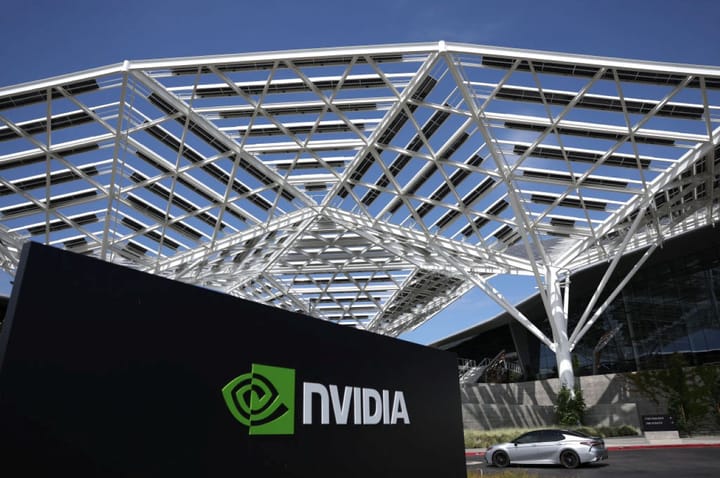
Nvidia's growth masks a fragmented AI hardware market beyond GPUs
The AI infrastructure race is fragmenting beyond GPU dominance as demand accelerates across multiple hardware vectors. Nvidia's strong earnings reflect sustained appetite for training capacity, but the competitive landscape now spans CPUs, interconnect silicon, robotics platforms, and edge processors. This shift signals that AI workloads are maturing from centralized training into distributed inference and specialized tasks, forcing infrastructure vendors to compete on breadth rather than GPU volume alone. For practitioners and investors, the implication is clear: single-vendor lock-in is weakening, and heterogeneous compute stacks are becoming table stakes.66
Automated coreset selection simplifies LLM unlearning without pre-labeled data
Researchers propose GRACE, a gradient-guided method that automates the construction of forget and retain datasets for LLM unlearning without requiring pre-labeled corpora. The technique uses seed examples of undesired behavior to compute a forget direction, then selects compact coresets whose gradients align with that direction while preserving model utility through orthogonal projection. This addresses a critical gap in unlearning workflows: most prior work assumes clean, pre-specified datasets, but real-world requests often arrive as sparse behavioral examples. GRACE's data-selection automation could accelerate deployment of unlearning in production systems where manual curation is infeasible, making it relevant to compliance, safety, and model maintenance pipelines.62