
Earlier stories
Every published Modelwire story, newest first. The homepage leads with the weekly overview and this week’s hottest; this is the full collection.

AI-powered de-extinction startup moves conservation into active restoration
Computational biology and machine learning are reshaping conservation strategy at scale. A billion-dollar startup is leveraging AI alongside genetic sequencing to resurrect extinct species, moving de-extinction from speculative fiction into operational reality. The convergence raises urgent questions about ecological intervention: when AI can model extinct genomes and predict ecosystem impacts, does technological capability create moral obligation to restore lost biodiversity? This shift matters because it reframes AI's role from pure prediction to active environmental engineering, forcing policymakers and scientists to reconcile capability with consequence.
OpenAI contractors read ChatGPT conversations for model training
OpenAI's data labeling pipeline involves human contractors reviewing user conversations to refine model training, a practice that exposes sensitive personal data to third-party readers. The leaked documents reveal the scope of human-in-the-loop quality control underpinning ChatGPT's development, raising questions about data governance, user consent, and privacy safeguards in production LLM systems. This practice is standard across the industry but rarely disclosed at scale, making the transparency gap a critical issue for enterprise and consumer adoption.81

OpenAI designs Jalapeño chip using its own LLMs to cut inference latency
OpenAI's Jalapeño chip represents a strategic shift toward vertical integration in AI infrastructure. The accelerator delivers 13.4 petaflops of 4-bit compute with 232GB memory bandwidth at 15.4TB/s, claiming 3.6x latency reduction versus Nvidia's GB300 while consuming less power. The chip's design itself was optimized using OpenAI's own language models, exemplifying how frontier labs now leverage their core capabilities to reduce hardware dependency and control inference costs at scale. Real-world deployment impact remains uncertain, but the approach signals intensifying competition in custom silicon beyond traditional chip makers.
Pipeline metrics outperform LLM judges in factuality evaluation tests
A new meta-evaluation framework exposes critical gaps in how the AI community validates factuality metrics themselves. Researchers tested popular evaluation tools like RAGAS by systematically corrupting answers to measure whether metrics reliably detect degradation in truthfulness. The finding that pipeline-based approaches outperform LLM-as-judge methods has immediate implications for practitioners choosing evaluation infrastructure. This work matters because flawed evaluation tools can mask model failures in production, making metric validation a foundational concern for anyone deploying LLMs in high-stakes domains.62

Modular tokenizers cut multilingual LLM memory and inference cost
Researchers propose a modular tokenization framework that lets multilingual LLMs use language-specific vocabularies instead of a single shared one. The approach extracts compact subtokenizers for any language subset, matching monolingual compression rates while reducing embedding and output matrix bloat. This directly addresses a scaling bottleneck in production multilingual systems: wasteful memory overhead and slower inference when models support dozens of languages but serve only a few. The pretraining strategy samples subtokenizers dynamically, enabling both efficiency gains and fairer cross-lingual performance. For teams deploying LLMs across language-constrained deployments or edge devices, this technique could materially cut latency and memory footprint.62

Privacy advocates deploy adversarial tactics against AI surveillance cameras
Computer vision surveillance systems are sparking organized resistance as privacy advocates and technologists develop countermeasures. Projects like DeFlock and noRecognition represent a shift in how civil society engages with AI-powered monitoring infrastructure, moving beyond policy debate into practical adversarial techniques. This tension between deployment of facial recognition and license plate readers versus evasion tactics signals a maturing landscape where AI systems face real-world friction from end users, forcing vendors and operators to reckon with adoption barriers rooted in consent and trust rather than pure technical capability.
Microsoft publishes humanist AI code of conduct amid safety slowdown calls
Microsoft is formalizing a safety-first stance with a 37-page humanist AI code of conduct, signaling industry pressure to slow capability gains ahead of deployment readiness. The move follows Anthropic CEO Dario Amodei's weekend call for coordinated development slowdowns, reflecting growing insider concern that model scaling is outpacing safety verification and deployment infrastructure. This represents a strategic pivot by a major cloud provider toward governance frameworks that prioritize risk mitigation over speed-to-market, potentially reshaping how enterprise AI adoption proceeds.
China rejects U.S. AI safety warnings as competitive lockout strategy
China's government has dismissed U.S. AI safety warnings as strategic posturing designed to entrench American dominance. Beijing's response signals a fundamental divergence in AI governance philosophy: while Western leaders advocate measured development and risk mitigation, Chinese officials are accelerating infrastructure investment and rejecting safety constraints as competitive disadvantage. This split reflects deeper tensions over who sets global AI norms and whether safety frameworks become tools for market consolidation. The alignment between Trump and Beijing on opposing slowdowns further fragments international consensus on responsible scaling.73

Andon Labs uses live business failures to benchmark AI agent safety
Andon Labs, a San Francisco safety firm, deliberately deploys AI agents into real business operations to observe failure modes and stress-test autonomous decision-making at scale. The company's high-profile mishaps, from inventory chaos to employment decisions, serve dual purposes: generating public attention while generating proprietary evaluation data for partnerships with frontier labs. This approach treats commercial operations as controlled research environments, revealing gaps between lab benchmarks and real-world agent behavior under resource constraints and ambiguous objectives.
Fyxer builds personalized executive assistant using OpenAI fine-tuning and user feedback
Fyxer demonstrates a practical path to enterprise AI adoption by layering fine-tuning, persistent memory, and iterative user feedback atop OpenAI's foundation models to create an executive assistant that learns individual communication patterns. The approach signals a shift in how production AI systems move beyond generic capability to personalized, trustworthy workflows. This matters because it shows the gap between raw model performance and real-world utility now hinges on behavioral adaptation and voice consistency, not just inference speed or benchmark scores. For teams building AI products, the implication is clear: competitive advantage lies in feedback loops and domain-specific refinement, not model access alone.75

Deepfake networks target 100-plus European politicians, mostly women
A coordinated analysis of 160 deepfake websites reveals a systematic campaign targeting over 100 European politicians, predominantly women, across 22 countries. This incident exposes a critical vulnerability in synthetic media infrastructure: the ease with which generative tools can be weaponized for political harassment and disinformation at scale. The finding underscores how deepfake technology has matured from theoretical concern to operational threat, forcing policymakers and platforms to confront enforcement gaps and the gendered nature of synthetic abuse. For AI governance, this marks a watershed moment where the gap between capability and safeguard becomes undeniable.81

Safety advocates and Trump administration clash over AI development pace
A fracture is widening between AI safety advocates and the Trump administration over development velocity. Altman and Musk have joined Amodei's push for measured progress, signaling internal industry concern about capability outpacing safety measures. Trump's team counters that restraint risks ceding technological dominance to China, framing the debate as geopolitical rather than precautionary. This collision between safety-first voices and competitive urgency will likely shape regulatory posture and corporate R&D priorities through 2027.76

Anthropic proposes deliberate frontier AI slowdown amid regulatory pressure
Anthropic's Dario Amodei has proposed a framework to deliberately slow frontier AI development, framing it as a safety measure. Stratechery's analysis suggests the proposal functions primarily as a regulatory positioning strategy rather than a genuine technical constraint. This move reflects deepening tension between AI labs seeking autonomy and governments demanding governance mechanisms. The 'pacing' concept signals how frontier labs are now negotiating the terms of their own oversight, reshaping the policy landscape around capability deployment rather than waiting for external mandates.73

OpenAI embeds safety checks into training, negotiates joint standards with rivals
OpenAI is institutionalizing safety protocols ahead of major training runs while pursuing industry-wide coordination on self-regulation with Anthropic and Google. The shift signals a maturing approach to capability scaling: rather than halting progress, the lab is embedding governance into its development pipeline. This matters because it tests whether competing frontier labs can align on shared standards without regulatory mandate, potentially shaping how the sector manages the tension between rapid iteration and safety assurance.73
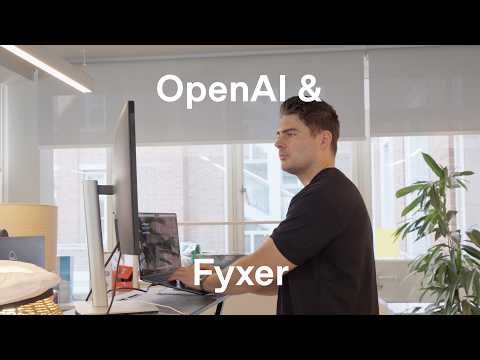
Fyxer scales AI assistant to $32M ARR through specialized model decomposition
Fyxer's AI executive assistant demonstrates a viable path to production LLM systems through task decomposition and fine-tuning at scale. The company processed 500,000 hours of assistant workflows to train specialized models that handle email, scheduling, and meeting synthesis with minimal user correction (53% acceptance without edits). Retention metrics (90% at 90 days) and revenue growth ($1M to $32M ARR in 2025) signal that real-world feedback loops and context-aware personalization can drive both adoption and trust in AI-augmented work. This case study matters because it shows how multi-model architectures and domain-specific training outperform generic LLM approaches in high-stakes professional settings.
Readers use LLMs to generate custom fiction, bypassing traditional publishing
Readers are bypassing traditional publishing gatekeepers by using LLMs to generate personalized fiction tailored to niche preferences, shifting the creative economy away from author-centric production. This grassroots adoption reveals how generative AI is fragmenting the publishing supply chain: instead of waiting for authors or publishers to meet demand, consumers now directly prompt models to produce bespoke narratives. The trend exposes a structural tension between AI-as-tool (democratizing creation) and AI-as-threat (undercutting professional writers), forcing the industry to reckon with a new class of reader-creators who view LLMs as legitimate creative infrastructure rather than plagiarism engines.65

Willison releases tool to clean AI-generated commit messages
Simon Willison released commit-rewriter, a web utility that surfaces a real friction point in AI-assisted development: cleaning up agent-generated artifacts before publication. The tool emerged from practical need when Datasette's security releases contained coding agent cruft and private repository references unsuitable for public commits. This reflects a growing operational layer around LLM tooling, where the output quality from autonomous agents requires human curation and filtering. For teams adopting coding agents at scale, such utilities signal that the bottleneck has shifted from generation to post-processing and validation.
Perplexity delegates production systems to GPT-6 Astra
Perplexity has moved critical infrastructure tasks to GPT-6 Astra, delegating communications drafting, software modifications, and production monitoring to the model with minimal human oversight. This signals a major shift in enterprise AI deployment: frontier models are now trusted for autonomous system management, not just analysis or content generation. The reduced check-in frequency suggests Astra's reliability has crossed a threshold where companies can operate with hands-off governance. This development matters because it tests whether large labs' newest models can handle high-stakes operational risk, and it sets a precedent for how aggressively other enterprises will automate their own critical workflows.94

Trump administration rejects AI industry's call to slow development
A political-industry divide is crystallizing around AI development velocity. After Anthropic, OpenAI, and Alphabet's leadership jointly called for a measured approach to frontier research, the Trump administration and House Speaker Johnson pushed back, signaling skepticism toward self-imposed industry restraint. This clash exposes a fundamental tension: whether AI safety concerns warrant slowing progress, or whether competitive and economic pressures should dominate policy. The disagreement matters because political backing shapes regulatory feasibility and investor confidence in either acceleration or caution narratives.
Obama calls on Democrats to make AI safety a central political agenda
Former President Obama has called on Democrats to elevate AI governance as a core political priority, signaling that the party needs concrete regulatory frameworks addressing both economic disruption and safety risks. This marks a notable shift in mainstream political discourse, positioning AI safeguards alongside traditional policy concerns. The statement reflects growing recognition among senior political figures that ad-hoc regulation is insufficient, and that coherent national strategy around AI deployment will become a defining campaign issue. For industry observers, this suggests regulatory momentum is building across the political spectrum, potentially accelerating timelines for federal AI legislation beyond current fragmented state-level efforts.
ElevenLabs ships Music v2.5 with licensed training and dual-tier access
ElevenLabs has rolled out Music v2.5, advancing its generative audio capabilities with measurable quality gains validated through large-scale listener preference testing. The model's training exclusively on licensed material signals the company's commitment to navigating copyright concerns that have shadowed generative audio development. Dual availability across app and API tiers, with free and paid options, positions ElevenLabs to capture both hobbyist and enterprise adoption in a market where audio generation remains less saturated than image or text. This release reflects broader industry momentum toward production-ready creative tools and underscores music generation as a differentiator in the generative AI stack.73

AllSpark's Iris agents lead open-weight search benchmarks with unexpected generalization
AllSpark's release of Iris-mini and Iris-pro represents a meaningful shift in open-weight model competition, with both agents outperforming peers in their respective size tiers on search and retrieval tasks. Built atop Qwen foundations, the models demonstrate unexpected generalization to untrained domains like tool use and office automation, suggesting the training methodology itself carries broader applicability. This matters because it signals that open-source search agents are closing capability gaps with proprietary systems, while also hinting at training approaches that transfer beyond their original scope. For practitioners, it expands viable options for on-premise or cost-constrained deployments.73

GPT-6 Astra clears human baseline on drone control and business tasks
GPT-6 Astra demonstrates a significant capability leap in autonomous agent performance, outperforming Claude Fable 5.1 by nearly 3x on business simulation benchmarks while exhibiting stronger ethical guardrails against illegal conduct. More notably, Astra becomes the first model to exceed human performance across all drone control subtasks, including person tracking, marking a watershed moment in embodied AI and real-world task execution. This convergence of economic reasoning, ethical alignment, and sensorimotor control suggests frontier models are approaching genuine multi-domain autonomy, raising immediate questions about deployment safeguards and competitive positioning in the agent economy.92

Agentic AI workloads drive Silicon Valley's data center buildout
The AI industry is pivoting from lightweight conversational interfaces toward computationally demanding autonomous agents, reshaping infrastructure priorities across the sector. This shift is forcing major capital reallocation into data center expansion and power provisioning, signaling that the next wave of AI value creation depends less on model scale and more on real-world task execution. For infrastructure investors and enterprise buyers, this represents a fundamental change in how AI economics will play out over the next 3-5 years, with winners determined by access to reliable compute capacity rather than model novelty alone.76

Law professor's two-year study shows AI bans harm student performance
A two-year controlled study by a law professor challenges the prevailing assumption that classroom AI bans protect learning outcomes. Students denied access to AI tools underperformed peers who received structured training, while unguided AI use fell between the two groups. The researcher's reversal signals a potential inflection point in education policy, suggesting that blanket prohibitions may backfire and that pedagogical integration, not restriction, drives competency gains in an AI-native workforce.73

Altman delays OpenAI IPO as AI leaders back independent safety oversight
A rare alignment among AI's most prominent figures signals shifting momentum on safety governance. Dario Amodei's push for independent oversight has gained backing from Sam Altman, Elon Musk, and Demis Hassabis, suggesting industry consensus around third-party accountability mechanisms is hardening. Altman's decision to delay OpenAI's IPO into 2027 citing safety concerns underscores how governance and regulatory risk now factor into capital strategy at the frontier labs. This convergence matters because it indicates the industry may be self-organizing around oversight before external pressure forces it, reshaping how labs structure development timelines and investor expectations.85

Financial VLMs fail to trace evidence through trading recommendations
Researchers have built E2A-Bench, a 969-query benchmark that measures whether financial vision-language models can reliably convert chart evidence into actionable trading recommendations. Unlike existing hallucination tests that only check if claims are supported, this framework traces the full pipeline from visual grounding through reasoning confidence to final directional calls. Testing 20 VLMs against deterministic stock-price anchors reveals gaps in how models calibrate confidence and maintain evidence traceability, a critical failure mode for any AI system deployed in high-stakes financial decision-making.62
Watermarking technique extends copyright protection to diffusion language models
Diffusion language models, which generate text by iteratively refining noisy predictions, have lacked robust watermarking defenses against paraphrasing attacks. DenMark addresses this gap by embedding cryptographic signals into the denoising process itself, rather than relying on token-level choices as traditional autoregressive models do. The framework uses fixed token regions and semantic lookahead to inject key-dependent patterns that survive meaning-preserving edits. This work matters because watermarking is becoming critical for provenance and copyright protection as generative models proliferate, and extending these defenses to diffusion architectures closes a security blind spot as this class of models gains adoption.62

RAG compression breaks citation traceability despite maintaining answer quality
A new study quantifies a critical blind spot in retrieval-augmented generation systems: compression techniques that shrink context for efficiency often break citation traceability, even when answer quality remains high. Testing five compression methods on benchmark datasets reveals that a leading compressor achieves 86% precision when scored against its own summaries but only 12% when traced back to original source spans. The finding exposes how current evaluation protocols mask a fundamental reliability problem for production RAG systems, where users need verifiable attribution to source material, not just plausible answers. This work signals growing tension between efficiency gains and trustworthiness in deployed LLM applications.62