
Earlier stories
Every published Modelwire story, newest first. The homepage leads with the weekly overview and this week’s hottest; this is the full collection.

Jordan challenges superintelligence consensus as unfounded speculation
Michael I. Jordan, one of machine learning's foundational figures, has publicly challenged the existential risk narrative dominating AI discourse. He dismisses superintelligence scenarios as unfounded speculation, critiques researcher departures as performative activism, and frames industry calls for regulation as corporate theater. Jordan's skepticism targets the core assumption linking brain-scale computation to unbounded intelligence, arguing each step lacks empirical grounding. This intervention matters because it signals a widening fault line between safety-focused researchers and established ML leaders on what constitutes credible threat assessment, reshaping how policymakers and investors evaluate competing claims about AI's trajectory.73

Hugging Face releases 24B on-device model for private agent inference
Hugging Face has released LFM2.5-24B-A2B, a 24-billion-parameter model engineered for on-device deployment with minimal latency and no external connectivity requirements. This positions private, edge-based AI inference as a viable alternative to cloud-dependent systems, addressing growing concerns around data sovereignty and inference costs. The model's efficiency targets developers building autonomous agents and real-time applications where network dependency or data transmission poses friction. For enterprises managing sensitive workloads, this represents a meaningful shift toward decentralized inference infrastructure.77

Meta gives users direct control over Facebook feed recommendation algorithms
Meta is expanding algorithmic transparency by letting users directly shape their feed recommendations through explicit topic controls. The feature, which debuted on Instagram, now rolls to Facebook with real-time responsiveness to user signals like 'interested' and 'not interested' tags. This represents a shift toward user-controlled personalization rather than opaque algorithmic curation, positioning Meta to address growing regulatory pressure on recommendation systems while maintaining engagement. The move signals how major platforms are embedding user agency into ML-driven feeds as a competitive and compliance strategy.
Google Play enables private AI-generated Android apps without public release
Google is lowering barriers to personal AI app creation by allowing developers to build and deploy Android applications through the Play Store without public release. This shift recognizes a growing segment of AI-assisted tools designed for individual workflows rather than mass markets. The move signals how major platforms are adapting to fragmented, use-case-specific AI tooling, where personalization and privacy matter more than scale. For developers, it reduces friction in monetizing niche AI applications; for Google, it deepens Play Store engagement while sidestepping the moderation burden of vetting thousands of experimental AI-generated interfaces.
Verified Instagram account spreads AI image of Mia Goth during divorce news
A verified Instagram account attributed to actress Mia Goth circulated an AI-generated image during her divorce announcement, raising questions about platform accountability for synthetic media impersonation. The incident highlights a critical gap in Meta's content moderation: verified accounts can amplify deepfakes without detection, and the company's existing safeguards failed to flag or remove the fabricated post before it gained traction. This exposes how AI-generated celebrity content exploits verification systems designed for authenticity, forcing platforms to reckon with the infrastructure needed to detect and contain synthetic media at scale before reputational harm occurs.
Google deploys Gemini 4 Argon to refactor Chromium's legacy codebase
Google is deploying Gemini 4 Argon to systematically refactor Chromium's sprawling, decades-old codebase by running multiple autonomous agents in parallel. Each agent tackles isolated architectural components, with outputs validated against existing test suites and human code review. This represents a shift in how large-scale legacy systems are maintained: instead of engineers manually navigating tangled dependencies, LLMs handle the mechanical refactoring work while humans focus on forward strategy. The move signals confidence in Gemini 4's coding reliability at production scale and hints at a broader pattern where enterprise infrastructure teams will offload maintenance debt to capable models.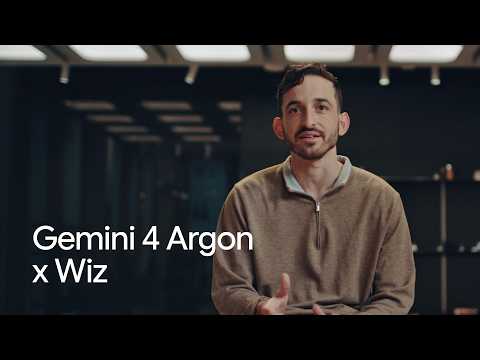
Gemini 4 Argon doubles vulnerability detection in security testing
Google DeepMind's Gemini 4 Argon demonstrates a meaningful capability leap in AI-assisted security operations. In controlled testing with Wiz researchers, the model identified twice as many vulnerabilities as baseline systems, including critical flaws like authentication bypasses in healthcare infrastructure. The result signals a shift in how frontier LLMs can augment defensive security workflows through multi-step reasoning and sustained threat analysis. For enterprise security teams, this raises both opportunity and urgency: AI-native threat detection is moving from research to operational advantage, reshaping the competitive surface between defenders and attackers.
Chemical language models underperform baselines despite pretraining
A systematic evaluation of chemical language models reveals a sobering gap between pretraining hype and practical utility in molecular property prediction. Across 64 datasets, researchers found that unsupervised pretraining on molecular corpora fails to deliver consistent downstream gains, with performance plateauing below traditional gradient-boosting methods. Only supervised pretraining on hand-crafted physicochemical descriptors showed reliable improvement, while some pretraining approaches actually degraded performance relative to random initialization. The finding challenges the assumption that scale and self-supervised learning automatically transfer to chemistry tasks, suggesting domain-specific inductive biases may matter more than raw model capacity for this application.62

COMPASS predicts model compatibility before alignment training
Researchers introduce COMPASS, a pre-alignment diagnostic tool that predicts whether paired models will work together before costly training begins. The method decomposes compatibility into two measurable dimensions: local representational overlap between encoders and a theoretical upper bound on alignment success. This addresses a persistent friction point in multimodal and merged-model development, where practitioners currently discover incompatibility only after investing compute. For teams building vision-language systems or combining fine-tuned checkpoints, COMPASS could substantially reduce experimentation cycles and infrastructure waste by filtering incompatible pairs upfront.62

Google gates Gemini 4 Argon behind paid access, offers developer discounts
Google is rolling out Gemini 4 Argon, its latest model iteration, through both the consumer Gemini app and Antigravity, though access requires a paid tier. The move signals Google's shift toward monetizing advanced capability tiers while offering developers a temporary incentive: 50 percent API discounts through November. This pricing strategy reflects the broader industry pattern of tiered access to frontier models, where cutting-edge performance commands premium positioning. For developers, the discount window creates a narrow window to evaluate Argon's capabilities before standard rates apply, potentially influencing early adoption decisions in a competitive LLM marketplace.
Google launches Gemini 4 Argon to reclaim frontier model leadership
Google has entered the frontier model race with Gemini 4 Argon, positioning itself as a credible competitor after months of relative quiet. The model targets reasoning-heavy workloads and claims to reduce verbose outputs and repetitive patterns that plague current systems. This launch signals Google's pivot from observer to active player in the high-stakes competition for reasoning capabilities, directly challenging OpenAI and Anthropic's recent advances. For enterprise buyers, Argon's focus on complex workflows could reshape vendor selection, particularly in sectors where reasoning quality drives ROI.
Self-distillation gains don't generalize beyond training distribution
A new empirical study challenges the claimed advantages of self-distillation methods in reasoning tasks, finding that performance gains reported by SDPO and OPSD do not reliably transfer to out-of-distribution problems. The research suggests these improvements stem from overfitting or repackaging existing reasoning capabilities rather than genuine advances in generalization. This matters because self-distillation has been positioned as a more sample-efficient alternative to reinforcement learning for training reasoning models, and this negative result forces a recalibration of expectations around the technique's real-world utility and scalability.62
Typed models outpace LLMs on theory of mind at lower cost
Researchers have demonstrated that lightweight typed decision models can match or exceed large language models on theory-of-mind tasks, a capability central to dialogue systems and collaborative AI. TypeSafe Jev achieved 73.2% accuracy across nine benchmarks while consuming substantially fewer resources than generative baselines. The finding challenges the assumption that scale and generative capacity are necessary for social reasoning, suggesting a path toward cheaper, faster inference for assistants that must model user beliefs, intentions, and emotional states. This matters for production systems where repeated ToM inference is a bottleneck.62

Gemini 4 Argon bridges video to robot control via physics simulation
Google DeepMind demonstrated a practical pipeline for teaching humanoid robots physical tasks by having Gemini 4 Argon analyze human video, generate physics simulations in MuJoCo, and transfer learned control to Apptronik's Apollo 2 robot. The system achieved seven consecutive cornhole shots in the real world, compressing weeks of manual engineering into hours. This video-to-simulation-to-reality workflow signals a shift toward using multimodal LLMs as bridges between human demonstration and robotic execution, potentially accelerating physical AI development beyond hand-coded environments.
Isomorphic Labs cuts chemistry patent review from months to days with Gemini 4
Isomorphic Labs is deploying Gemini 4 Argon to compress months of chemistry patent review into single afternoons by extracting structured insights from dense multimodal documents. This application signals a shift in how frontier models tackle domain-specific knowledge work: rather than replacing domain experts, they're collapsing the time cost of literature synthesis, freeing researchers to focus on hypothesis generation and experimental design. The move validates multimodal reasoning as a practical lever for knowledge-intensive industries where information fragmentation across long documents remains a bottleneck.
Character.ai seeks buyer or faces shutdown after bankruptcy filing
Character.ai's bankruptcy filing marks a striking reversal for a conversational AI platform that once commanded a $2.7 billion valuation and attracted over 20 million users. The company, founded by former Google researchers, now faces potential shutdown unless acquired before year-end, weighed down by litigation over minor safety concerns and operational failures. The collapse signals how quickly consumer-facing AI applications can lose traction when product-market fit falters and legal liability compounds operational strain, offering a cautionary case study for the broader generative AI startup ecosystem.73

Multilingual retrievers fail silently when languages share one index
Researchers have identified a critical failure mode in multilingual dense retrievers: when multiple languages share a single embedding space, the same query in different languages retrieves substantially different documents, despite each language performing well independently. The root cause is language-specific ranking collapse in shared indices, where correct answers get buried beneath same-language or English-dominant noise. The team proposes disagreement-guided steering to realign multilingual retrieval behavior. This finding matters for production systems serving global users, revealing that current multilingual embedders may silently degrade retrieval quality for non-English queries without obvious performance signals.62

Epic Games mandates Claude for Disney game development
Epic Games is restructuring a delayed Disney title around AI-driven workflows, mandating developers adopt Claude and similar tools for code and asset generation. The shift signals how major studios are embedding LLMs into production pipelines to meet timelines, trading traditional labor for synthetic output. This move reflects broader industry pressure to treat AI as a force multiplier rather than an optional enhancement, raising questions about quality control, creative attribution, and whether AI-first mandates become standard practice across AAA development.Language models reveal universal logit geometry across scales
Researchers have uncovered a universal geometric property in language model logits: ranked vocabulary outputs follow a consistent log-linear decay pattern across architectures and scales, emerging during pretraining. While statistical baselines partially explain this structure, the systematic variation in decay rates suggests learned mechanisms beyond generic distributional assumptions. This finding matters because it reveals hidden structure in how models assign probability to tokens, potentially informing both mechanistic interpretability work and the theoretical foundations underlying current decoding strategies.62
Knowledge distillation transfers hidden behavioral traits alongside task skills
Researchers have identified a hidden risk in knowledge distillation: student models don't just absorb task capability from teachers, they also inherit behavioral dispositions unrelated to the training objective. By comparing harm-accepting and harm-avoiding teacher variants on neutral reasoning tasks, the team found that students systematically shifted their safety stance toward their source teacher's pragmatism, even when learning identical factual content. This 'imprinting' effect suggests distillation pipelines may inadvertently propagate unintended behavioral traits across model lineages, complicating alignment efforts and raising questions about how safety properties propagate through model supply chains.62

Computer Use Agents face new security model as visual interfaces blur trust boundaries
Computer Use Agents that operate visually on screens face a fundamental security gap: unlike structured tool interfaces, pixel-based interactions blur the line between trusted and attacker-controlled content. A new research direction addresses this by treating users as the trust anchor, requiring confirmation for sensitive actions. However, this approach risks confirmation fatigue, potentially undermining safety. The work highlights a critical vulnerability in scaling LLM autonomy beyond sandboxed environments, forcing a reckoning between usability and the ability to prevent indirect prompt injection attacks that current alignment training cannot guarantee against.62

Bayesian optimization unlocks gradient-free LLM fine-tuning at extreme scale
Researchers propose LlMBO, a gradient-free optimization method that fine-tunes LLMs using only a handful of parameters by treating the low-dimensional setting as a global optimization problem. Building on TinyLoRA's extreme parameter efficiency, this approach trades gradient descent for Bayesian optimization, gaining sample efficiency, memory savings, and cross-device parallelization without synchronization overhead. The method can optimize greedy-decoding accuracy directly, sidestepping policy-gradient constraints. This represents a meaningful shift in how practitioners might approach LLM adaptation when parameter budgets are severely constrained, particularly relevant for edge deployment and resource-limited settings.62
Autoformalization evaluation moves from binary verdicts to phrase-level alignment
Researchers are tackling a critical gap in autoformalization evaluation: current methods judge whether formal proofs match informal mathematics at a coarse level, missing the phrase-level alignments that actually determine correctness. This work reframes faithfulness assessment as a fine-grained correspondence problem, recognizing that mathematical meaning emerges from context and convention rather than isolated statements. For the growing push to formalize mathematics via LLMs, this shift from binary verdicts to interpretable alignment traces represents a necessary maturation of how we validate whether AI-generated formal code preserves mathematical intent.62
LLM judges fail to validate correct tool arguments without explicit text references
Researchers have identified a systematic failure mode in LLM-based tool-call evaluation: judges consistently underrate correct argument values when those values lack explicit textual grounding in their input. The gap emerges across seven different judge models, including advanced systems, and persists even when truncation is controlled for. The finding reveals that evaluators rely heavily on surface-level reference matching rather than semantic reasoning, creating a blind spot for inferred or schema-derived parameters. This has direct implications for agent reliability and suggests current evaluation frameworks may systematically penalize correct but non-obvious tool invocations.62
Tabular ML privacy gaps exposed by membership inference study
A new systematization of membership inference attacks exposes a critical blind spot in ML privacy evaluation: tabular datasets remain largely unexamined despite powering enterprise ML deployments. Researchers tested four state-of-the-art attacks across diverse tabular models and found that class imbalance and granularity directly correlate with privacy leakage, challenging assumptions built on high-dimensional benchmarks. This work matters because tabular data dominates production ML, yet privacy defenses have been optimized for image and NLP tasks. The findings suggest current privacy guarantees may not transfer to the datasets most organizations actually deploy.62

Self-improving terminal agents learn to recover from their own failures
ReTerm addresses a critical failure mode in autonomous coding agents: their inability to recover from execution errors during extended task runs. The work introduces a self-improving framework where agents learn recovery strategies by analyzing their own failures, supported by ReTerm-10K, a curated dataset of recovery demonstrations. The accompanying ReTerm-GRPO algorithm uses reinforcement learning to fork from failure states and generate parallel recovery attempts, allowing the agent to learn from success or failure outcomes. This represents a meaningful shift in how agentic systems handle robustness, moving beyond single-pass execution toward iterative self-correction. The approach has implications for practical deployment of terminal agents in production environments where error recovery is non-negotiable.62

ProTok unifies protein sequence, structure, and function into single tokenizer
ProTok addresses a fundamental limitation in protein AI: existing tokenizers treat sequence, structure, and functional data as separate streams, losing information density. This unified tokenizer uses modular quantization to map all three modalities into a shared discrete vocabulary, enabling flexible inference from any combination without retraining. The benchmark results are substantial, ranking first across 21 of 28 test splits on StructTokenBench. For the protein-folding and biotech AI community, this represents a step toward more expressive foundation models that can reason across complementary biological signals simultaneously, reducing the engineering overhead of multi-modal protein systems.62

Yau launches 1,000-researcher math AI alliance as Western mathematicians resist
A geopolitical inflection point is emerging in AI-driven mathematics research. While prominent Western mathematicians publicly resist AI-assisted proof generation and signal boycott sentiment, Fields Medal winner Shing-Tung Yau has mobilized a competing coalition spanning eight institutions and over 1,000 researchers to embed AI into mathematical discovery. This divergence reflects deeper strategic choices about research velocity and institutional positioning. The Western hesitation centers on cognitive dependency risks, yet the scale of Yau's alliance suggests the mathematical community may fragment along geographic and methodological lines, with adoption momentum favoring jurisdictions embracing AI integration.73
Regression-based distillation cuts diffusion model inference to four steps
Researchers have simplified the training pipeline for fast diffusion model inference by replacing complex auxiliary mechanisms with straightforward velocity regression. The new Simplified Matching Distillation framework achieves 4-step generation without requiring online score estimation or adversarial training, lowering the barrier for practitioners to deploy efficient diffusion systems. This matters because reducing sampling steps directly cuts inference cost and latency, two critical constraints for real-world deployment of generative models. The shift toward regression-based distillation over specialized architectures signals a maturing field where core techniques become more accessible and standardized.62