
Earlier stories
Every published Modelwire story, newest first. The homepage leads with the weekly overview and this week’s hottest; this is the full collection.

Google unveils 8th-gen TPUs, agent platform, and Workspace AI layer at Cloud Next '26
Google rolled out eighth-generation TPUs alongside a new agent platform and Workspace AI layer at Cloud Next '26, consolidating its infrastructure and enterprise software under an 'Agentic Enterprise' strategy. The moves signal Google's push to compete in both AI compute and agent-driven productivity tools.85

Variance Is Not Importance: Structural Analysis of Transformer Compressibility Across Model Scales
Researchers systematically tested compression techniques across GPT-2 and Mistral 7B, discovering that high-variance activations don't correlate with model importance and that transformer blocks behave linearly only under specific input distributions. The findings challenge conventional assumptions about which components matter for efficient inference.62

Cooperative Profiles Predict Multi-Agent LLM Team Performance in AI for Science Workflows
Researchers benchmarked 35 open-weight LLMs using behavioral economics games and found that cooperative profiles from these games reliably predict how well LLM teams perform on real AI-for-Science tasks like collaborative data analysis and modeling.62

Now Meta will track what employees do on their computers to train its AI agents
Meta is deploying employee monitoring software called Model Capability Initiative on US workers' computers to capture mouse movements, keystrokes, and screenshots for training AI agents. The practice raises immediate questions about consent, data governance, and whether surveillance-derived training data will become standard across the industry.
Self-Aware Vector Embeddings for Retrieval-Augmented Generation: A Neuroscience-Inspired Framework for Temporal, Confidence-Weighted, and Relational Knowledge
Researchers propose SmartVector, a framework that embeds temporal awareness, confidence decay, and relational metadata into vector embeddings for RAG systems. The approach addresses a real failure mode where conventional RAG achieves only 58% accuracy on versioned queries by modeling knowledge consolidation after hippocampal-neocortical memory processes.62

Anthropic manager hints that Pro and Max plans are outgrown by today's Claude workloads
Anthropic's Head of Growth signaled that Claude's Pro and Max tiers no longer fit user behavior after the company briefly yanked Code features from Pro before reversing course. The incident suggests subscription architecture misalignment with actual workload demands.68
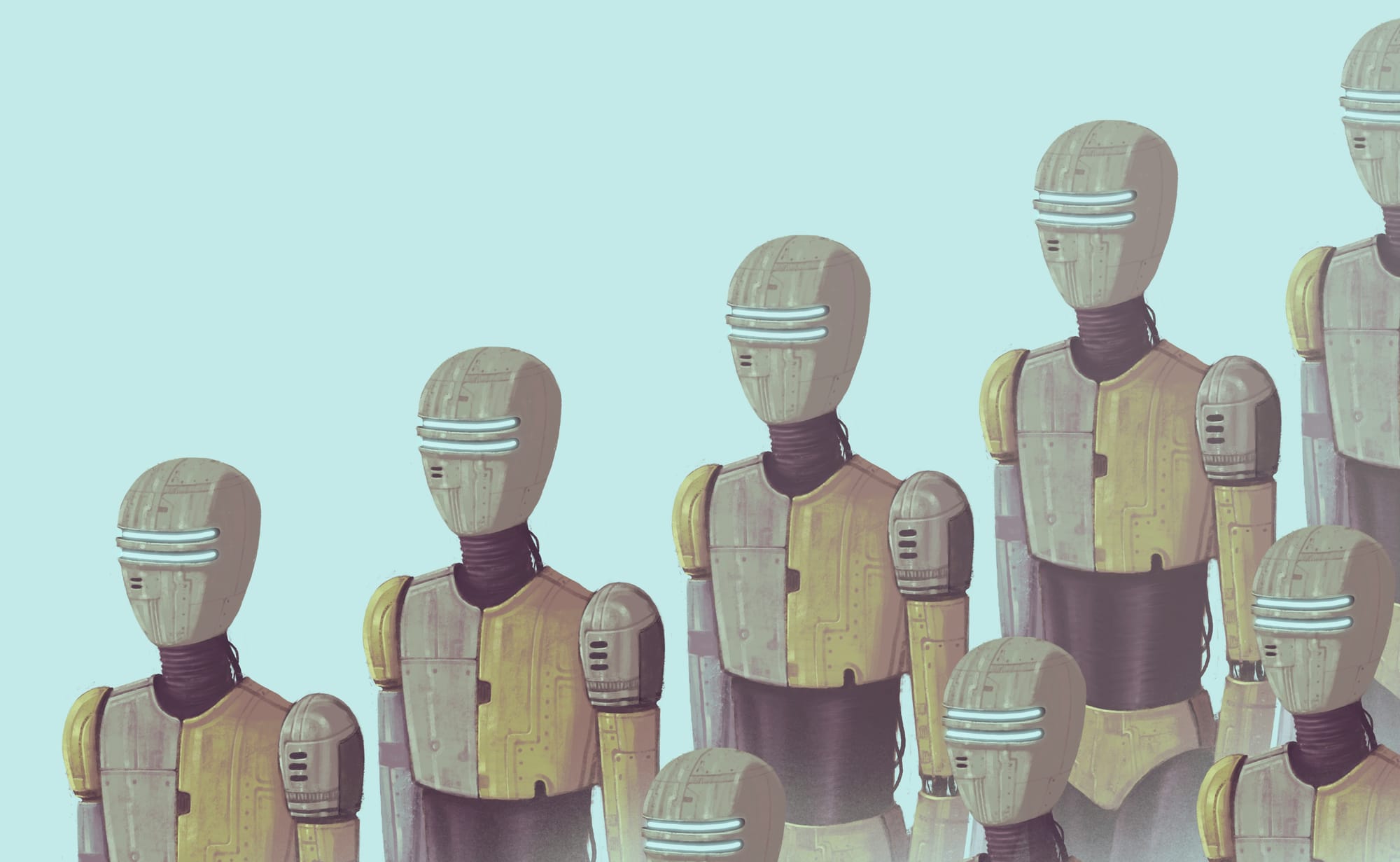
Startups Brag They Spend More Money on AI Than Human Employees
A cohort of AI startups are redirecting hiring budgets toward compute infrastructure, signaling a shift in how early-stage companies allocate capital in the race for model training capacity. The move reflects both the capital intensity of AI development and startups' bet that compute spending outpaces traditional headcount.65

AI is spitting out more potential drugs than ever. This start-up wants to figure out which ones matter.
10x Science closed a $4.8M seed round to build AI tools that help pharma researchers prioritize drug candidates by interpreting molecular complexity. The startup addresses a real bottleneck: generative models now produce far more potential compounds than labs can feasibly validate.

ChatGPT Images Tool Upgraded With ‘Thinking’ Capability
OpenAI has integrated its reasoning capability into DALL-E, enabling the image generation model to apply deeper computational thinking to visual tasks. The upgrade represents a convergence of reasoning and vision modalities within the company's product suite.61

Meta tracks US employees' clicks and keystrokes to train AI agents
Meta deployed keystroke and mouse-tracking software across US employee computers to harvest behavioral data for AI agent training. The move raises questions about consent, data governance, and whether large-scale employee surveillance is becoming standard practice in AI development.85

Musk's SpaceX bets $60 billion on Cursor to fix xAI's coding gap
SpaceX has secured an option to acquire Cursor, an AI coding startup, for $60 billion to bolster xAI's developer tooling capabilities. The deal signals Musk's strategy to compete in the AI coding space by acquiring rather than building internally.85


Exclusive: Google deepens Thinking Machines Lab ties with new multi-billion-dollar deal
Thinking Machines Lab, led by Mira Murati, secured a multi-billion-dollar Google Cloud infrastructure deal centered on Nvidia's GB300 chips. The partnership signals major capital commitment to competing AI infrastructure stacks beyond hyperscaler in-house silicon.

Decoupled DiLoCo: A new frontier for resilient, distributed AI training
Google DeepMind introduced Decoupled DiLoCo, a distributed training method designed to improve resilience and efficiency across decentralized AI systems. The technique addresses failure modes in large-scale model training by decoupling local and global optimization steps, potentially reshaping how frontier labs orchestrate multi-node compute.
AI needs a strong data fabric to deliver business value
Enterprise AI adoption has crossed a tipping point: half of companies now deploy AI across three or more business functions, from finance to supply chains. The bottleneck isn't capability anymore—it's data infrastructure. Organizations need robust data fabrics to unlock real business value from copilots, agents, and predictive systems.


Speeding up agentic workflows with WebSockets in the Responses API
OpenAI detailed how WebSockets and connection-scoped caching cut API overhead and latency in the Codex agent loop, offering a technical blueprint for faster agentic workflows. The optimization targets a core bottleneck in agent-based systems where repeated API calls compound latency.81

The Pope’s Warnings About AI Were AI-Generated, a Detection Tool Claims
Pangram Labs' AI detection Chrome extension flagged content purportedly written by Pope Francis as machine-generated, raising questions about the reliability of detection tools and the prevalence of synthetic content in high-profile contexts.65

Anthropic’s most dangerous AI model just fell into the wrong hands
Anthropic's Mythos cybersecurity model was accessed by unauthorized users through a third-party contractor, marking a significant security breach for a tool the company flagged as potentially dangerous. The incident raises questions about access controls at frontier labs and the risks of deploying powerful dual-use AI systems.



Meta will record employees’ keystrokes and use it to train its AI models
Meta is deploying an internal tool that converts employee mouse movements and keystrokes into training data for its AI models. The practice raises immediate questions about consent, data governance, and whether employee activity can ethically fuel model development at scale.